 Русский
 Қазақша
 Eesti
EestiSpaceX After IPO: Price, Valuation, Outlook
Why the volatility is no reason to panic

Following its merger with xAI, the company was officially renamed SpaceXAI. In this article, we use the original name, SpaceX, under which the asset trades on the exchange as SPCX.
The largest IPO in history turned into one of the most nervous debuts. In the first month of trading, SpaceX shares managed both to spike and to pull back sharply. Our venture market analyst Roman Z. walks through the facts: what is happening with the company, what makes up its valuation, and why analysts are in no hurry to revise their long-term expectations.
SpaceX Is Three Businesses at Once
The point is that the market today values not so much the current numbers on the books as the company's potential years ahead. After the merger with xAI, this is no longer just a space business. The group now spans three major divisions:
- Rocket launches;
- The Starlink satellite network;
- Artificial intelligence in the form of xAI.
Each division sits at its own stage of development and is measured by its own criteria. That is why SpaceX's value reflects not only the company's current performance but also expectations about its future growth.
The Musk Premium and the Bet on a Merger
Markets rarely value Elon Musk's companies on their current business alone. A premium is almost always added to the calculation, one that investors call the "Musk premium." It is the price of his reputation, his proven ability to scale companies, and the attention and capital his name attracts.
For SpaceX, there is an added bet on a merger. Musk controls several technology companies at once, and the market prices in the likelihood that they will one day combine into a single structure. Such a combination promises economies of scale and shared technology, and part of the premium is exactly what investors pay for that scenario.
This shows clearly in the numbers. As of June 17, PitchBook valued the entire company at roughly $2.5T, of which about $1.5T came from the stable combination of launches and connectivity. The remainder analysts attributed to a premium on expectations, tied largely to Musk himself and to the future of the AI division. Hence the gap between still-modest reported results and the market's high valuation.
Starlink Is the Main Source of Revenue
One of the biggest revelations for investors was Starlink's financial performance. In 2025, the satellite business brought in $11.4B in revenue, up roughly 50% year over year. More important still was profitability: before interest, taxes, and depreciation, the company kept about 63 cents of every dollar of revenue. For a telecom business, that is an exceptionally high level.
Starlink remains the main source of cash flow within the group, while the rocket division and xAI still require significant investment. Where SpaceX was once associated first and foremost with rocket launches, its financials show that satellite connectivity has already become the financial foundation of the business.
Why the Stock Reacts So Strongly to News
After the listing, shares first climbed above $225, then pulled back almost to the IPO's opening price, and by late July set a low for their time on the public exchanges. But for companies of this scale, sharp price swings do not necessarily mean something is wrong with the business.
There are several reasons for the volatility. Investors are still searching for a fair valuation after the largest IPO in history. The market is preparing in advance for the end of share lock-up periods, when some early investors and employees will be able to sell. Such events raise volatility for any company, no matter how strong the underlying business.
An opposite factor is supporting the price as well. In early July, SpaceX was added to the Nasdaq-100 index. That brings steady demand from index funds, all the more so while relatively few shares are in free float.
What Analysts Are Saying
A telling moment came when the mandatory quiet period after the IPO ended. In a short span, SpaceX received about 15 analyst initiations, all with a buy rating. Large companies rarely earn such unanimity.
The forecasts of leading banks vary, but all point to notable upside:
- Morgan Stanley — $300, the boldest forecast among the major banks;
- JPMorgan — $225;
- Goldman Sachs — $205;
- Citi — $200, the most cautious of the major banks.
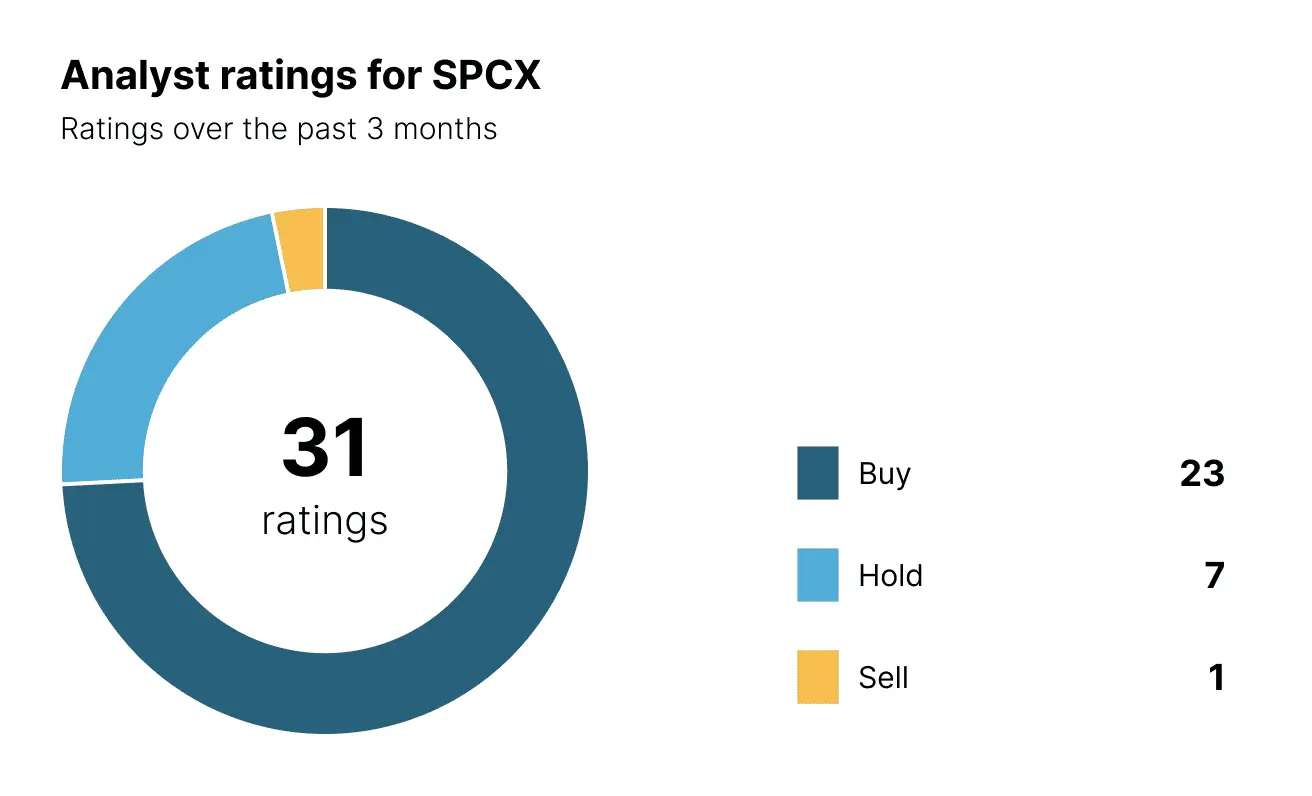
A broader sample confirms the same mood. Of the 31 analysts who have rated the stock over the past three months, 23 recommend buying, 7 holding, and just one selling. The average price forecast is around $235, nearly double current levels.
For all the differences in the numbers, one idea recurs in most models: SpaceX's long-term value will depend on how successfully the company can scale all three divisions at once.
xAI: The Key Question for Investors
If Starlink looks like the financial foundation today, xAI remains the most uncertain division. Before the IPO, many analysts treated it with caution because of the heavy investment in data centers, the lack of a proven monetization model, and stiff competition from OpenAI, Anthropic, and Google.
After the listing, the picture became noticeably clearer. Lease contracts for capacity at the Colossus data center confirmed that xAI's infrastructure is in demand among the market's largest players: Anthropic and Google rent a substantial share of its compute. Such agreements are sometimes called unreliable, since formally either side can exit on 90 days' notice. In practice, tenants have nowhere to go: demand for compute is at record highs, and there is almost no spare capacity on the market.

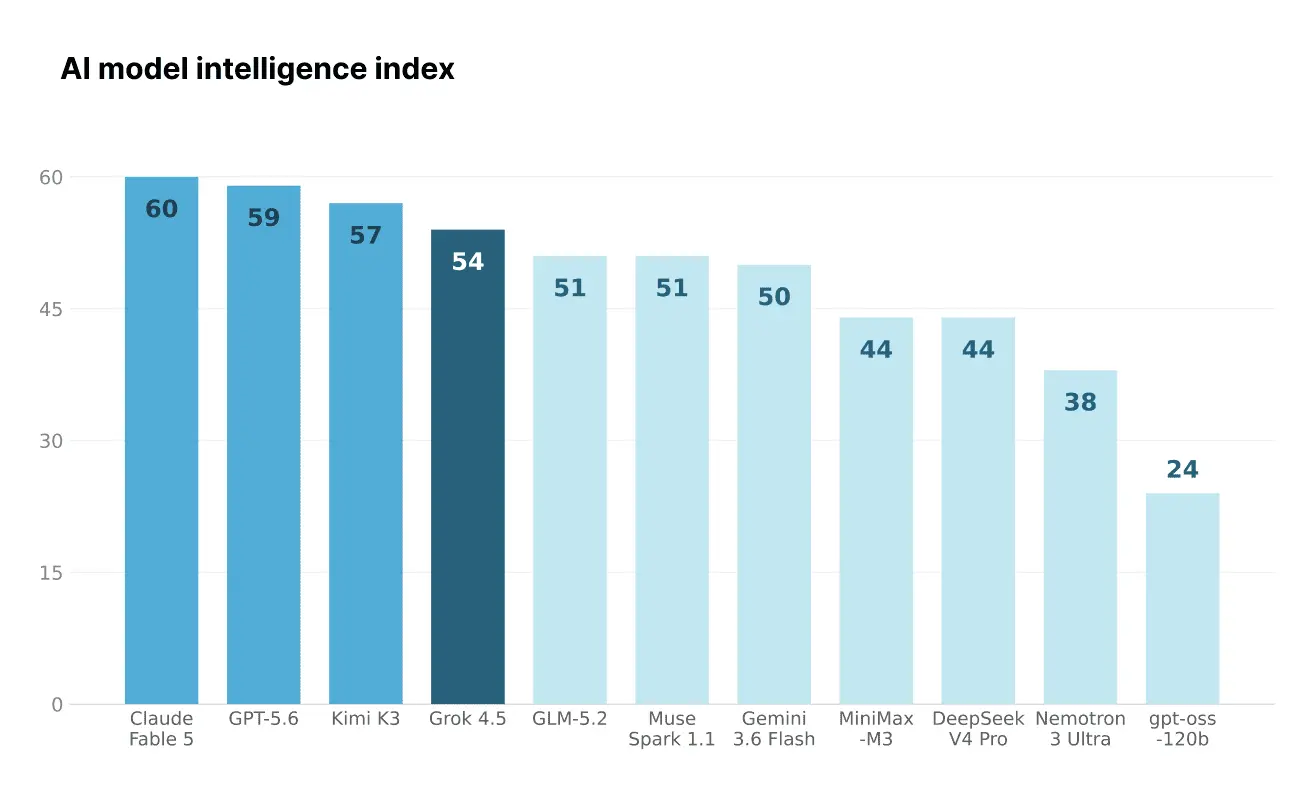
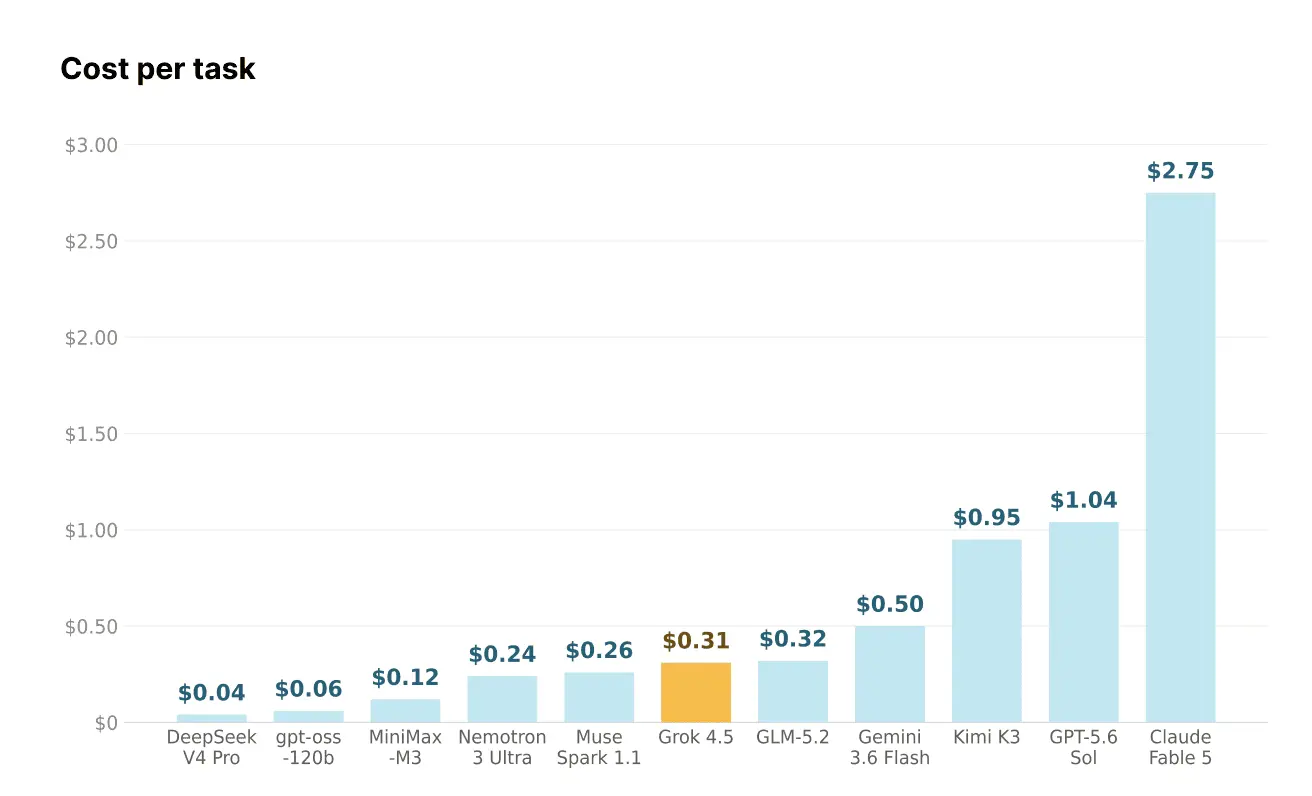
The product side has changed too. The release of Grok 4.5 brought the model back into the conversation among the leaders: on complex agentic tasks it still trails the strongest solutions, but on cost of work it has become one of the most economical options on the market.
The development of the division should also be accelerated by the acquisition of Cursor, which closed part of the talent and technology gaps. An important nuance is that a significant share of this revenue is not yet reflected in reported results, because the contracts only took effect mid-year. It will be seen more fully in the coming quarterly figures, which is why they deserve particular attention.
A Risk Even the Optimists Acknowledge
Nearly all analysts agree on one thing: the main challenge remains the scale of investment. The company is developing three capital-intensive divisions at once, so investors are watching closely how quickly that spending starts turning into growing revenue and cash flow. In 2025, SpaceX earned $18.7B in revenue but ended the year with a net loss of about $4.9B. The long-term valuation will be justified only if each of the three businesses reaches sustainable scale before the company needs to raise additional capital.
What Investors Should Watch
The coming months will offer several markers by which to judge the company's trajectory.
Starship launches
This is the largest rocket in history, and the key question is whether it can be made reusable, as SpaceX already works with SpaceX's earlier rockets. If so, the cost of putting cargo into orbit will fall sharply, lifting both demand for launches and Starlink's profitability. At the same time, Starship is the second-hungriest cost center after AI, and failed launches lead to investigations and expensive production of new components. So the share of successful launches directly affects both the financials and sentiment around the stock.
Starship also underpins lunar missions, international contracts, and Musk's Mars plans, and with them the interest of retail investors. Launches can be followed on the schedule on the company's website.
Quarterly reports
The reports for the second and third quarters of 2026 deserve particular attention. That is where the AI division's revenue will appear for the first time, including income from capacity lease contracts, and over time a fuller picture of the company's market and financial position. The second-quarter report is expected around the turn of July and August, the third by the second half of November. They are published on the investor relations page.
Wall Street sentiment and Musk's reputation
The analysts' shared optimism supports the company in itself, because many funds build portfolios and assess risk precisely by consensus. The backdrop around Musk himself matters separately: reputational scandals involving the owner once weighed on Tesla's shares, and a calm public backdrop works in the stock's favor.
Mergers and acquisitions
For an expensive company, buying up smaller businesses with its own shares is one of the most effective ways to deploy capital, as in the case of Cursor. Such deals do not hurt the financial statements, but they sometimes pressure the price in the moment, since the lock-up applies less strictly to sellers. If the acquired business strengthens overall efficiency, that effect smooths out quickly.
The Bottom Line
No one can guarantee SpaceX shares will rise: ahead of the company lie the end of the lock-up periods and years of capital-intensive investment. But there is little reason to panic either. There was no sharp collapse after the IPO, and the offering was oversubscribed across every category of investor, from institutional to retail. That means demand persists, and quite likely not all of Musk's believers have bought the asset yet. The volatility of the first weeks reflects a search for a fair price rather than weakness in the business.
The nearest test will be the first public quarterly report on August 4. We will continue to follow SpaceX's progress and share updates as new reports and major corporate events arrive.