 Русский
 Қазақша
 Eesti
EestiOn the Right Note: April 2026
Structured Notes Monthly Performance Digest

On the Right Note is Raison’s regular analytical digest focused on its structured notes portfolio. In each issue, we go beyond reporting results to explain the underlying logic: how market conditions influence performance, how protection mechanisms work, and how strategies behave on actual observation dates. This material helps noteholders better understand their assets and allows investors to assess how protection mechanisms perform in practice.
April: Markets Recover, Volatility Eases
In April 2026, global markets began gradually adapting to the hawkish tone from central banks and persistent geopolitical uncertainty. Investor attention shifted from macro expectations toward the Q1 corporate earnings season.
Between April 1 and 30, 2026, observation dates passed for 6 notes:
- 6 notes maintained active status, including one individual strategy;
- 0 notes were redeemed early via Autocall.
- Memory Effect was triggered on 2 active notes.
Market Environment and Key Events
The primary market driver in April was earnings from major companies, which partially shifted investor sentiment toward the tech sector and AI spending. Two key trends defined the month:
-
Focus on ROI: Investors warmed to a portion of big tech companies that showed early signs of successful AI monetization in the enterprise segment — allowing the sector to partially recover from March's losses.
-
Capital rotation: At the same time, capital continued flowing into more resilient value sectors. Amid lingering doubts over large-scale AI infrastructure spending, investors increasingly favored industrials, energy, and financials, which delivered steady results.
Key indicators as of April 30, 2026:
- S&P 500: −4.85% YTD (rebounding from March lows)
- Nasdaq 100: −5.42% YTD
- Russell 2000: +0.85% YTD
- Euro Stoxx 600: −2.15% YTD
- CSI 300: −1.90% YTD
- VIX fell to 22.45 vs. 30.89 at the end of March, reflecting a gradual easing of market stress.
Impact on Structured Notes
The partial recovery in equity indices and a notable drop in volatility in the second half of April had a positive effect on structured product portfolios. The underlying assets of most notes moved comfortably away from their protection barriers, reducing capital risk.
In this environment, structured notes continued to demonstrate resilience: built-in mechanisms smoothed out the impact of market swings while preserving the potential for regular coupon income.
Notes in Detail
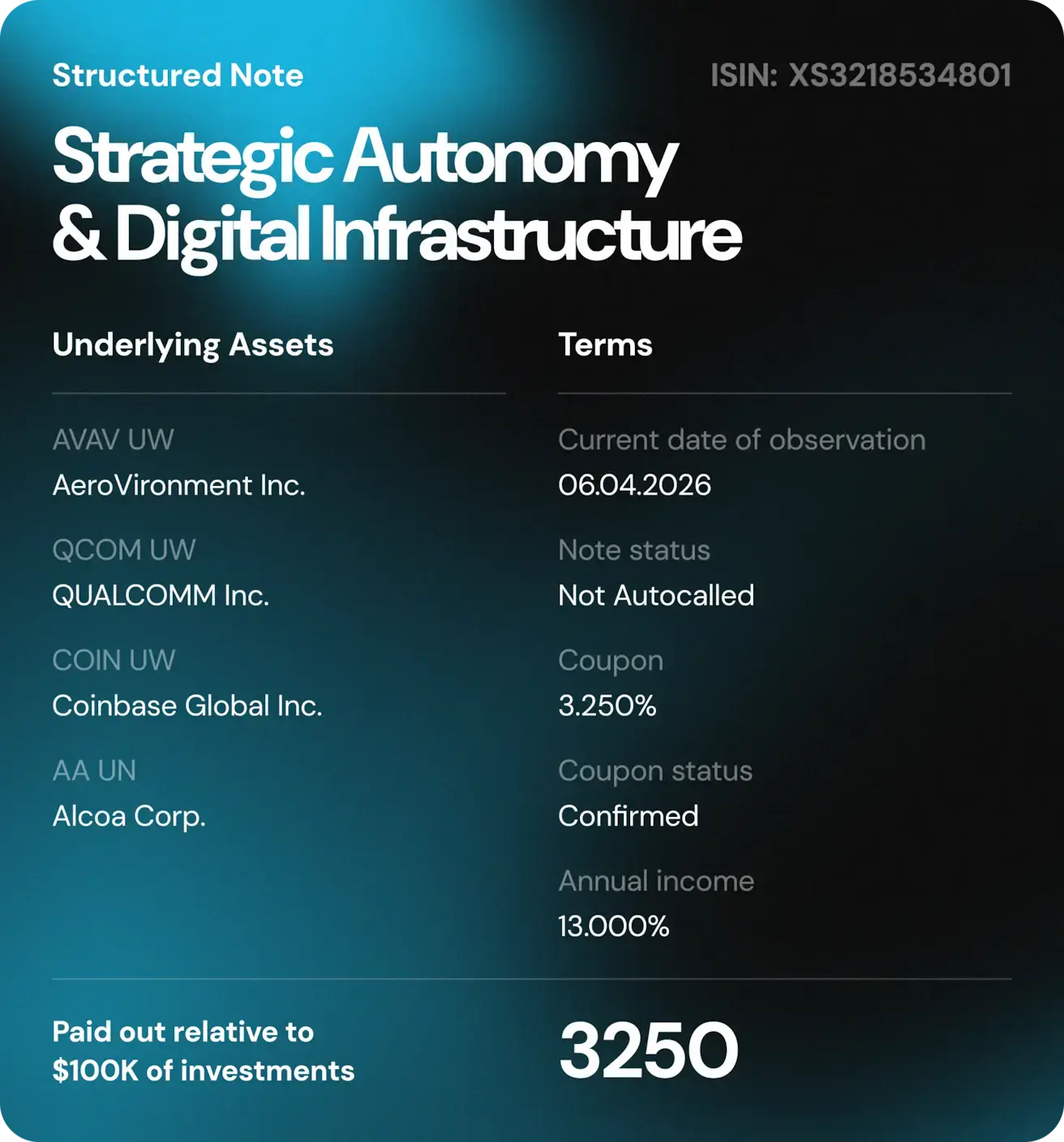
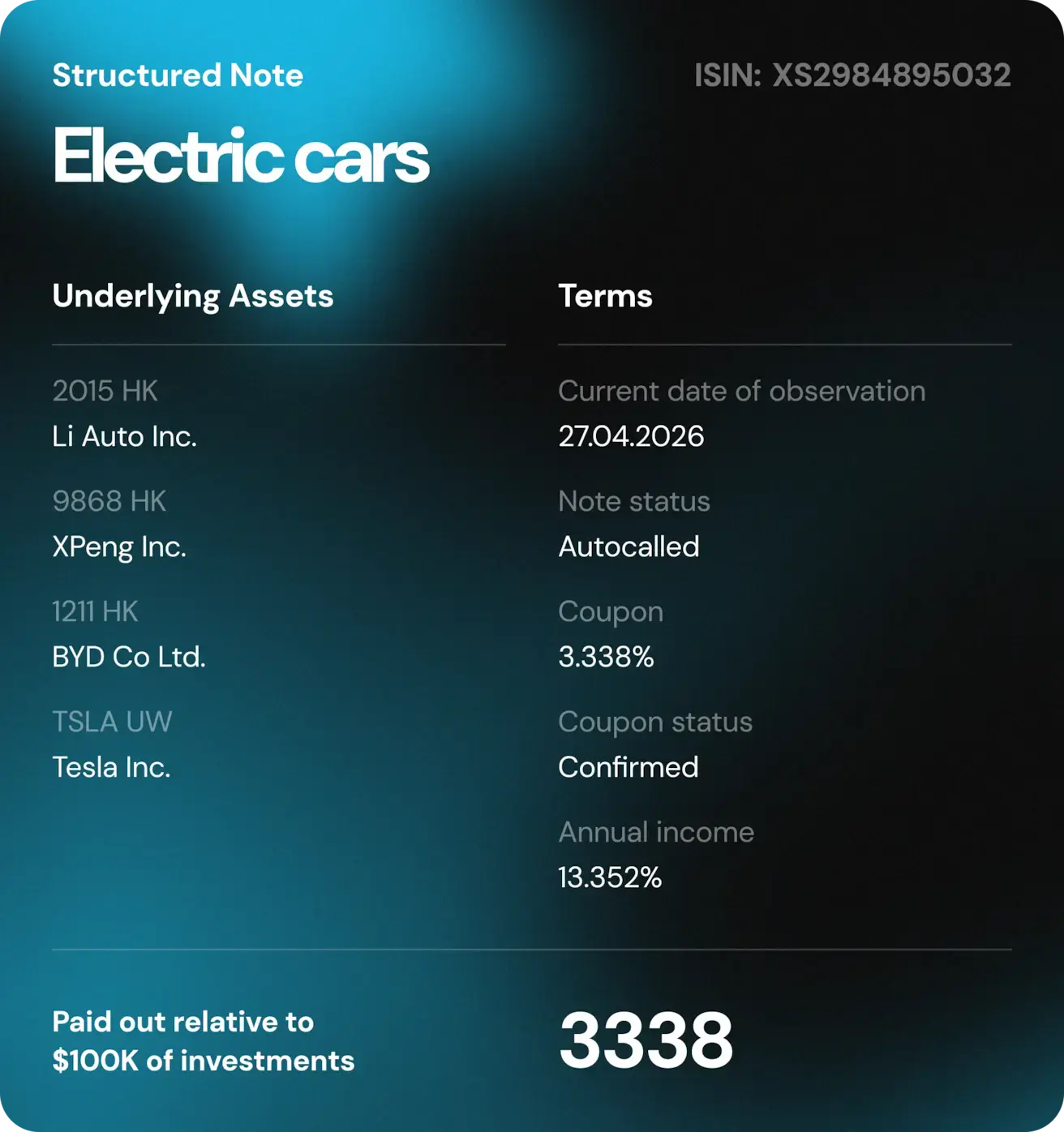
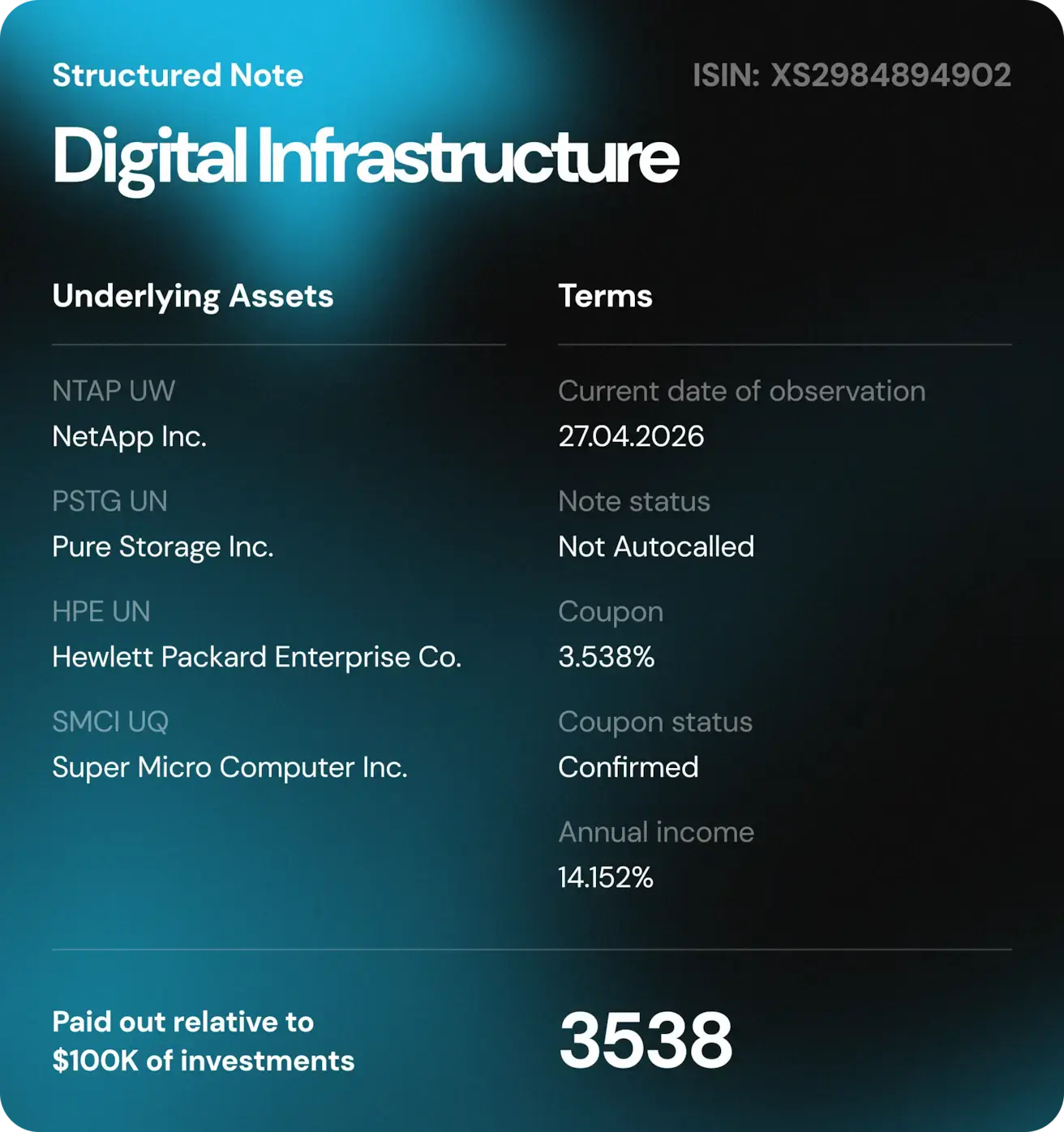
From market trends to the actual numbers. Below are the note cards for all observation dates that fell in April. We've grouped them into three categories: Active — those that continue to run, Autocalled — those redeemed early, and those in which Memory Effect was triggered.
Each card includes:
- Basket composition: the underlying assets we're tracking.
- Coupon status: whether payment was confirmed for this period.
- Actual income: how much the investor earned per $100,000 invested.
Active Notes
Memory Effect
On two notes — Semiconductors and Software — some underlying assets were below the coupon barrier on the observation date. Under the note terms, coupons for the period are not lost: they are recorded and will be paid once the underlying asset levels recover.
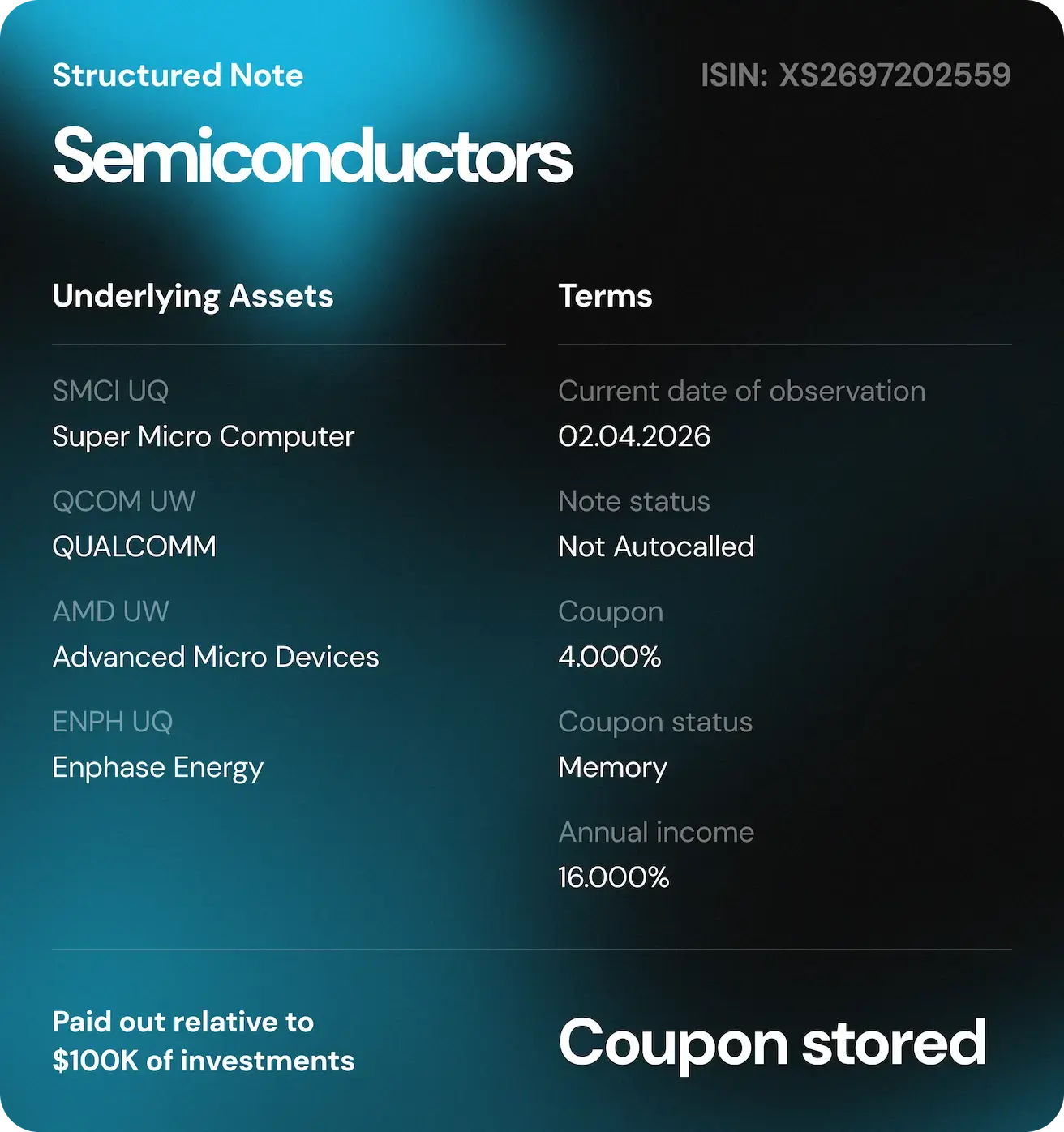
Why the Memory Effect Was Triggered
SMCI recovered meaningfully: fiscal Q3 2026 came in well ahead of expectations on both earnings and margins, with the stock up around 25%. The company maintains a strong revenue outlook and remains a key beneficiary of growth in AI infrastructure, despite lingering reputational overhang from prior periods.
ENPH remains under pressure from tariffs and the rollback of US solar support programs — headwinds shared across the entire sector. However, the company's financial position tells a more confident story: positive free cash flow, around $500M in cash reserves, a contract backlog of **$873M **not yet fully reflected in reported figures, and an additional $200M authorized for buybacks. On top of that, ENPH is moving into AI data center infrastructure — a new growth vector beyond its core market.
Analyst consensus views the stock as undervalued, with recovery potential above the note's coupon barrier over its lifetime.
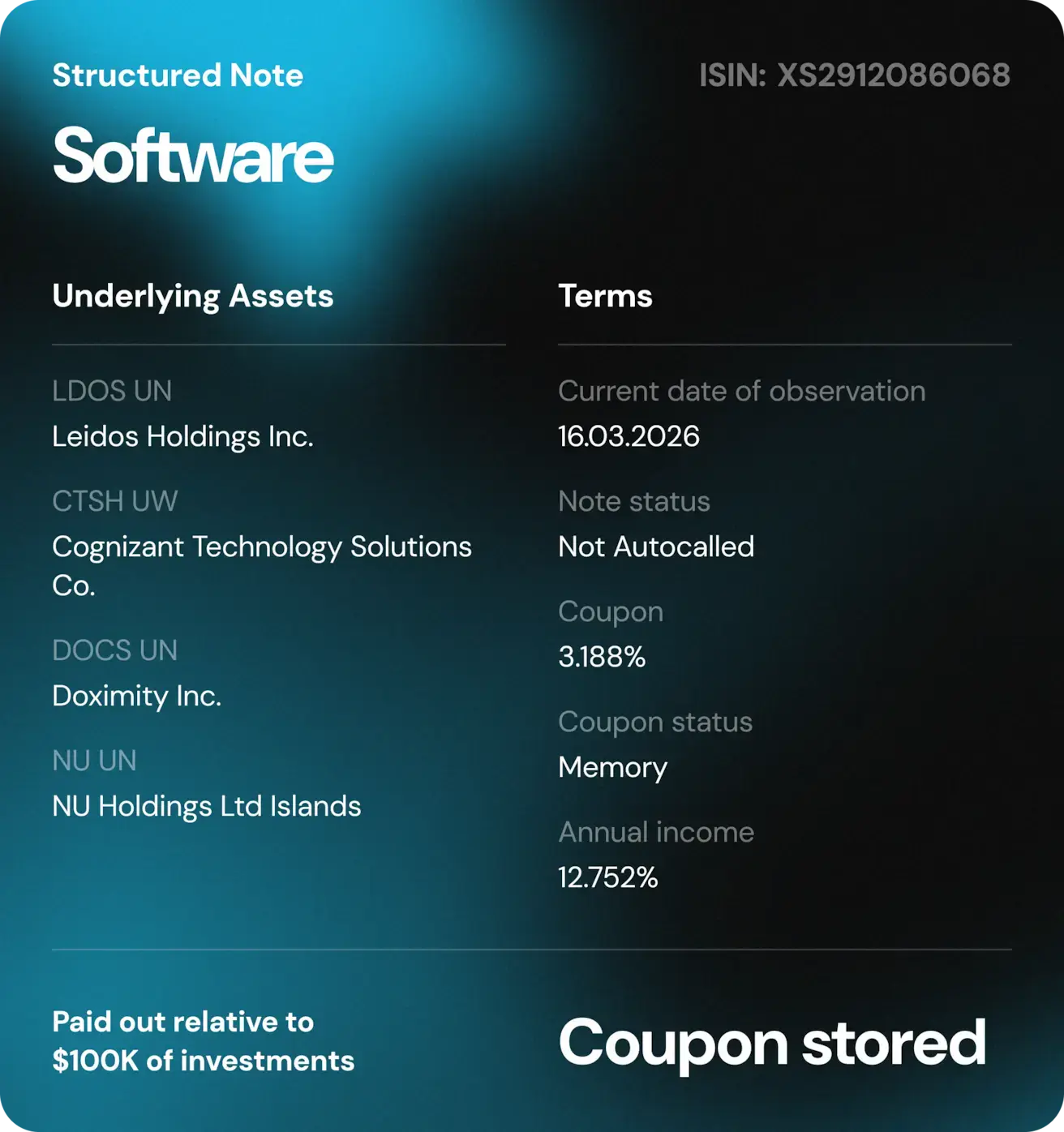
Why the Memory Effect Was Triggered
Of the four underlying assets, only Doximity is below the coupon barrier — and by just 2%. The reason is regulatory: the MFN rule prompted major pharmaceutical clients to temporarily pause their marketing budgets. Those funds haven't disappeared; they are expected to return to Doximity's revenue as the industry adapts. Fundamentally, the company remains sound: positive cash flow, a dominant market position, and active development of AI features. With such a narrow gap to the barrier, recovery before the next observation date is realistic.
Taken together, the current situation is best viewed as a temporary deviation; accumulated coupons will be paid once underlying asset levels recover.
Summary and Outlook
April demonstrated that structured notes hold up well even in an uneven market environment with heightened scrutiny of corporate results. All 6 notes maintained active status throughout the month, including one individual strategy, while Memory Effect was triggered on 2 notes.
The Memory Effect mechanism preserves investor income until market levels recover. In conditions like these, structured notes continue to prove their value, delivering a balance between return potential and capital protection.
We continue building products around key macro themes, combining strong yield potential with reliable protection mechanisms.
Interested in learning more about Raison structured notes? Please contact our expert to get a personal consultation.