 Русский
 Қазақша
 Eesti
EestiOn the Right Note: August 2026
Structured Notes Monthly Performance Digest
On the Right Note is Raison's regular analytical digest covering our structured notes portfolio. Each issue goes beyond the numbers — we break down the market context, explain how protective mechanisms work, and track strategy performance on real observation dates. The digest helps note holders better understand their assets and gives prospective investors a clear picture of how protection features work in practice.
August: Market Recoups Losses as the Fed Turns More Hawkish
In August 2026, markets fully recovered from July's decline and returned to highs, although the picture beneath the surface was uneven: some segments moved calmly while others were noticeably more volatile.
Between August 1 and August 31, 2026, observation dates passed for 8 notes:
- 5 coupons paid on schedule
- Memory Effect was triggered on 3 active notes
- 0 notes were called early via Autocall
Market Overview
August was shaped by five key developments:
- Market recovery. Indices returned to historic highs, led by the Nasdaq 100 (+4.1%). Small caps lagged for the month (+1.4%) but remain ahead of the other benchmarks year-to-date (+19.8%).
- A tale of two halves for semiconductors. The sector rallied in the first half of the month — SOXX was up 10.7% as of August 17 — but gave back most of the gain and closed August at +0.74%. NVIDIA's earnings confirmed the strength of the AI thesis: revenue came in at $96.2 billion (+106% year-over-year), with Q3 guidance of $108 billion excluding the China segment. At the same time, margins across much of the sector remain under pressure from a shortage of memory chips.
- A strong earnings season. According to FactSet, 86% of S&P 500 companies beat EPS estimates, earnings growth accelerated to 52% year-over-year, and margins hit a record 17%. Meanwhile, forward P/E slipped to 19.6x from 20.4x as earnings forecasts rise faster than the index itself.
- A more hawkish Fed. Rates held steady (3.50–3.75%), but after the Jackson Hole symposium, the market began pricing a 59.8% probability of a hike at the September 16 meeting, up from 38.9% a week earlier. The ECB, meanwhile, had already raised its deposit rate to 2.25%.
- Low volatility and stabilizing commodities. The VIX held around 15 points. WTI crude traded at $83.40 per barrel, and flow through the Strait of Hormuz rose to 7–8 million barrels per day, up from roughly 4 million in mid-July.
Key indicators as of the end of August 2026:
- S&P 500: +2.96% for August, +12.65% year-to-date
- Nasdaq 100: +4.10% for August, +16.57% year-to-date
- Russell 2000: +1.40% for August, +19.76% year-to-date
- STOXX Europe 600: +0.92% for August, +10.63% year-to-date
- CSI 300: +0.46% for August, −0.45% year-to-date
- VIX: ≈15.2 at month-end
Impact on Structured Notes
At the index level, August stayed calm: the S&P 500 gained roughly 3%, with no moves large enough to threaten barriers. Beneath the surface, though, dynamics diverged sharply — semiconductors swung from +10.7% mid-month back to flat by month-end, and small caps lagged large caps — so for certain baskets the month was considerably more volatile than the market as a whole. Coupon products linked to US equities came through without stress.
Fed rhetoric turned more hawkish, but equity markets haven't reacted yet: the probability of a September hike climbed to nearly 60% from 38.9% a week earlier, while the VIX stayed anchored around 15. Cheap volatility caps the coupon on newly issued notes, while a higher risk-free curve, conversely, improves structuring conditions. The Fed's September 16 meeting is the nearest point where this gap could close.
Notes in Detail
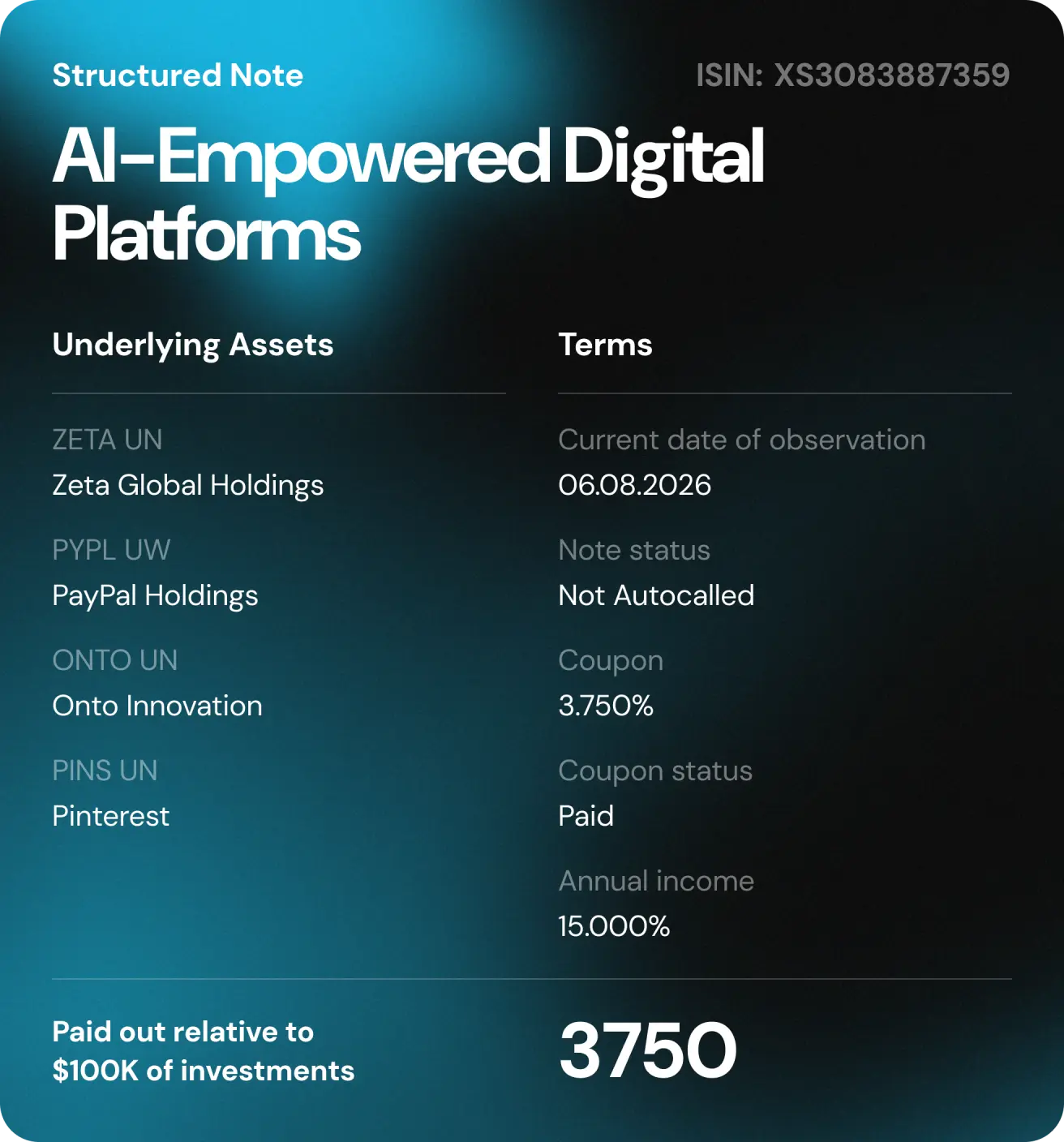
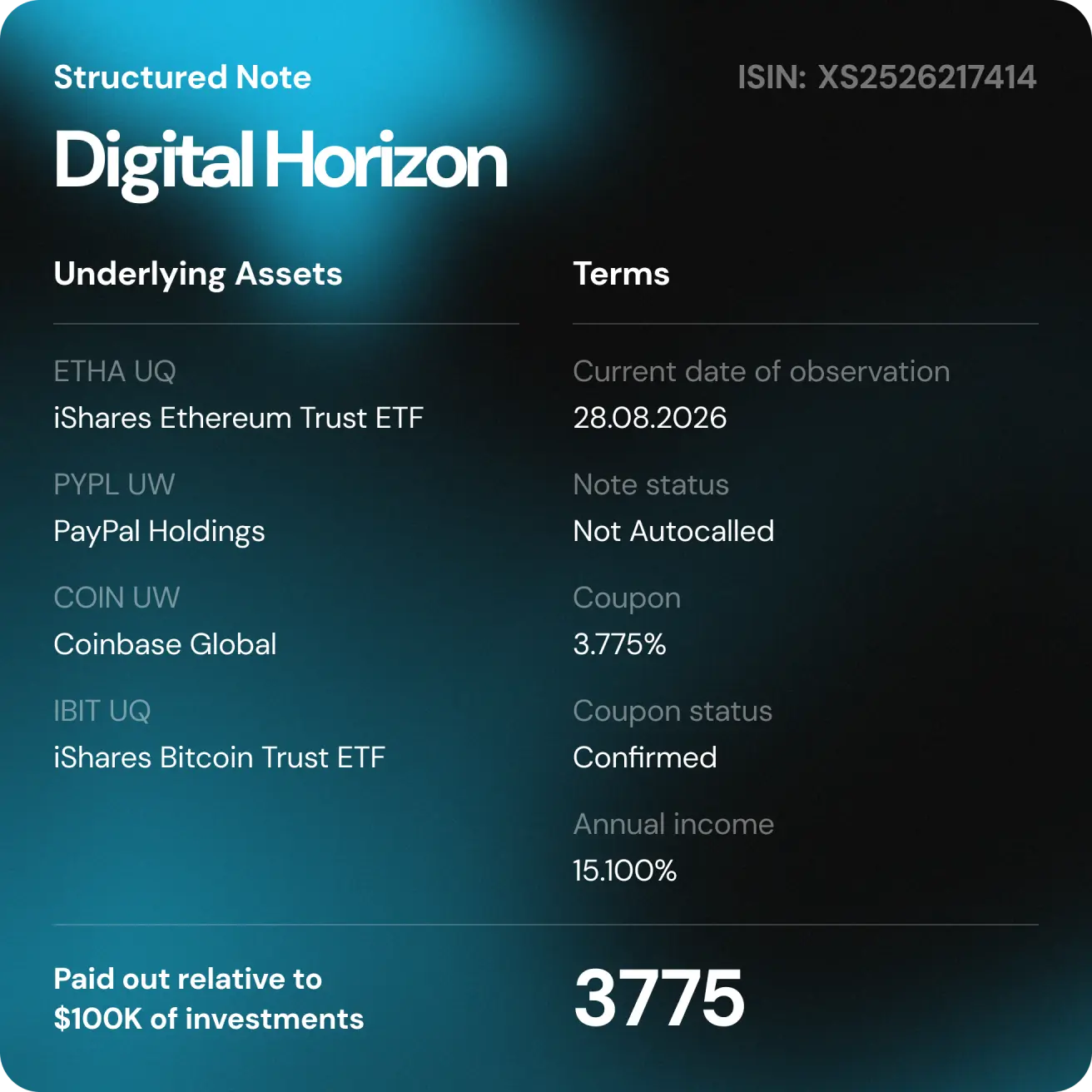
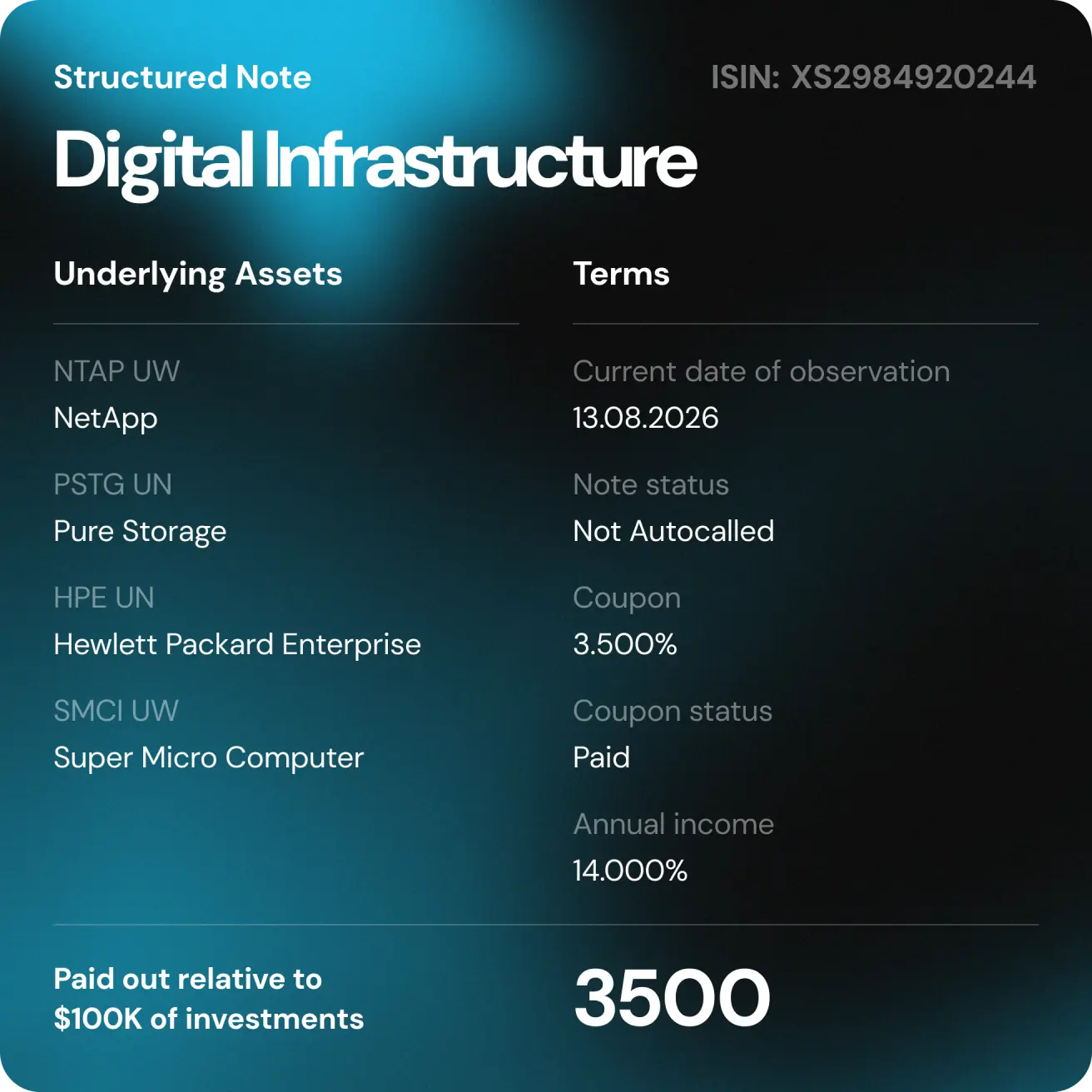
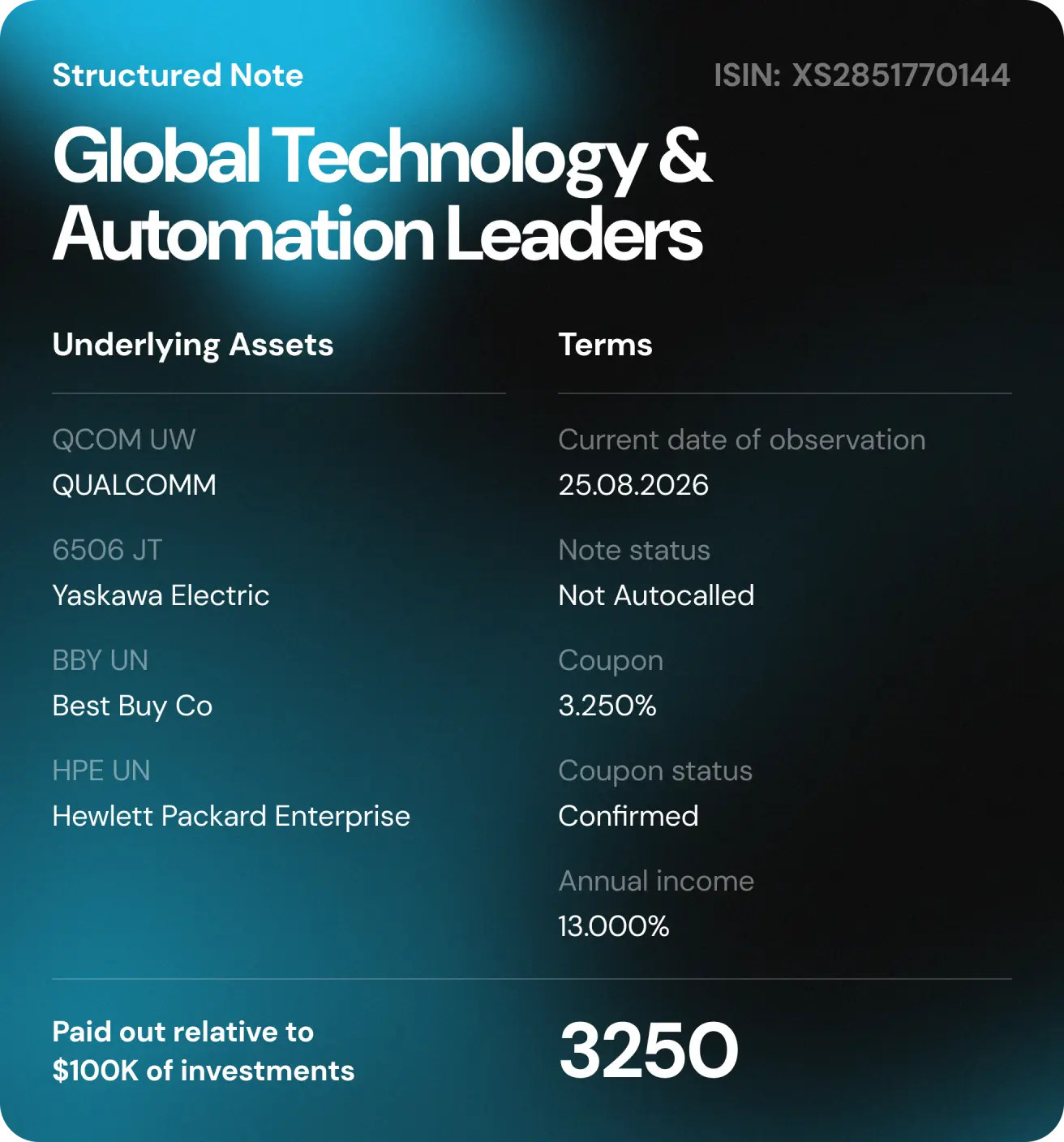
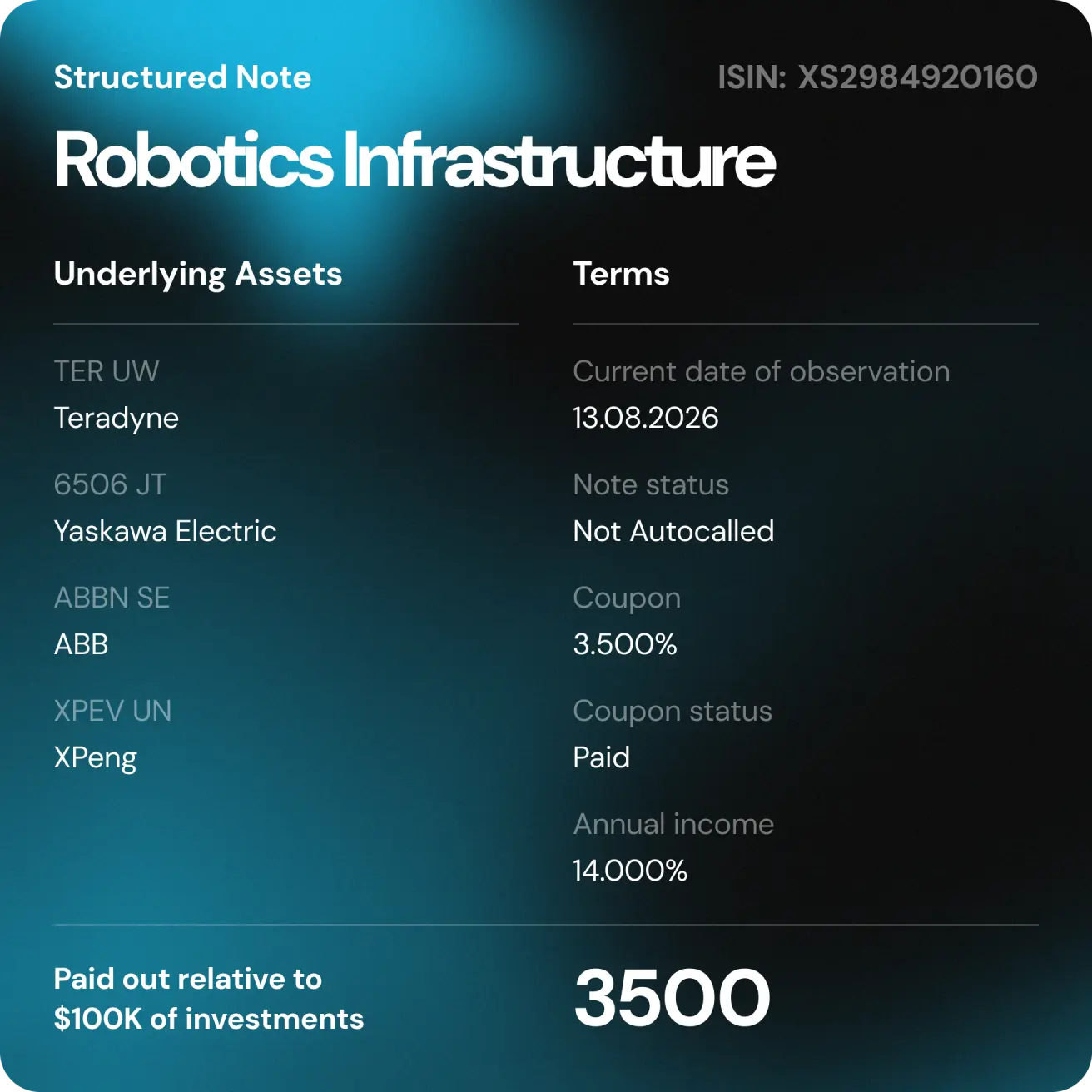
From market trends to the actual numbers. Below are the note cards for all observation dates that fell in August, grouped into three categories: Active — notes continuing to run, Autocalled — notes closed early, and those where the Memory Effect protective mechanism was triggered.
Each card includes:
- Basket composition: the underlying assets we are tracking
- Coupon status: whether the payment was confirmed for this period
- Actual income: how much the investor earned per $100,000 invested
Active Notes
Memory Effect
On three notes, some underlying assets were below the coupon barrier on the observation date. Under the note terms, coupons are not lost: they are recorded and will be paid once the underlying assets recover.
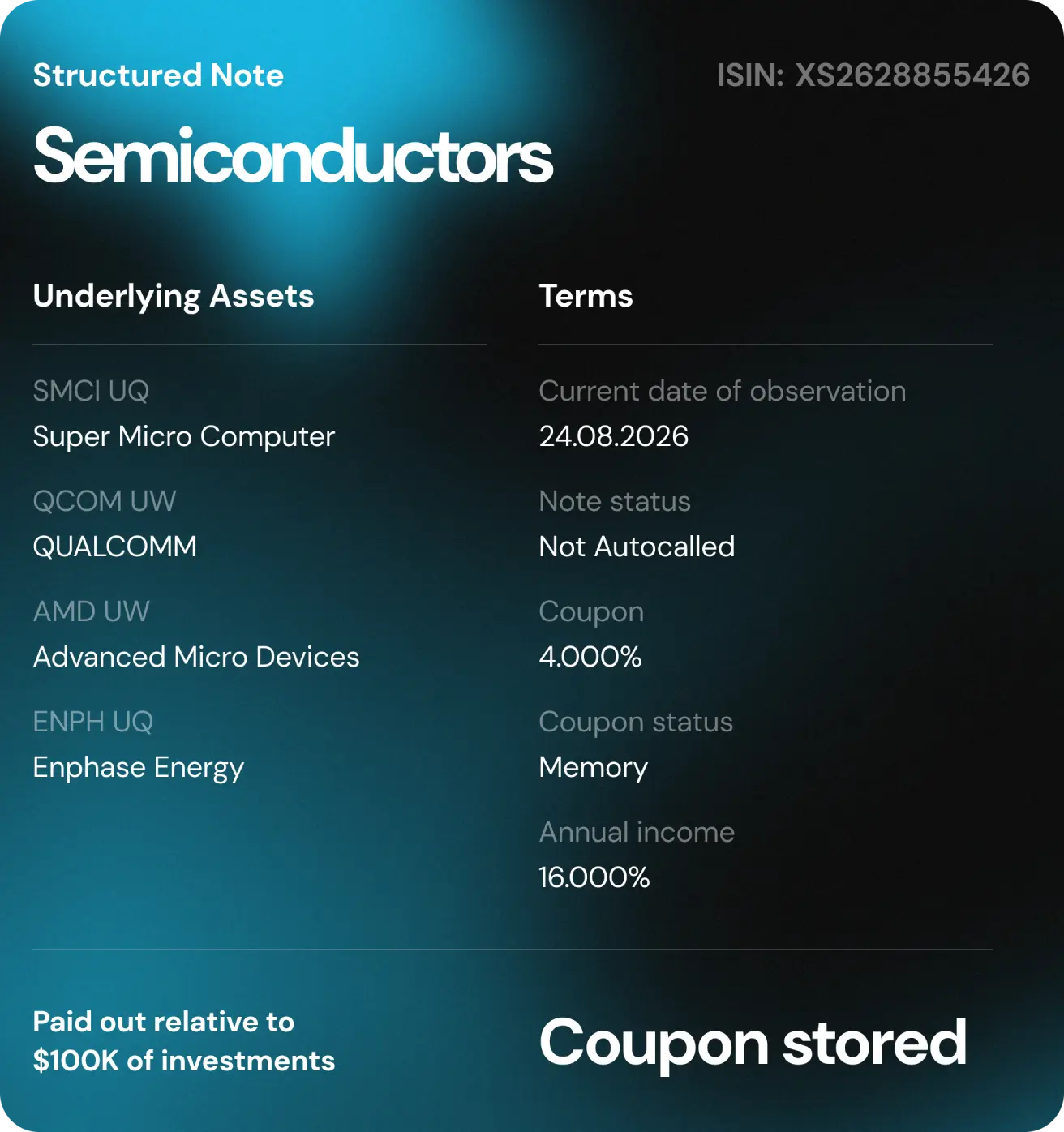
Why the Memory Effect was triggered
SMCI fully confirmed July's positive momentum. In its Q4 FY2026 earnings report (August 11), revenue came in at $11.1 billion (+93% year-over-year), and gross margin rose to 17.5% from 9.9% the prior quarter — above even the company's previously raised guidance. Non-GAAP EPS was $1.70 versus a consensus of around $0.96.
The forecast was even stronger than the results: for FY2027 the company is guiding to $65–72 billion in revenue against market expectations of roughly $54 billion, and for Q1 to $14.5–15.5 billion versus a consensus of $11.7 billion. Backlog hit a record above $60 billion in new orders, and the number of clients generating over $1 billion in revenue grew to nine from four.
Cash flow turned around notably: operating cash flow for the quarter came in at +$747 million, following a burn of roughly $6.6 billion the prior quarter. The corporate channel's share of revenue rose to 50% from 28%, making the business less dependent on a handful of large clients. On the earnings news, the stock gained roughly 9–10%.
ENPH found a new growth driver: the stock gained around 9.5% since its July earnings report, outperforming the S&P 500. The main catalyst was the announced expansion of US manufacturing and the launch of the IQ Solid-State Transformer platform for powering AI data centers — on that news alone, the stock rose about 6%. A steady stream of corporate announcements followed: pre-orders for the IQ Battery C80, the launch of an AI assistant within the app, and expanded presence in the Netherlands. Evercore ISI raised its price target from $37 to $41.
Operationally, the company is also stabilizing: non-GAAP gross margin improved to 46.8% from 43.9% in Q1, and free cash flow turned positive. The core US solar segment remains weak for now, but new business lines are laying the groundwork for a recovery.
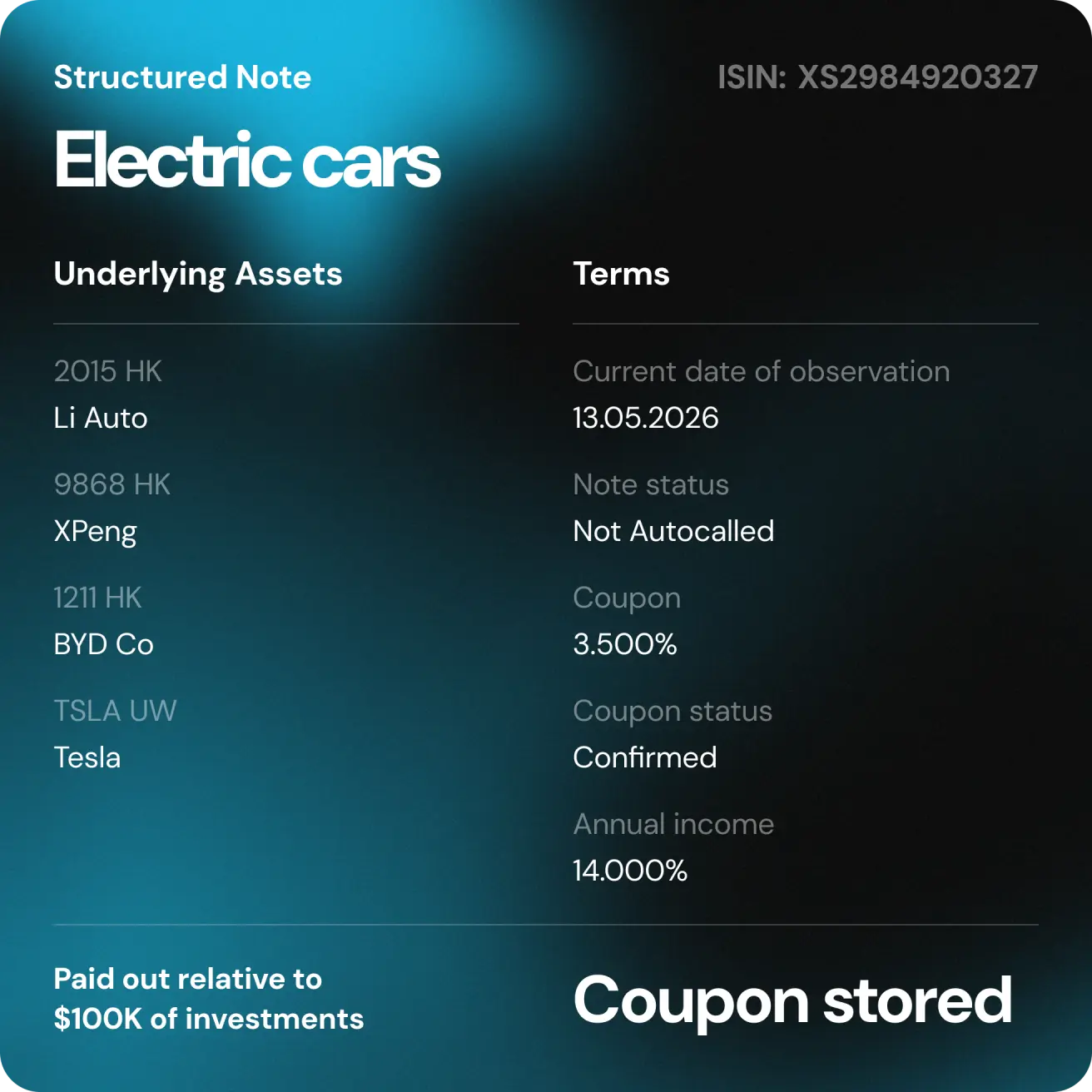
Why the Memory Effect was triggered
Li Auto saw the start of a margin turnaround. In its Q2 2026 earnings report (August 26), automotive segment margin recovered to 9.4% from 6.1% in Q1, and overall gross margin rose to 11.0% from 7.9%. Gross profit grew 56.9% quarter-over-quarter. The company's CFO attributed the improvement to the launch of the updated L9 model and expects further margin expansion in the second half of the year.
Deliveries stabilized: the company sold 98,330 vehicles — up 3.4% from Q1 and in the upper half of its own guidance range. The net loss narrowed by roughly a quarter, to 1.7 billion yuan. Q3 guidance of 95,000–100,000 vehicles would mark the first year-over-year growth in a long time.
The company's product cycle is essentially complete and moving into a payoff phase: the L lineup refresh is complete, the L9 Ultra version accounts for more than 85% of that model's sales, and the company expects the new L6 to sustain around 10,000 units per month.
The next catalysts land in September: the next-generation Li MEGA is scheduled for September 2, and the fully electric flagship L9 is set for mid-month. On international expansion, the company has flagged Dubai, Europe, right-hand-drive markets, and a local assembly partnership in Kazakhstan.
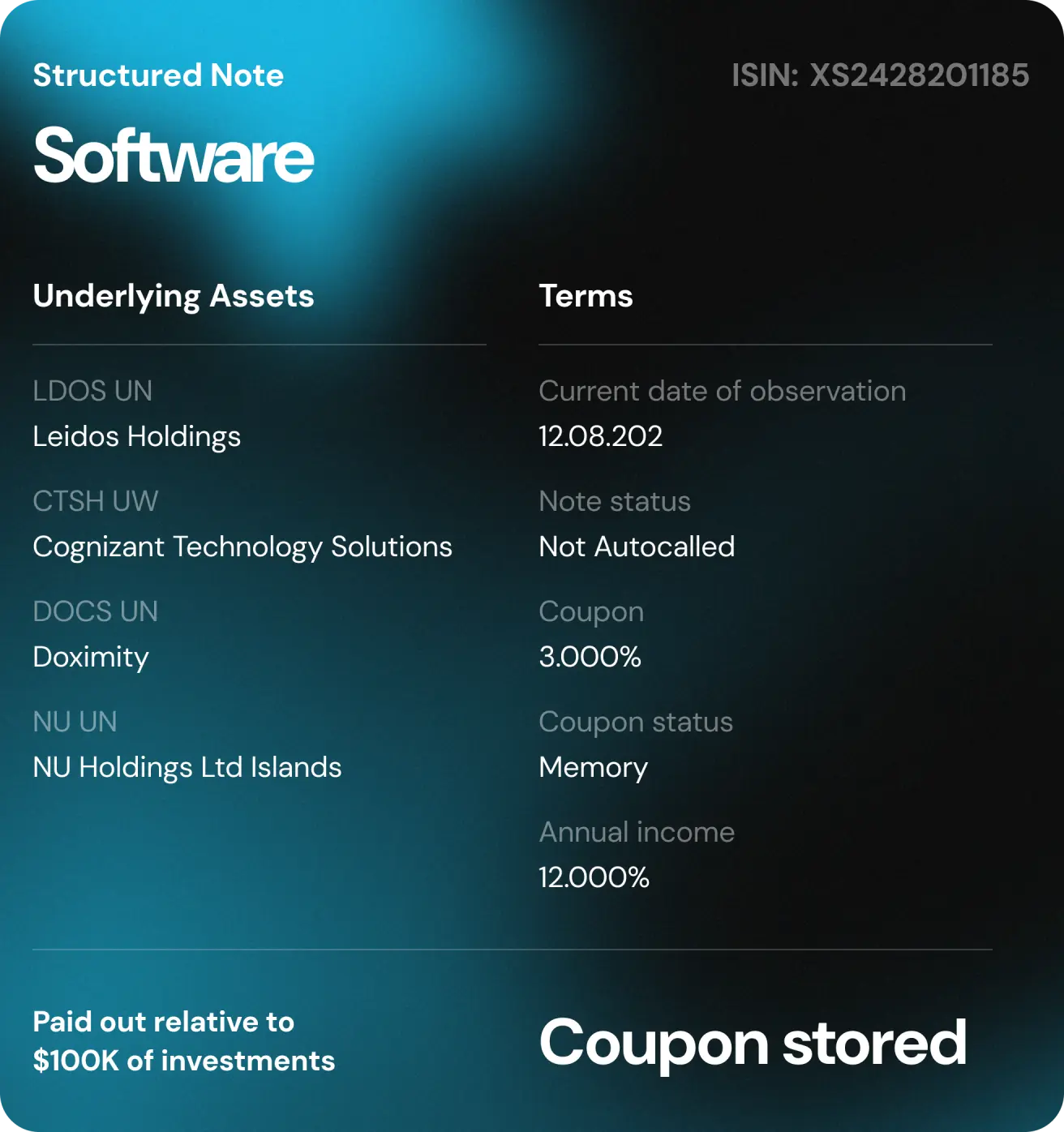
Why the Memory Effect was triggered
August was Doximity's best month in a long time. Its Q1 FY2027 earnings report (August 6) beat both the company's own guidance and analyst consensus: revenue came in at $156.6 million (+7% year-over-year), and adjusted EBITDA was $74.8 million at a 48% margin. Full-year revenue guidance was raised to $671–681 million.
The market reaction was extraordinary: the stock more than doubled at one point in after-hours trading and settled in the $29–32 range, without breaching the coupon barrier. The trigger was the CEO's statement that AI Search generates more than ten times the revenue it costs to operate.
The market re-rated the company's AI investments as a growth driver: AI Search queries grew more than 25% quarter-over-quarter, and physicians actively using the service grew more than 30% year-over-year. Additional third-party validation came from the NOHARM study, led by Stanford and Harvard, which found Doximity Ask had the lowest rate of clinical errors among US models. Starting in FY2028, the AI Search segment is expected to turn margin-positive.
The current situation across all three notes illustrates how the Memory Effect works in practice: even when individual names face temporary pressure, coupon income isn't lost — it's preserved until recovery. Each underlying asset has concrete fundamental reasons to expect a return above its barrier level over the life of the note.
Results and Outlook
August confirmed the effectiveness of Raison's protective strategies: capital preservation and coupon memory mechanisms allowed the portfolio to deliver stable returns despite localized volatility in certain sectors. In total, 8 notes reached observation dates during the month; 5 coupons were paid on schedule, and no autocalls occurred.
Even amid temporary corrections in individual names, the Memory Effect protects investor returns by preserving coupons until the market recovers. We continue building products around current macro trends, balancing strong yield potential with reliable protection.
Want to learn more about structured notes? Please contact our experts for a personal consultation.