 Русский
 Қазақша
 Eesti
EestiOn the Right Note: June 2026
Structured Notes Monthly Performance Digest

On the Right Note is Raison's regular analytical digest covering our structured notes portfolio. Each issue goes beyond the numbers — we break down the market context, explain how protective mechanisms work, and track strategy performance on real observation dates. The digest helps note holders better understand their assets and gives prospective investors a clear picture of how protection features work in practice.
June: New Fed Chair and Market Stabilization
In June 2026, financial markets adjusted to the change in Fed leadership against a backdrop of easing geopolitical tensions.
Between June 1 and June 30, 2026, observation dates passed for 10 notes:
- 10 notes remained active
- Memory Effect was triggered on 4 active notes
Market Overview
June was shaped by two key developments:
- New Fed leadership. Incoming chair Kevin Warsh maintained a moderately hawkish tone both ahead of his appointment and at his first press conference. The Fed held rates unchanged at its June meeting. Against this backdrop, the dollar index strengthened and falling oil prices reduced broader inflation risks.
- Geopolitical de-escalation. The signing of a framework agreement between the US and Iran meaningfully reduced tensions. Markets responded with measured moves, largely holding near May levels.
The technology sector painted a mixed picture: AI-linked companies continued to advance while software developers faced pressure. Markets are growing more sober in their assessment of AI as a replacement for established software solutions, though the sector's repricing continues.
Key indicators as of June 29, 2026 (year to date):
- S&P 500: +7.43%
- Nasdaq 100: +15.32%
- Russell 2000: +20.01%
- Euro Stoxx 600: +7.49%
- CSI 300: +5.69%
- VIX: 18.49
Impact on Structured Notes
Moderate market growth created a comfortable environment for structured products. Coupon notes tied to US equities and the technology sector held up well, with underlying assets maintaining a healthy buffer above protective barriers.
Notes in Detail
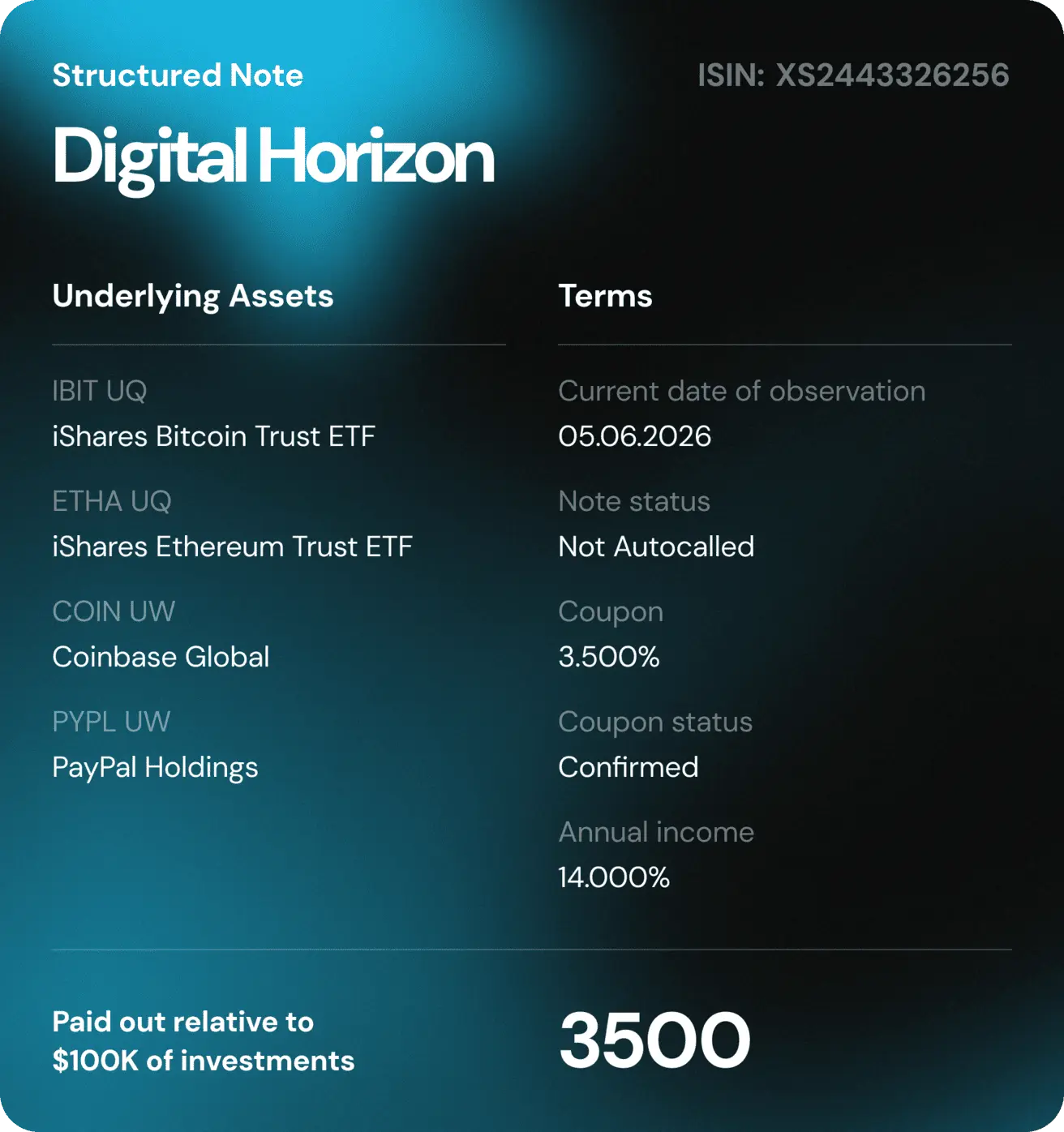
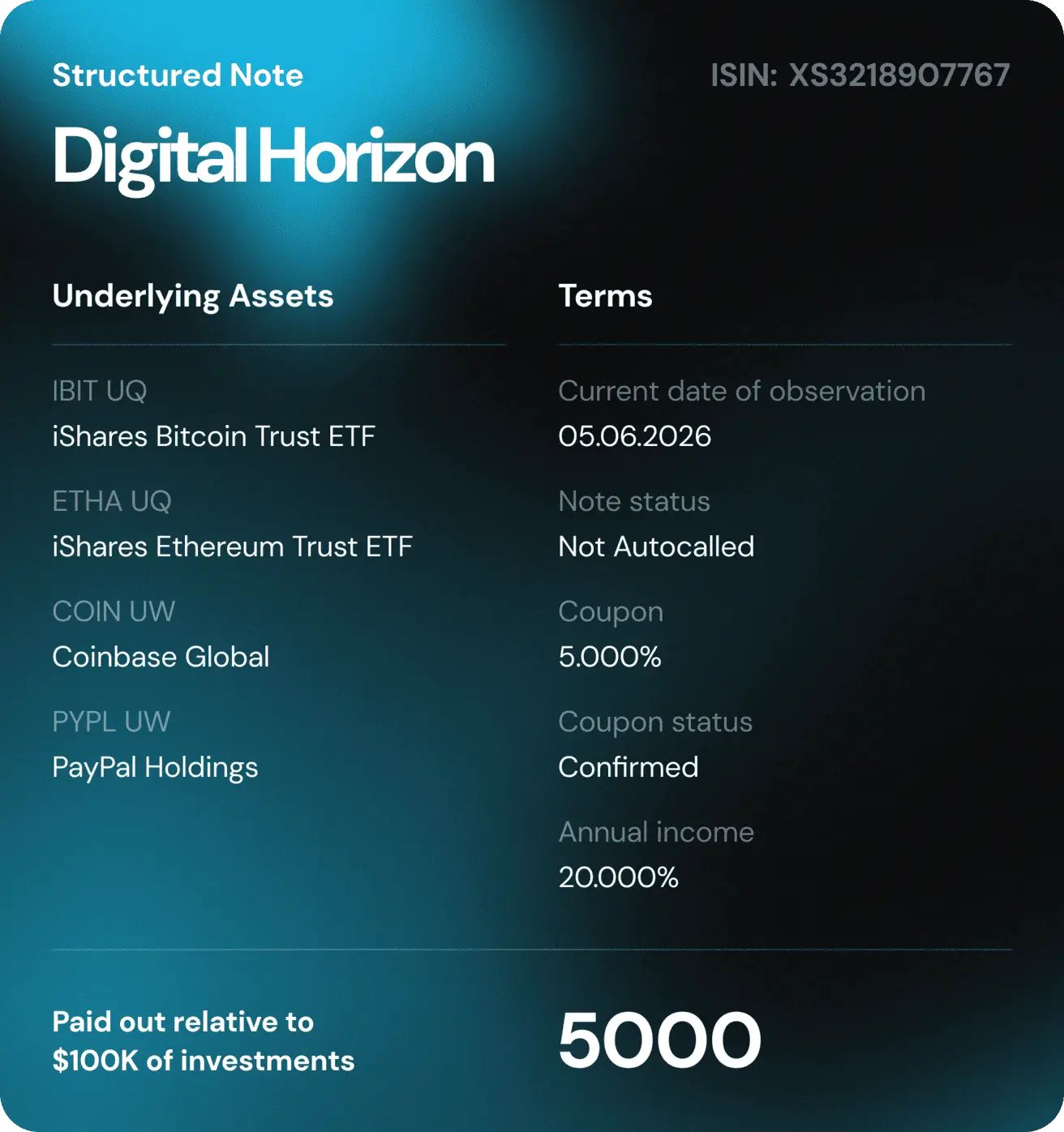
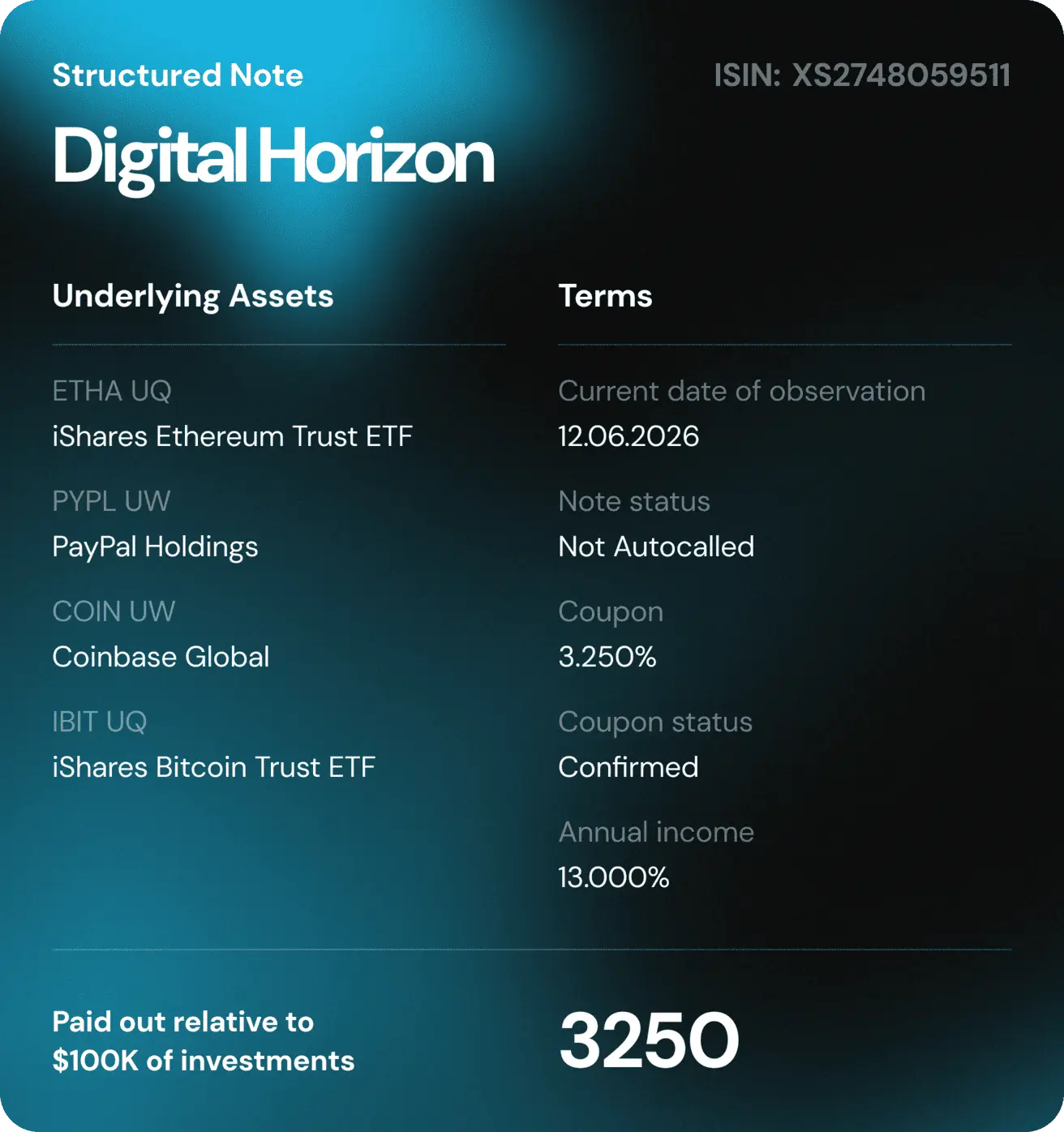
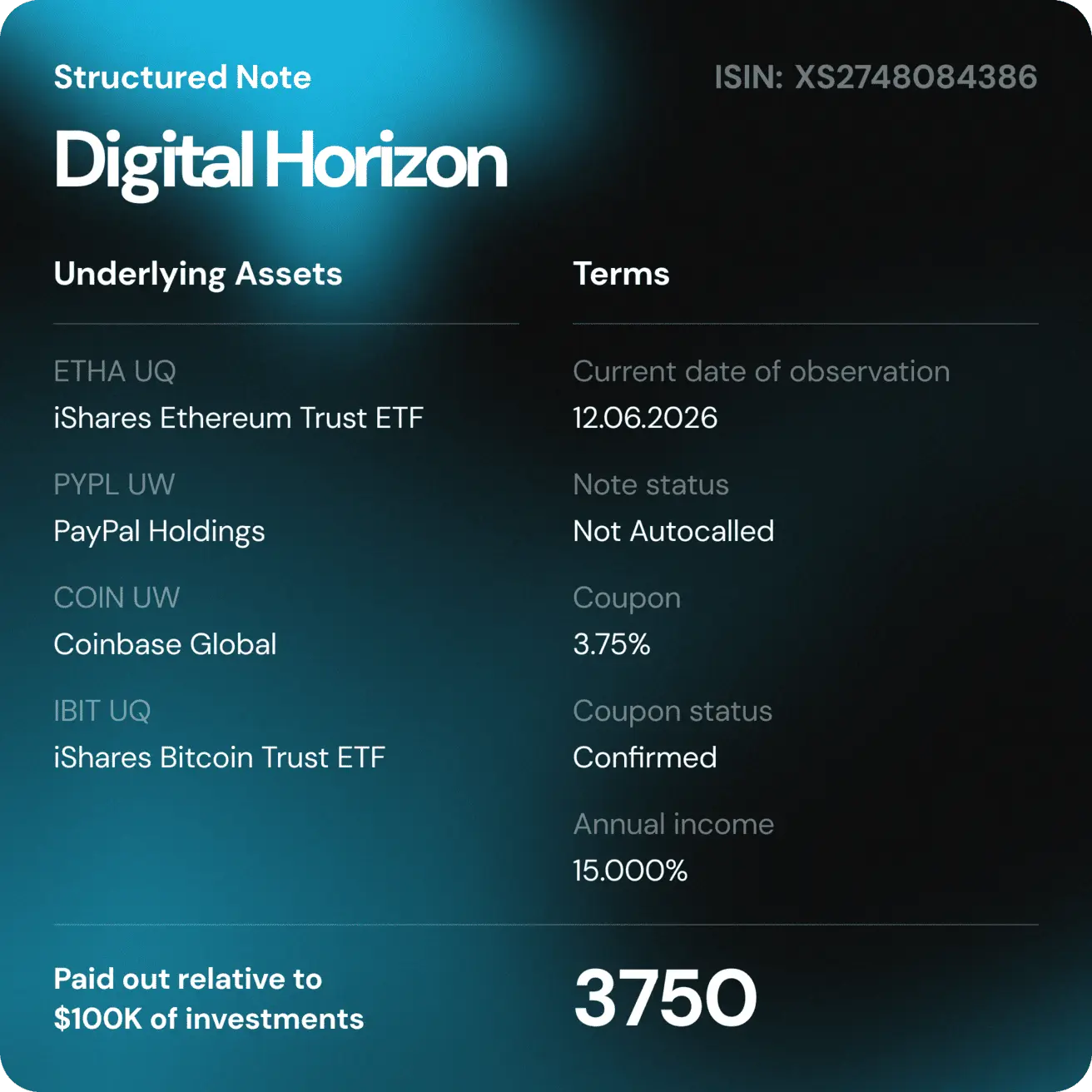
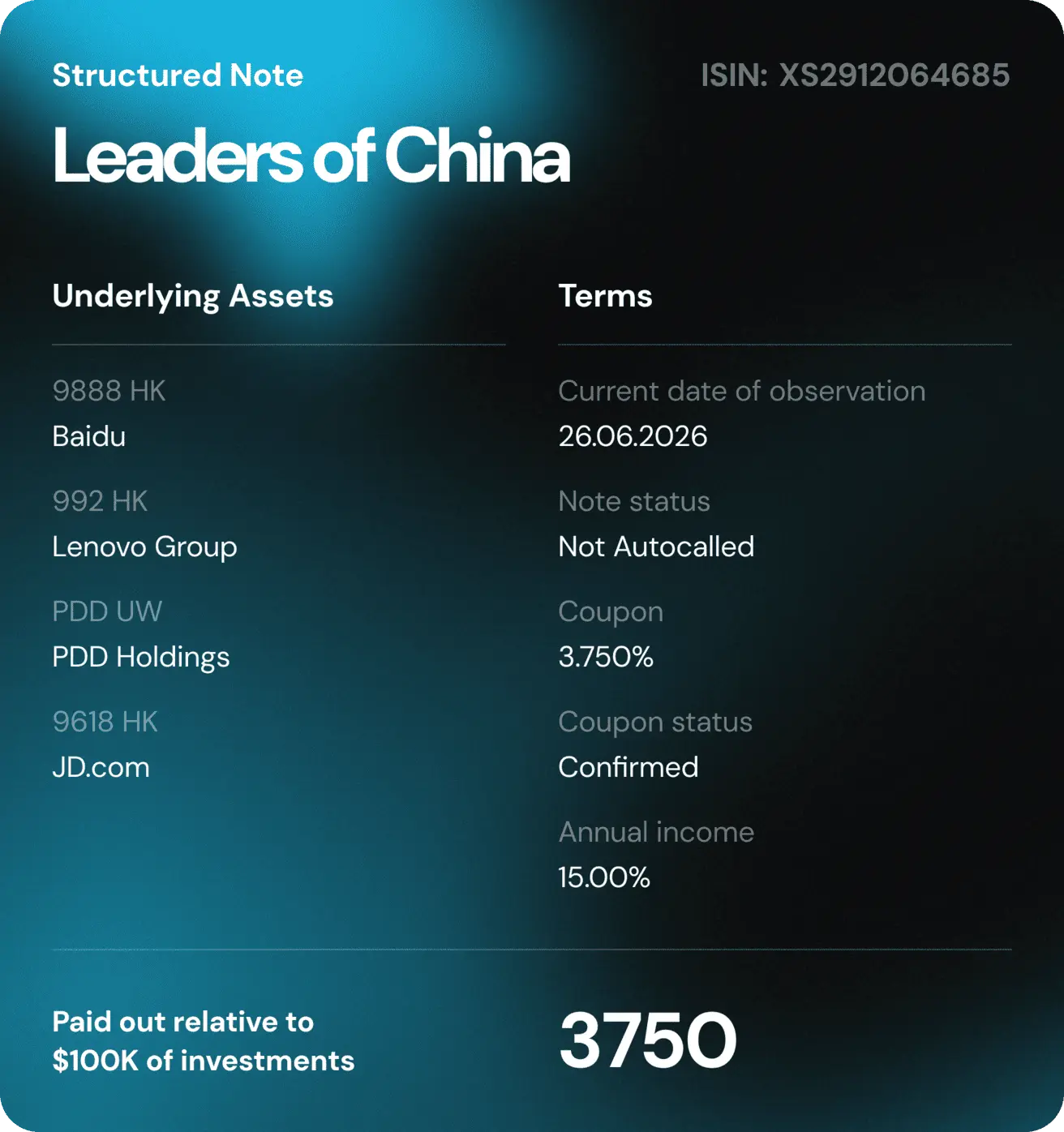
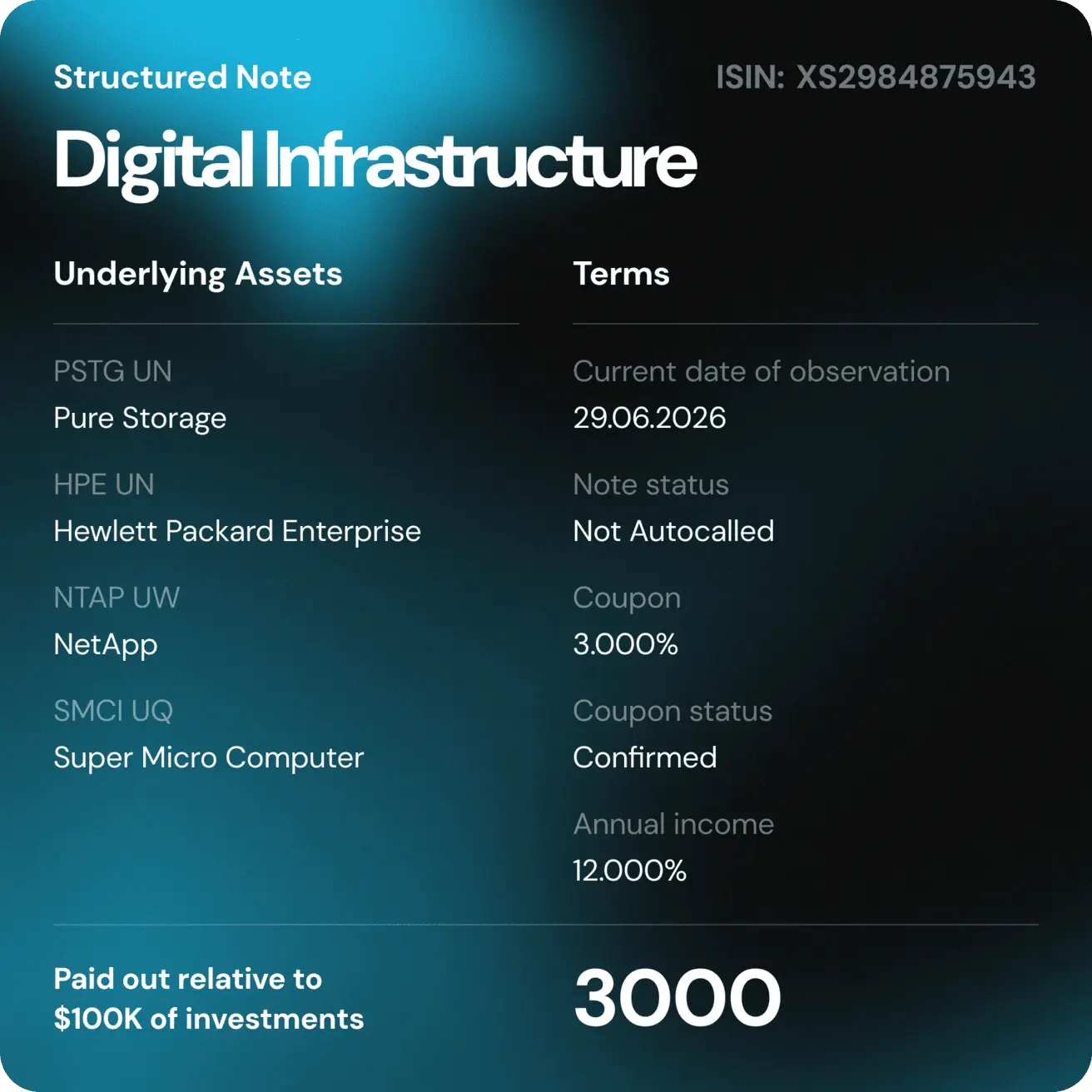
From market trends to the actual numbers. Below are the note cards for all observation dates that fell in June, grouped into two categories: Active — notes continuing to run, and those where the Memory Effect was triggered.
Each card includes:
- Basket composition: the underlying assets we are tracking
- Coupon status: whether the payment was confirmed for this period
- Actual income: how much the investor earned per $100,000 invested
Active Notes
Memory Effect
On four notes, some underlying assets were below the coupon barrier on the observation date. Under the note terms, coupons are not lost: they are recorded and will be paid once the underlying assets recover.
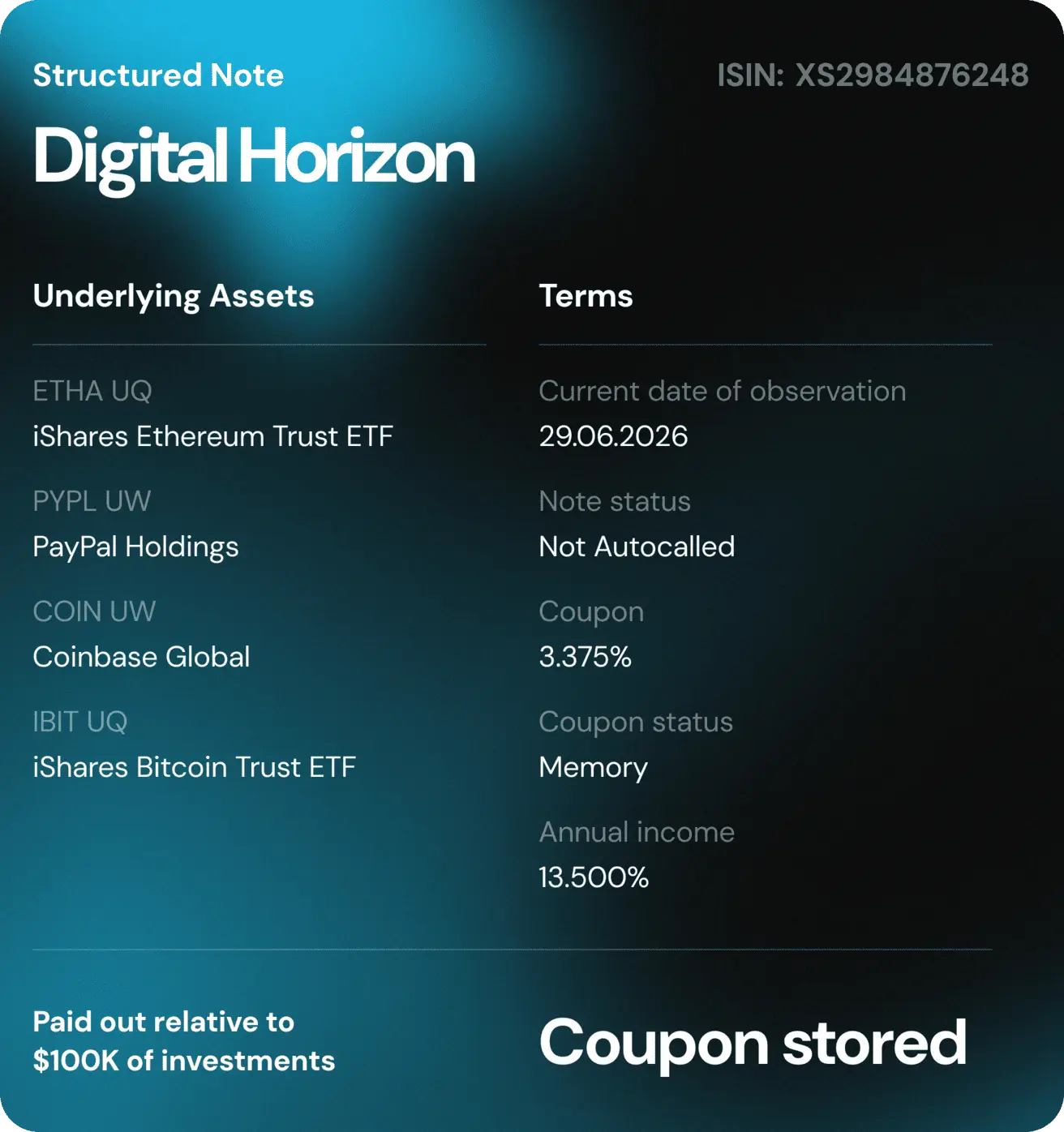
On the observation date, Coinbase was just barely below the coupon barrier — by a fraction of a percent. The company operates in the cryptocurrency market, and the pressure on its stock largely reflects the current phase of the crypto cycle: falling digital asset prices translate directly into lower transaction revenue for companies like Coinbase, since fees are denominated in cryptocurrency.
That said, the company is actively diversifying its business. Non-transaction revenue from premium subscriptions is growing 11.4% year over year, forming a stable income base regardless of crypto market conditions. In June, Coinbase launched a tokenized equities segment and became a co-founder of the new OUSD stablecoin standard alongside Visa, Mastercard, and BlackRock — moves that could substantially expand transaction volumes on the platform. A $2 billion share buyback program authorized for 2026 provides additional support for the stock.
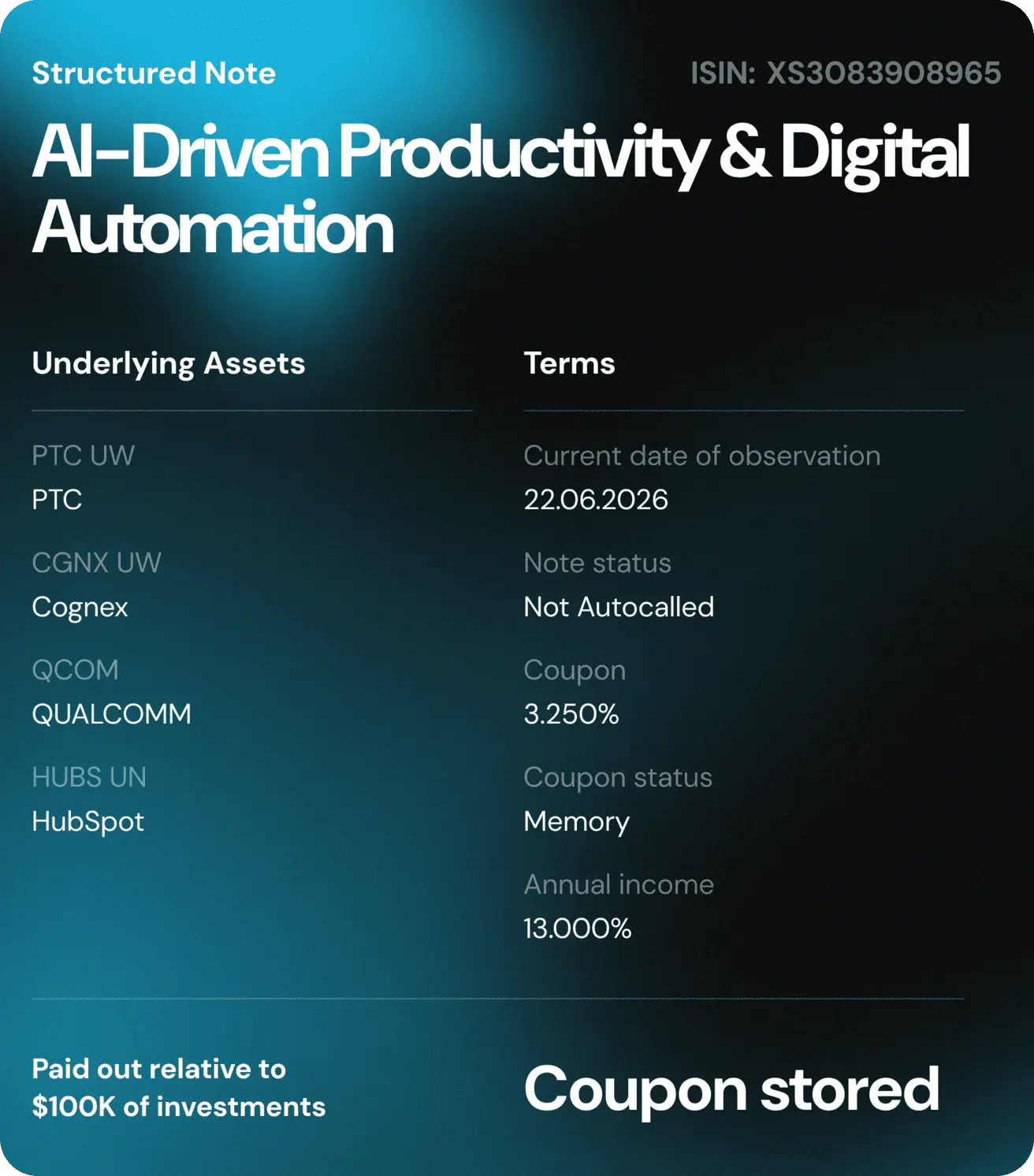
On the observation date, HubSpot was below the coupon barrier. The cause is not the company's business performance but a shift in market sentiment: since the start of 2026, the entire cloud software segment has been under pressure amid concerns that AI tools could partially replace solutions from companies like HubSpot. This has pushed HubSpot's valuation below levels typical for companies with comparable growth rates.
The underlying fundamentals remain firmly positive. Revenue grew 23% quarter over quarter, the company reached net profitability in 2025, and maintains positive cash flow. In Q1 2026 alone, HubSpot earned nearly two-thirds of its full-year 2025 net income. The 2026 guidance points to 18% revenue growth. Analyst consensus sees 47% upside from current levels.
A further positive signal: there are early signs of a sector-wide recovery. The broad SaaS index has already recouped 10–13% of the losses triggered by the repricing. As one of the most affected companies, HubSpot stands to recover alongside the industry.
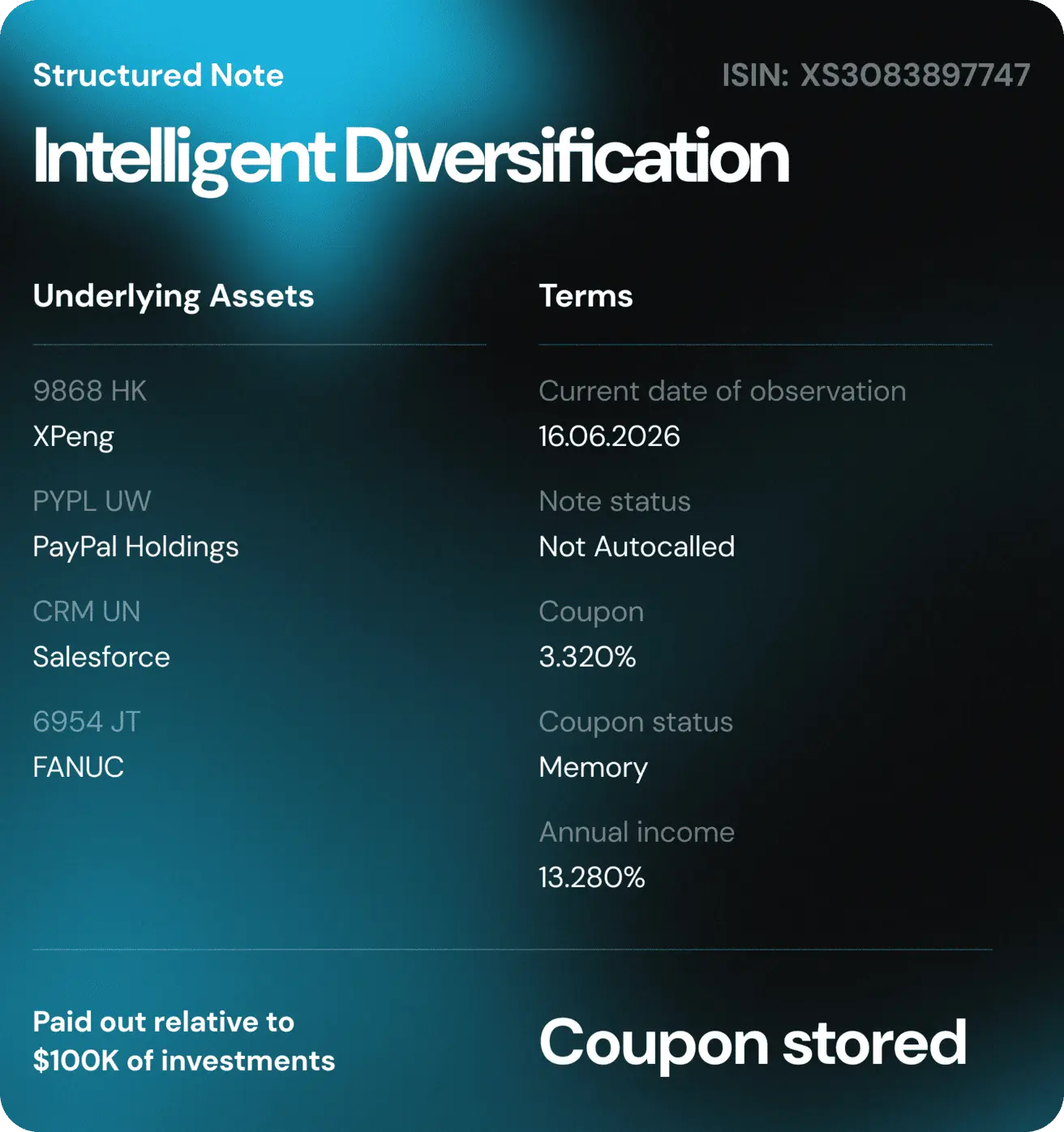
On the observation date, XPeng was below the coupon barrier. The stock correction largely reflects a broader shift in sentiment toward Chinese EV manufacturers. Additional pressure came from Q1 2026 results — traditionally the weakest quarter for the Chinese auto market due to the Lunar New Year, when sales decline across most manufacturers.
Fundamentally, the company continues to grow: margins are expanding, the balance sheet supports ongoing investment in AI and robotics, and analyst consensus points to upside from current levels. The partnership with Volkswagen on autopilot integration and a strong delivery forecast for Q2 create real conditions for the stock to return above the coupon barrier by the next observation date.
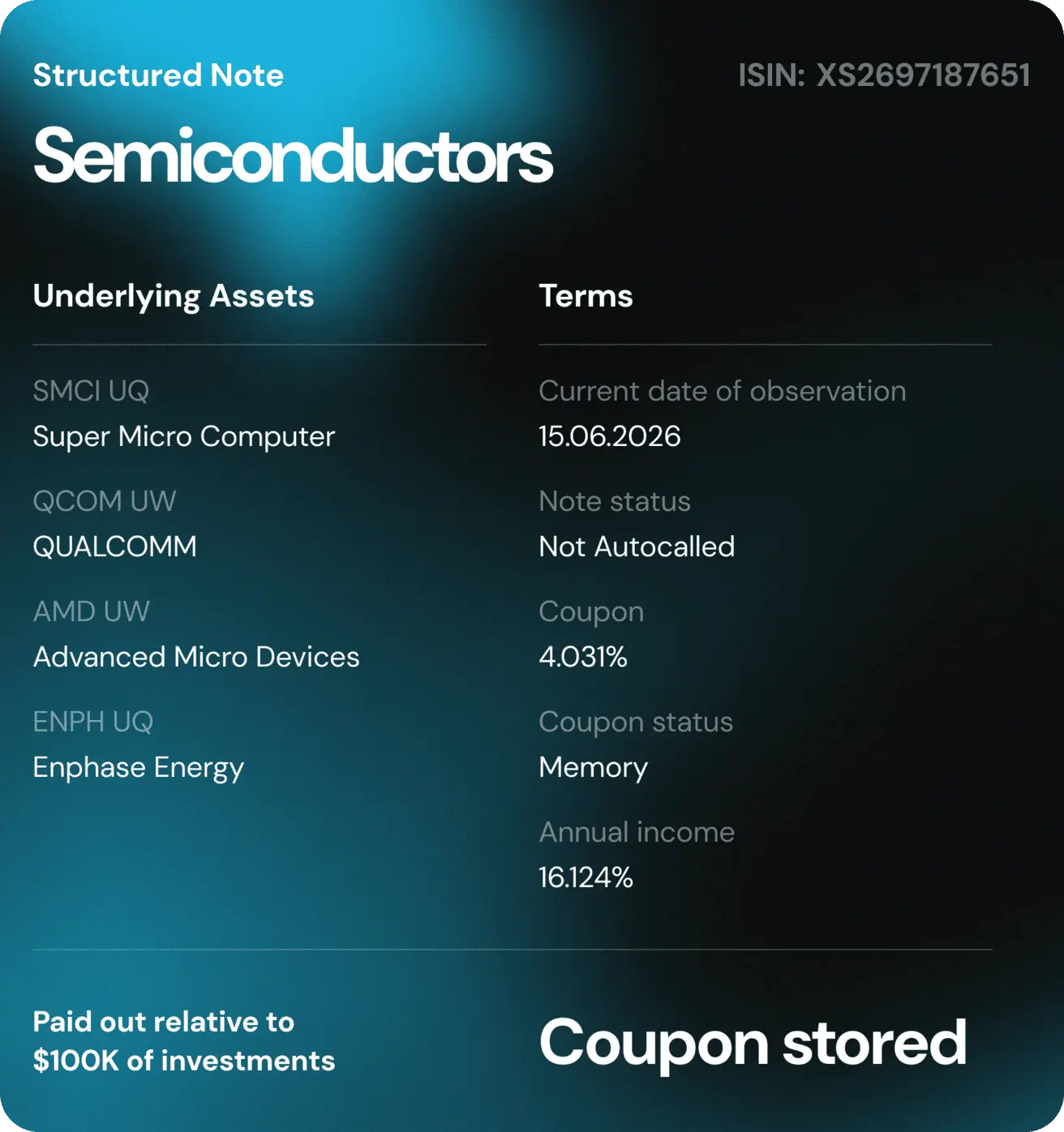
SMCI and ENPH were below the coupon barrier on the observation date. The situation for both assets has not changed significantly since our previous issues — the core thesis remains intact.
- On ENPH: the stock is up 46% year-to-date, and analysts are raising price targets. In late June, US regulators began considering a ban on foreign-made inverters, which is a potentially positive regulatory signal for the company.
- On SMCI: consensus targets a price roughly 30% above current levels. The company announced a partnership with a Turkish provider for AI infrastructure development and secured a NASA contract. The news flow is gradually improving — each item is modest on its own, but together they reflect the company's steady recovery from past audit and trade-related issues.
The current situation across all four notes clearly illustrates how the Memory Effect works: even when individual sectors face pressure, coupon income is not lost but is preserved until recovery. Each of the underlying assets has concrete fundamental reasons to expect returns above the barrier levels over the life of the notes.
Results and Outlook
June was a stable month for the structured notes portfolio: all 10 notes remained active with no autocalls. Memory Effect was triggered on four notes — coupons have been recorded and will be paid once the underlying assets recover.
We continue building products around key macro trends, combining strong yield potential with reliable protective mechanisms.
Want to learn more about structured notes? Please contact our expert to get a personal consultation.