 Русский
 Қазақша
 Eesti
On the Right Note: September 2026
Structured Notes Monthly Performance Digest

On the Right Note is a regular analytical digest on the Raison blog covering our structured notes portfolio. In each issue we look beyond the results to the logic behind them: the impact of the market backdrop, how protective mechanisms work, and how strategies behave on actual observation dates. The material helps note holders better understand their assets and helps investors assess how protective mechanisms work in practice.
September: tech giants held up the US market as the Fed and ECB raised rates
In September 2026, market performance depended on region and index composition: large US technology companies supported US indices, while small-cap stocks and the European and Chinese markets declined.
Between September 1 and September 30, 2026, 16 notes had observation dates:
- 13 active notes confirmed their coupons on schedule.
- The Memory effect was triggered on 2 active notes.
- 1 note was called early via Autocall.
Market backdrop and key events
Four themes defined September.
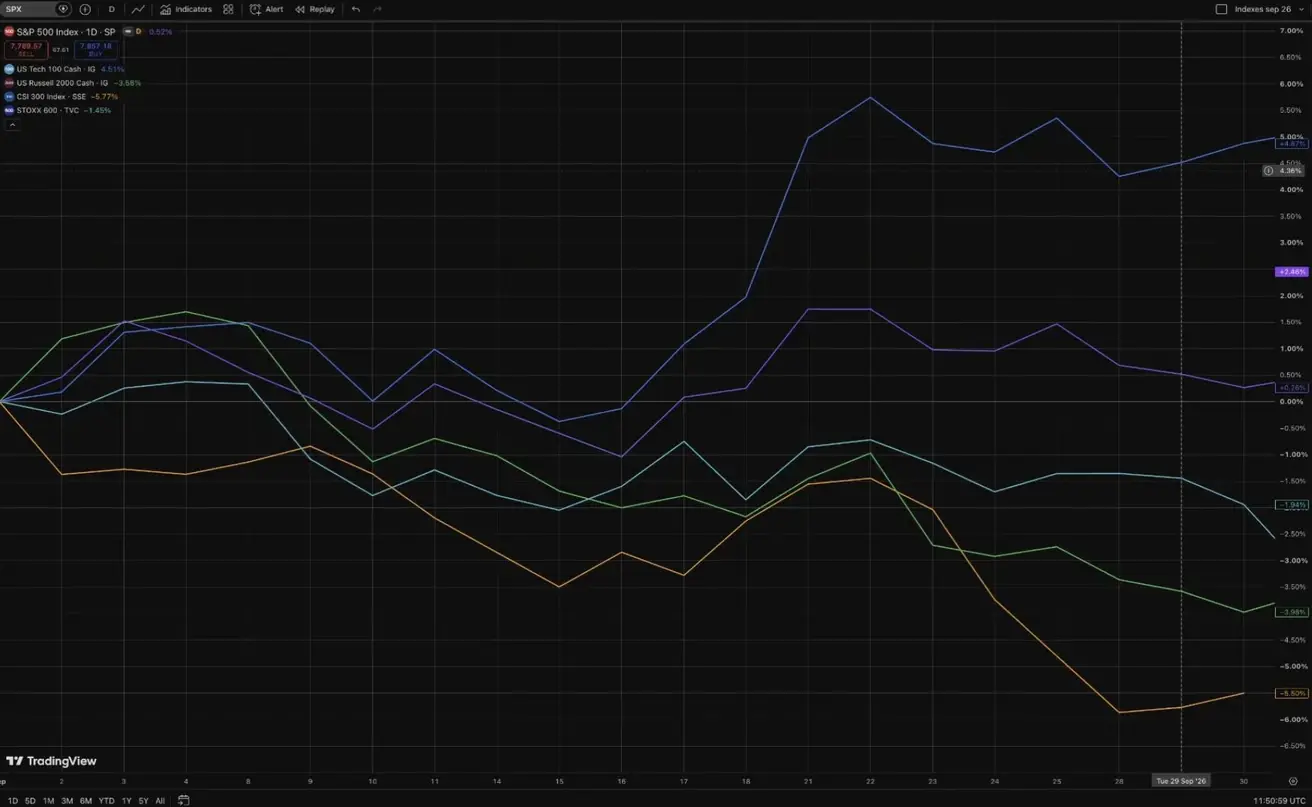
- Indices diverged. Large technology companies kept US indices in positive territory. Small-cap stocks, as well as the European and Chinese markets, declined. The S&P 500 gained 0.52% and the Nasdaq 100 gained 4.51%. The Russell 2000 fell 3.58%, the STOXX Europe 600 fell 1.45%, and the CSI 300 fell 5.77%.
- Semiconductors were among the month's leaders. The SOXX ETF gained 11.2%, despite declines in small-cap stocks and a sell-off in Chinese equities. The rally was driven by renewed demand for technology and AI stocks. However, the rally in the US remained narrow and did not extend to most of the market.
- The Fed and ECB raised rates. On September 16, the Fed raised its target rate range by 0.25 percentage points, to 3.75–4.00%. On September 10, the ECB raised its key rates by 0.25 percentage points for the second time, amid inflation concerns driven by high energy prices. The main refinancing rate reached 2.65%. The yield on 10-year US Treasuries rose by 54 basis points over the month, adding pressure on equities, especially small-cap companies.
- Volatility and oil prices rose. The VIX, the US market's expected volatility index, ended the month at 16.34 points versus 14.92 at the end of August. The index remained relatively low, but the market began to price in higher risks. The average WTI price rose to $97.31 per barrel from $83.90 in August, and on September 30 oil closed at $90.42. Oil supplies through the Strait of Hormuz and other routes remain a major source of uncertainty amid the conflict in the Middle East.
Key indicator performance (as of the end of September 2026):
- S&P 500: September −0.78%, year to date +11.56%
- Nasdaq 100: September +3.11%, year to date +20.64%
- Russell 2000: September −5.90%, year to date +11.51%
- STOXX Europe 600: September −3.10%, year to date +6.50%
- CSI 300: September −5.46%, year to date −7.63%
- VIX (volatility index): ≈16.34 points at month-end
Data as of the close on September 30, 2026; ranges August 31–September 30 and December 31, 2025–September 30, 2026 (TradingView).
Impact on structured notes
Market performance in September depended on region and index composition. Large US technology companies supported the S&P 500 and Nasdaq 100, while small-cap stocks and the European and Chinese markets declined. Against this backdrop, notes with baskets of large US stocks showed more resilient performance: by the end of the month, their underlying assets remained further from the coupon barriers.
Notes in detail
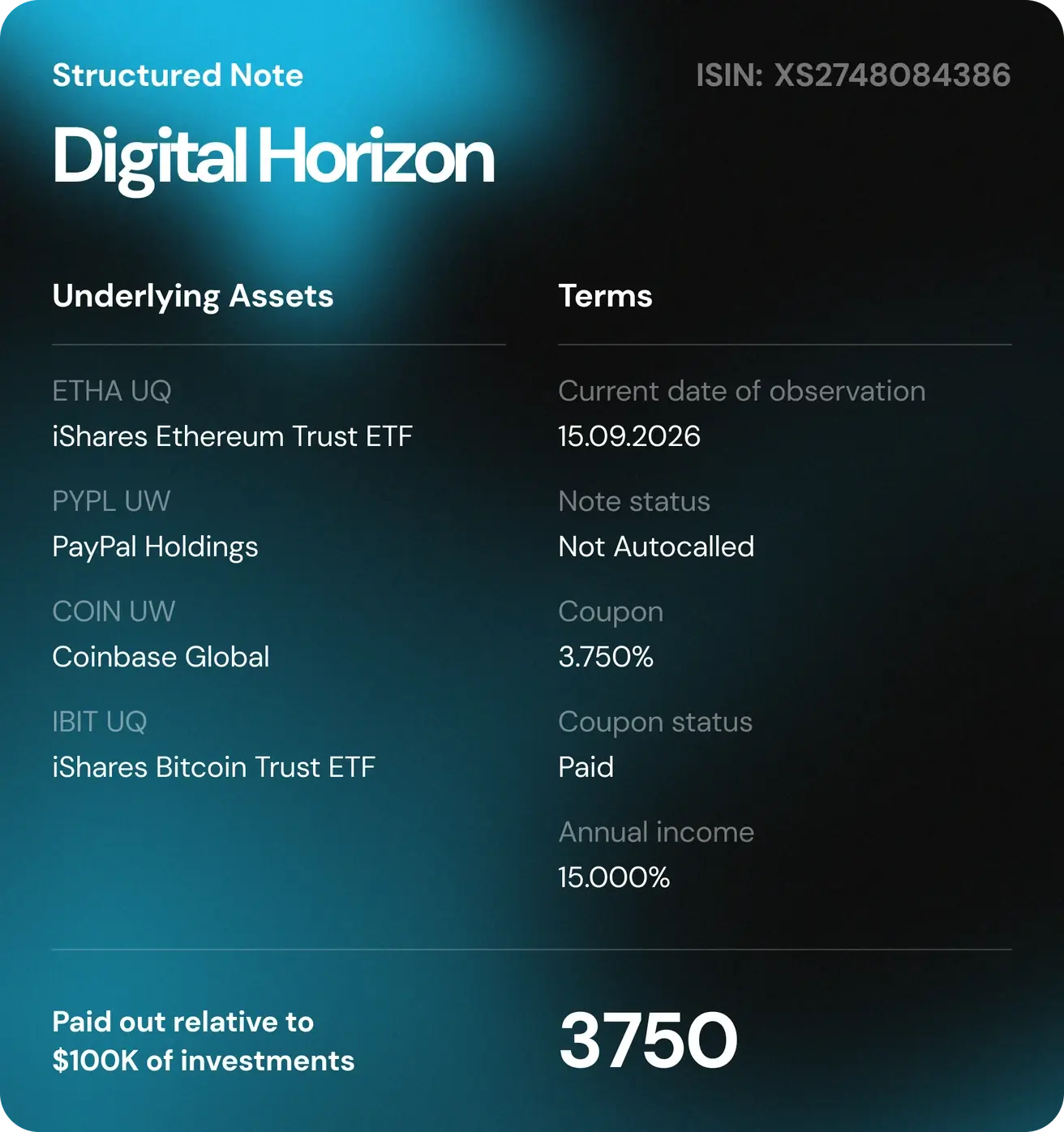
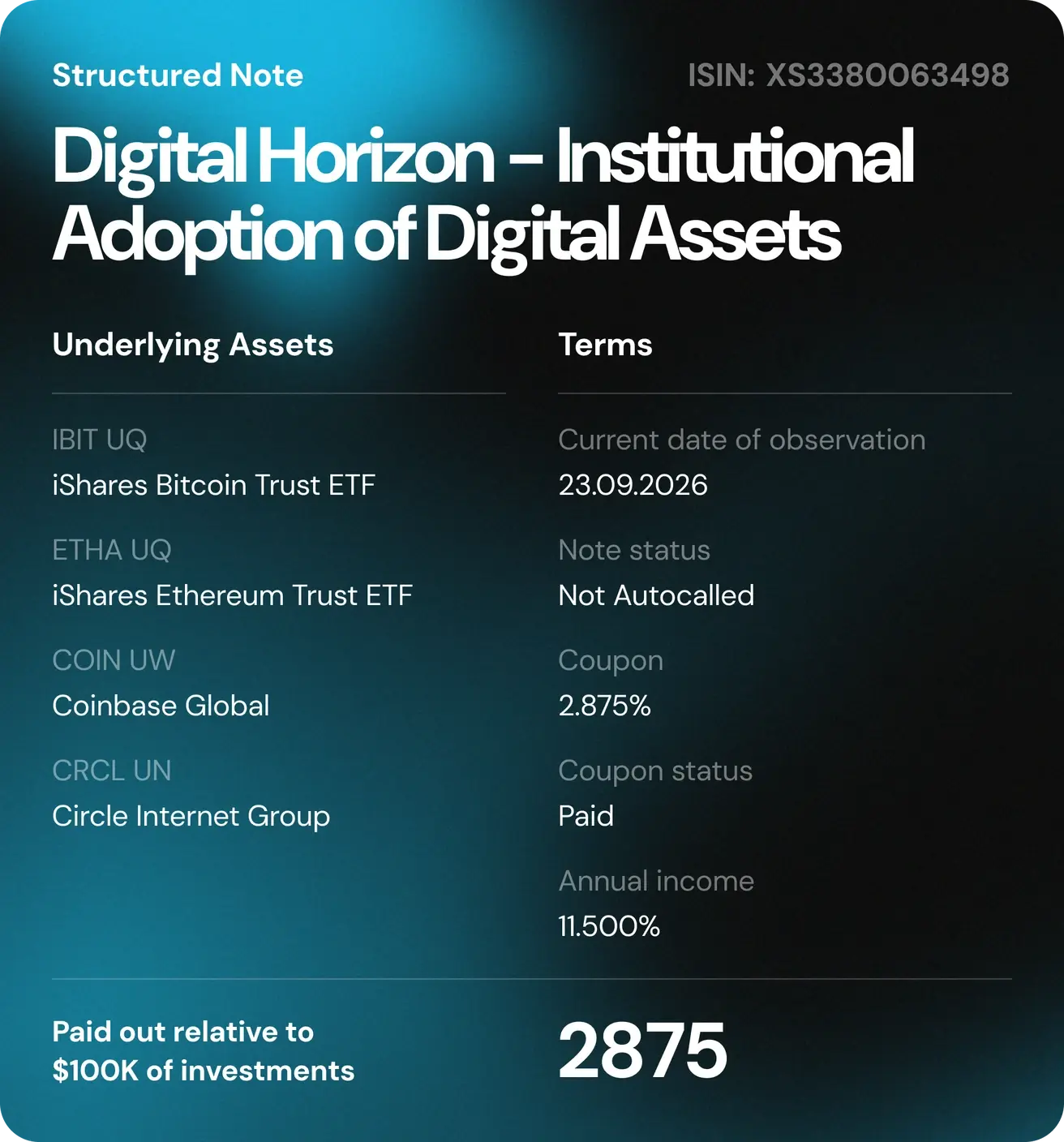
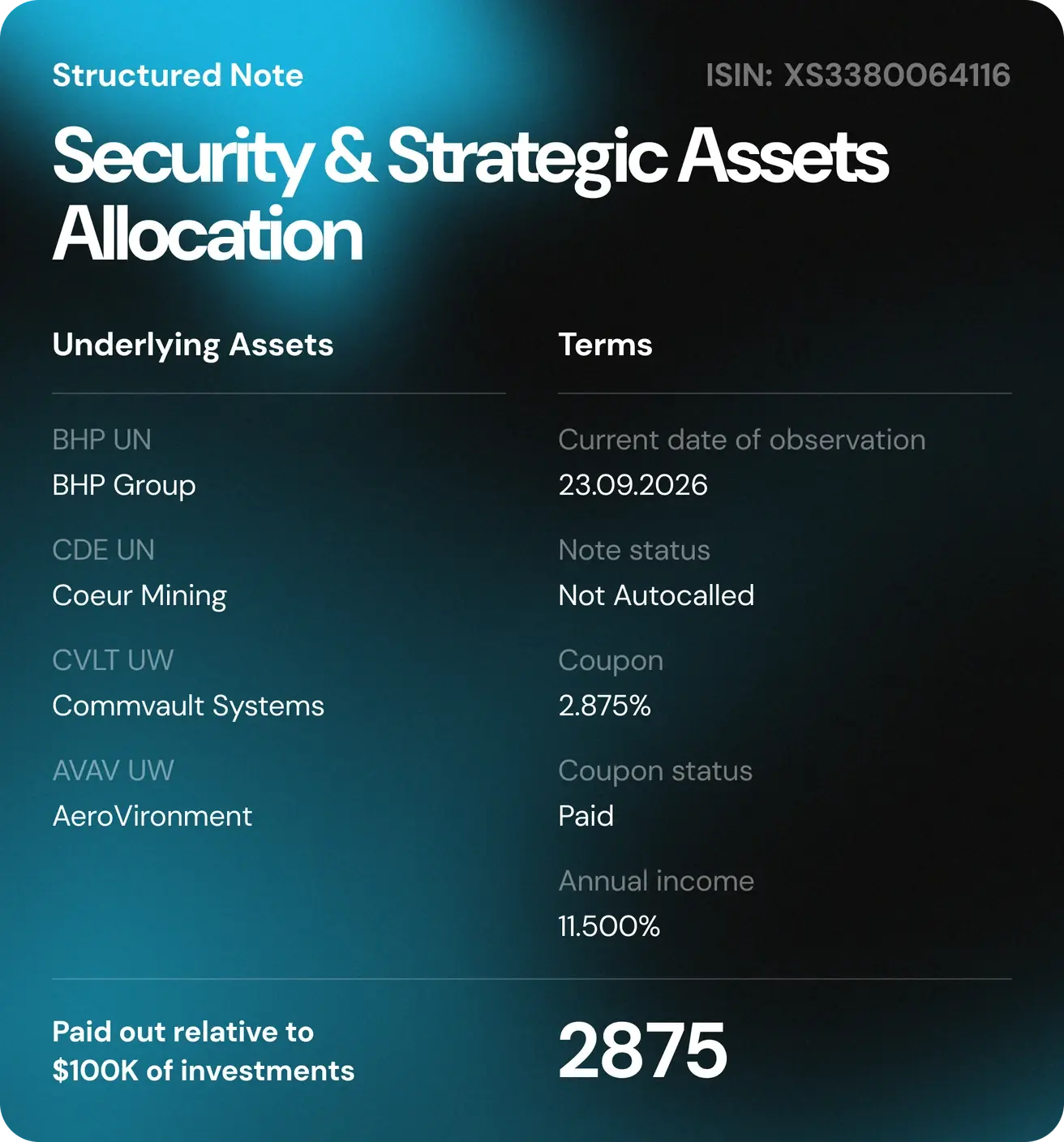
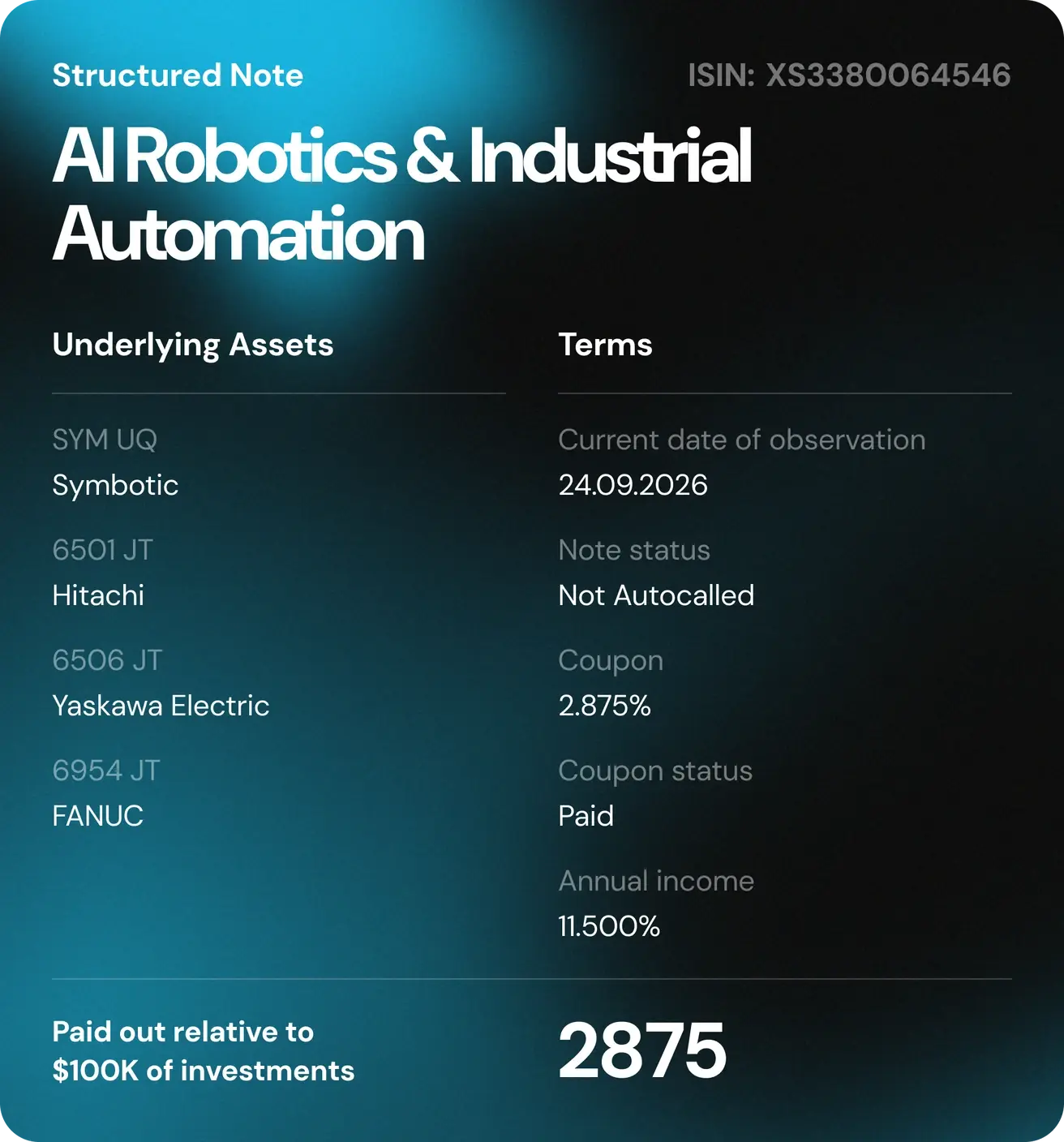
We now move from market trends to specific figures. Below are the cards for notes that had an observation date in September. We have grouped them into categories: Active notes continue to run, Autocalled notes were redeemed early, and the remaining notes triggered the Memory Effect protective mechanism.
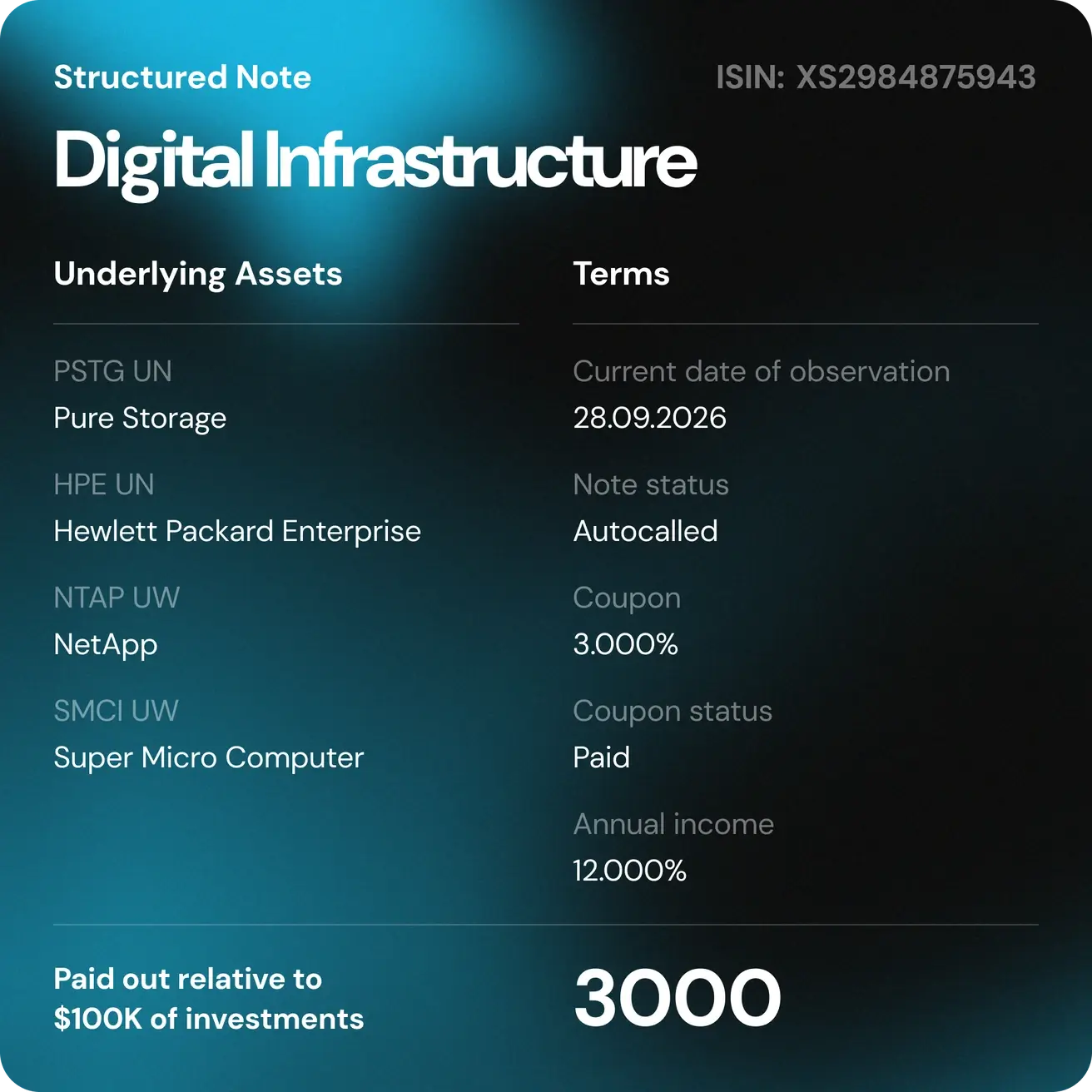
Autocall means the automatic early redemption of a structured note. On observation dates, we check whether all underlying assets are at or above the autocall level. This level is set in the note's terms. If the condition is met, the note is redeemed, and the investor receives the invested amount and the coupon. Importantly, all note conditions are tested against the worst-performing asset in the basket: if one stock has risen while another has fallen below the autocall level, there will be no early redemption.
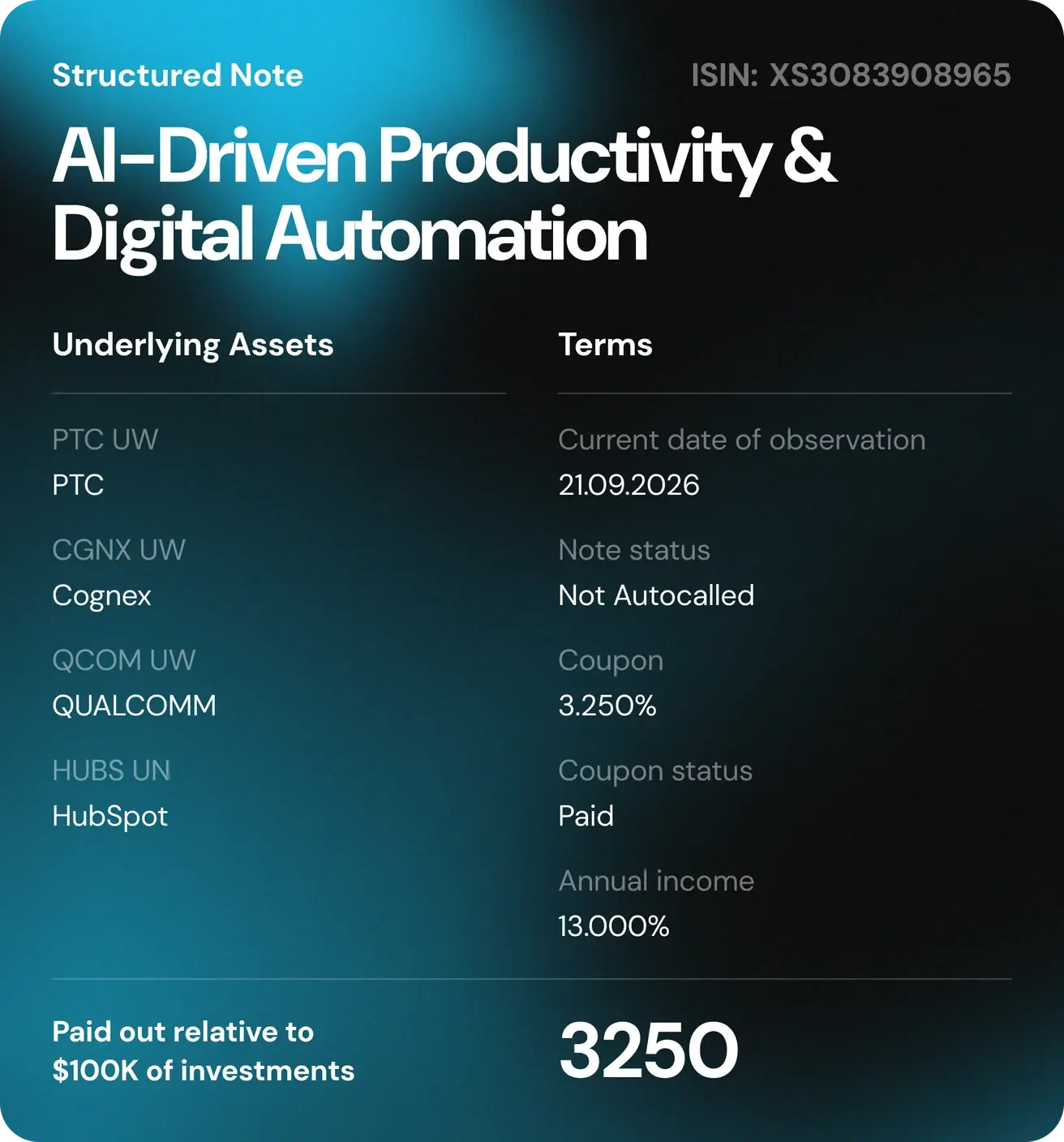
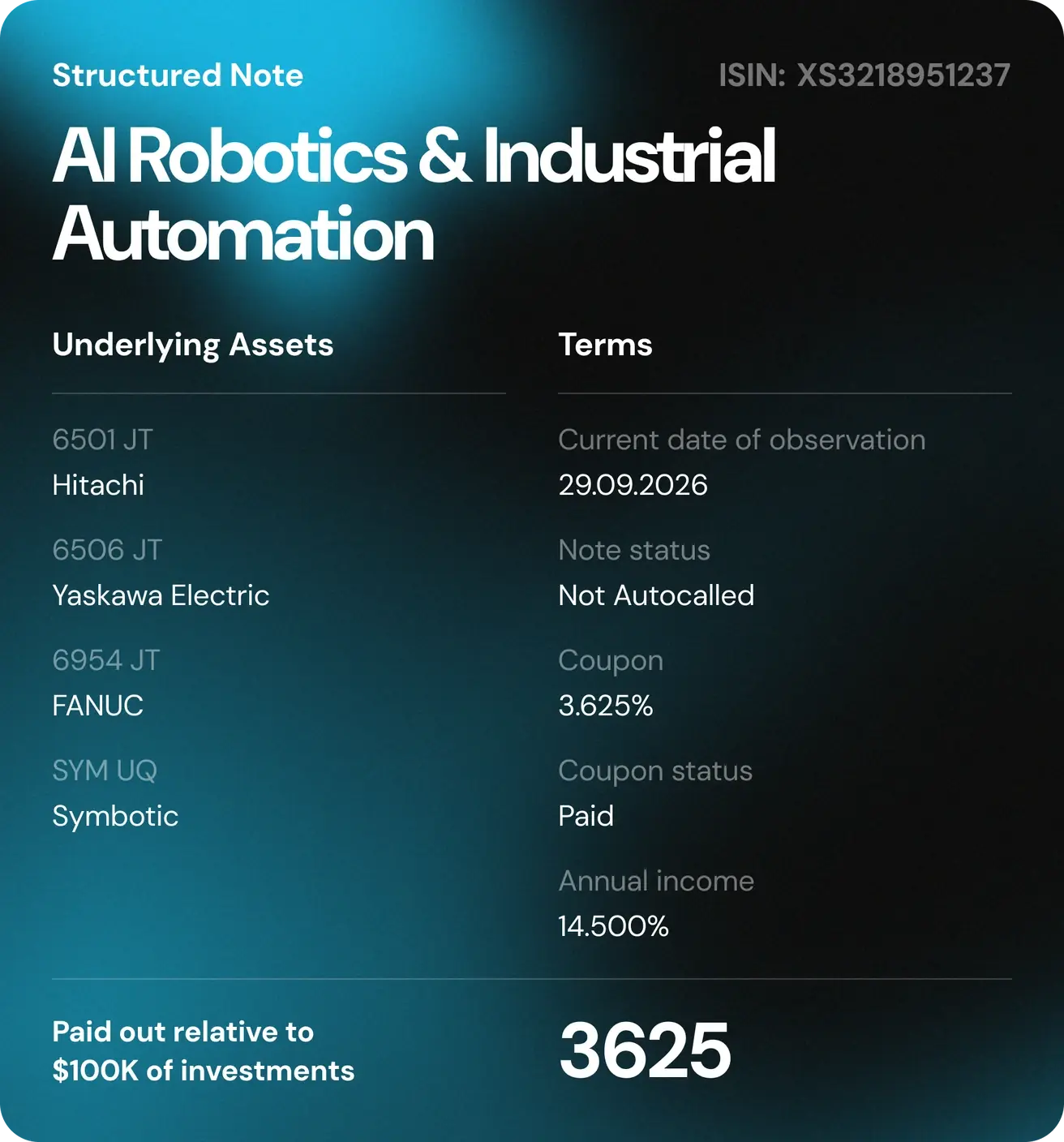
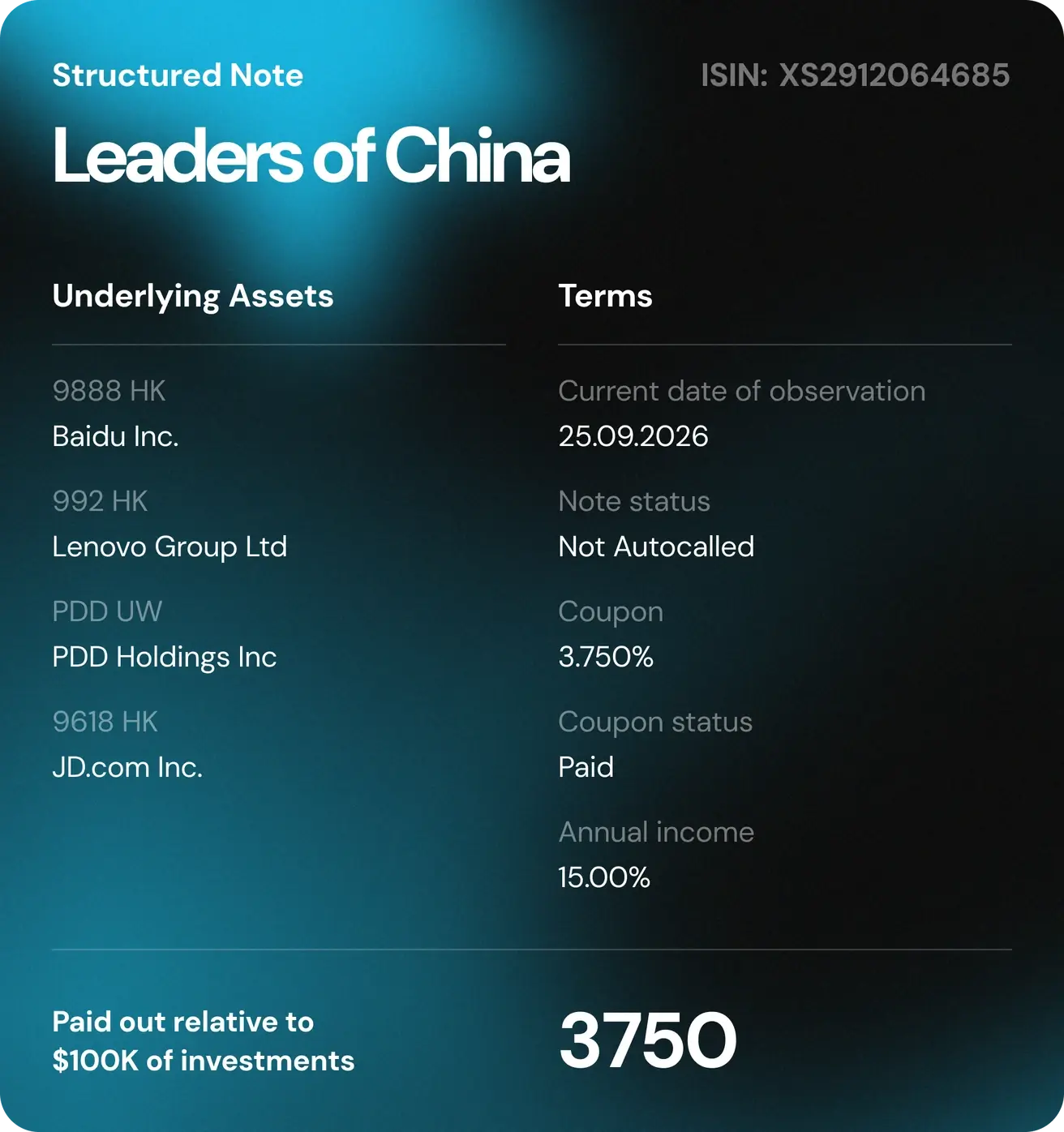
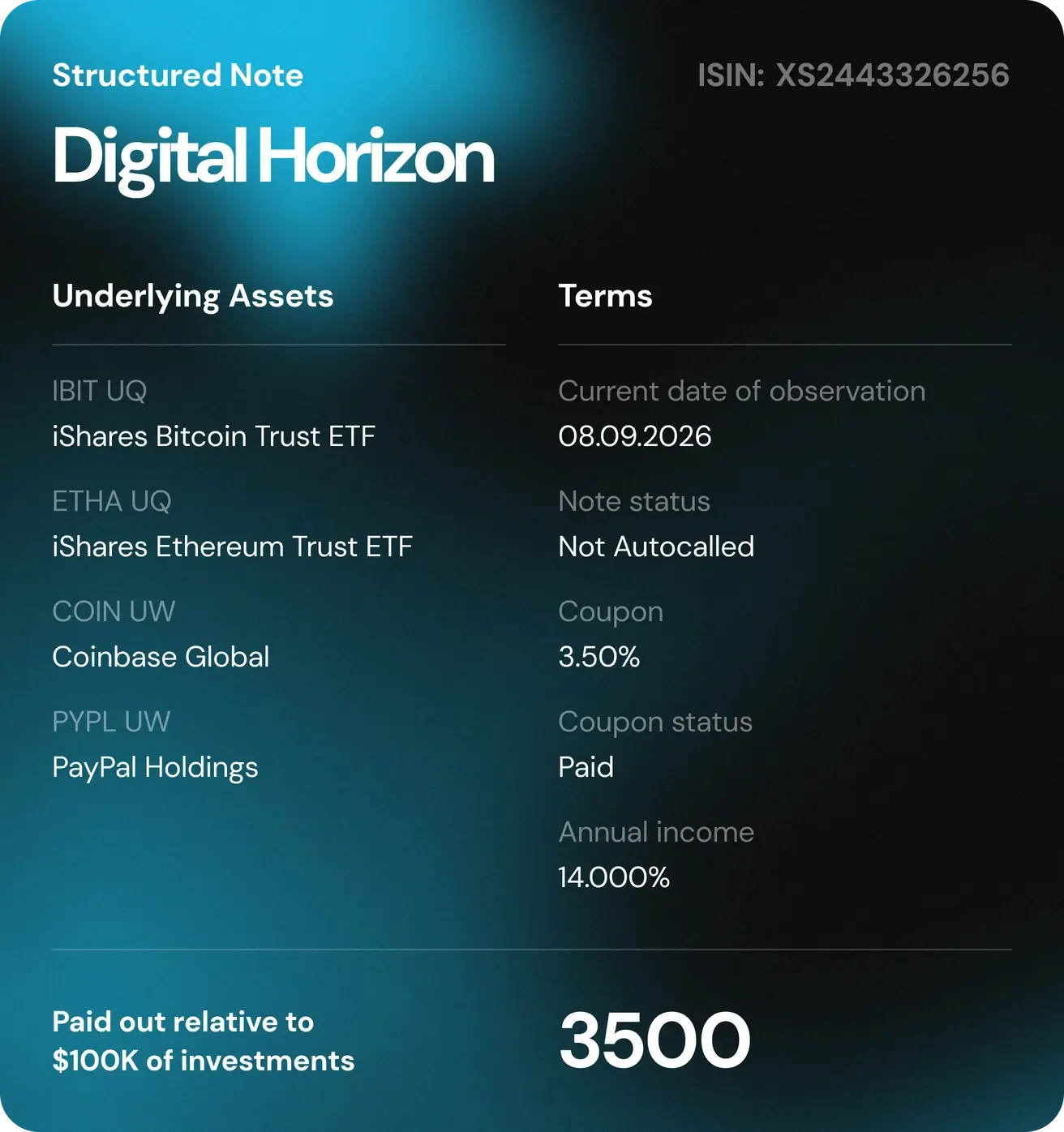
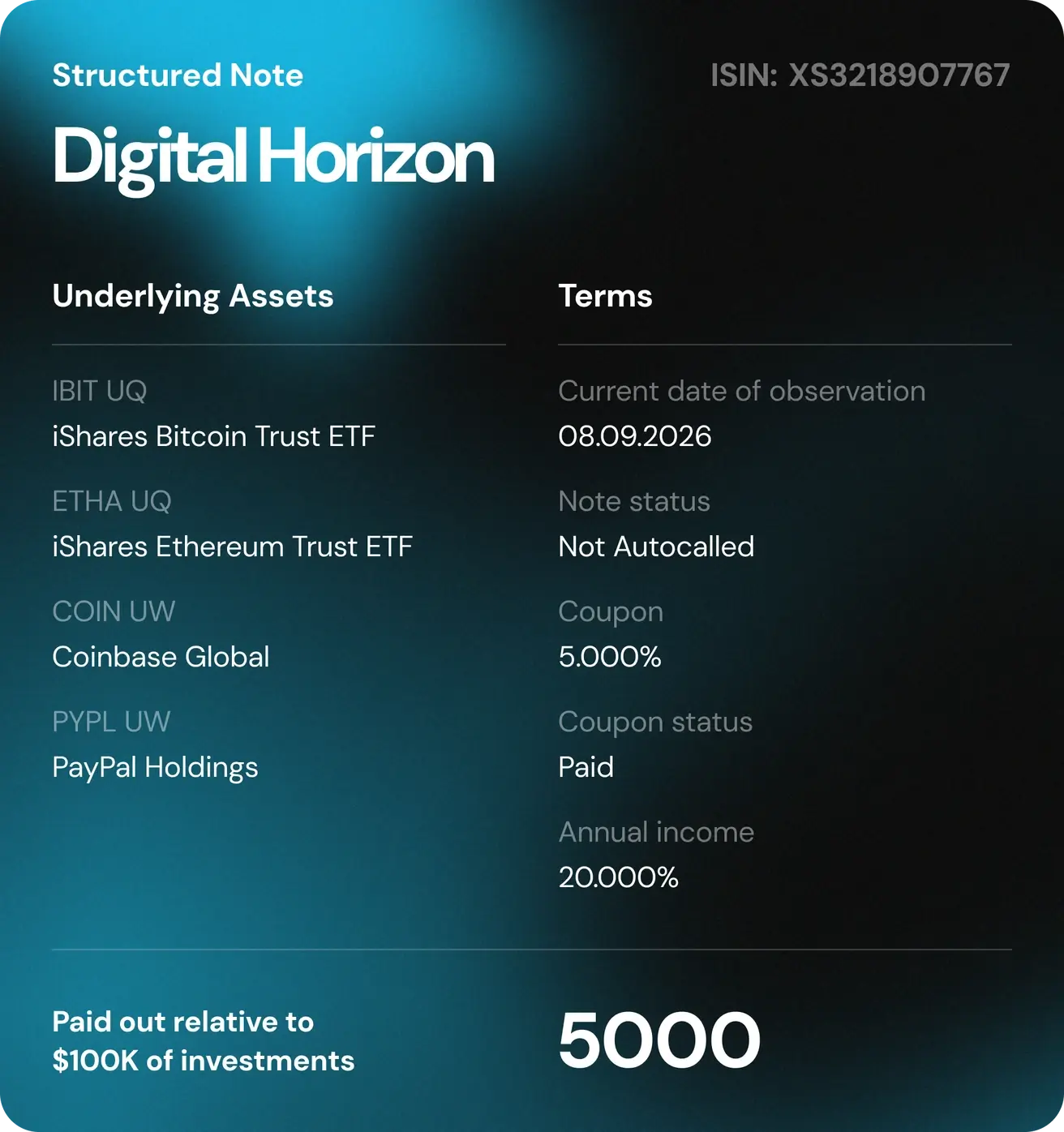
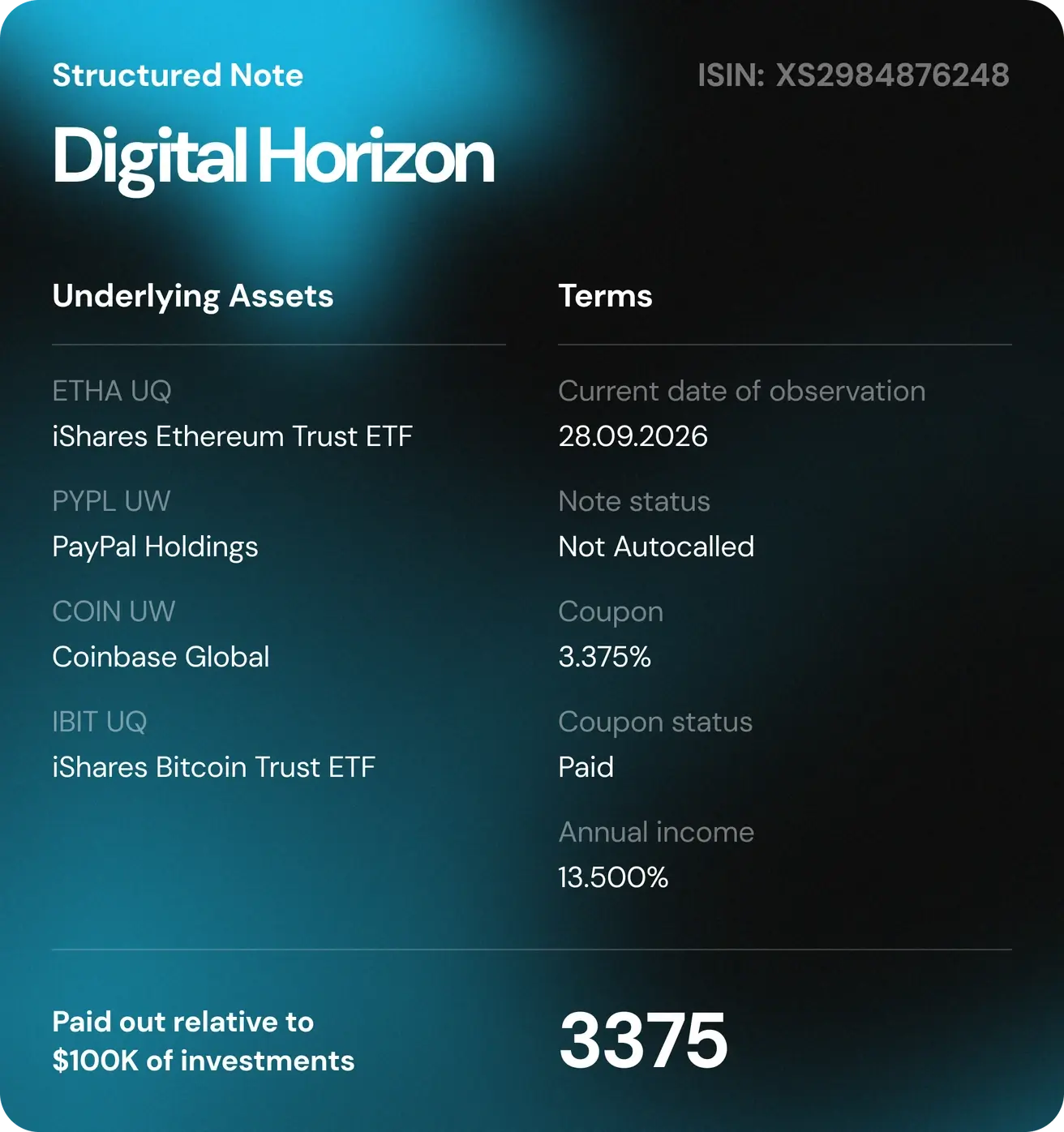
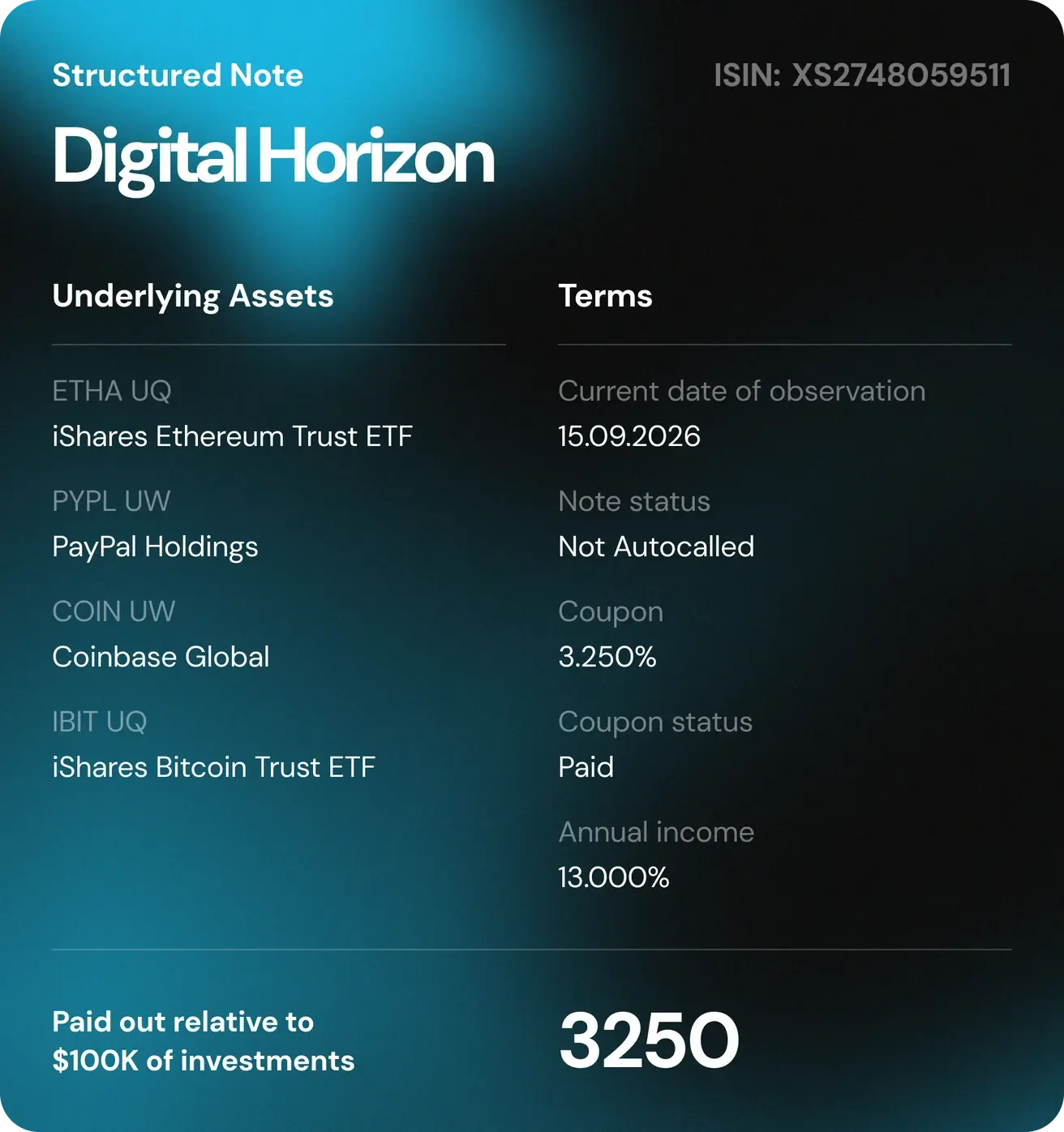
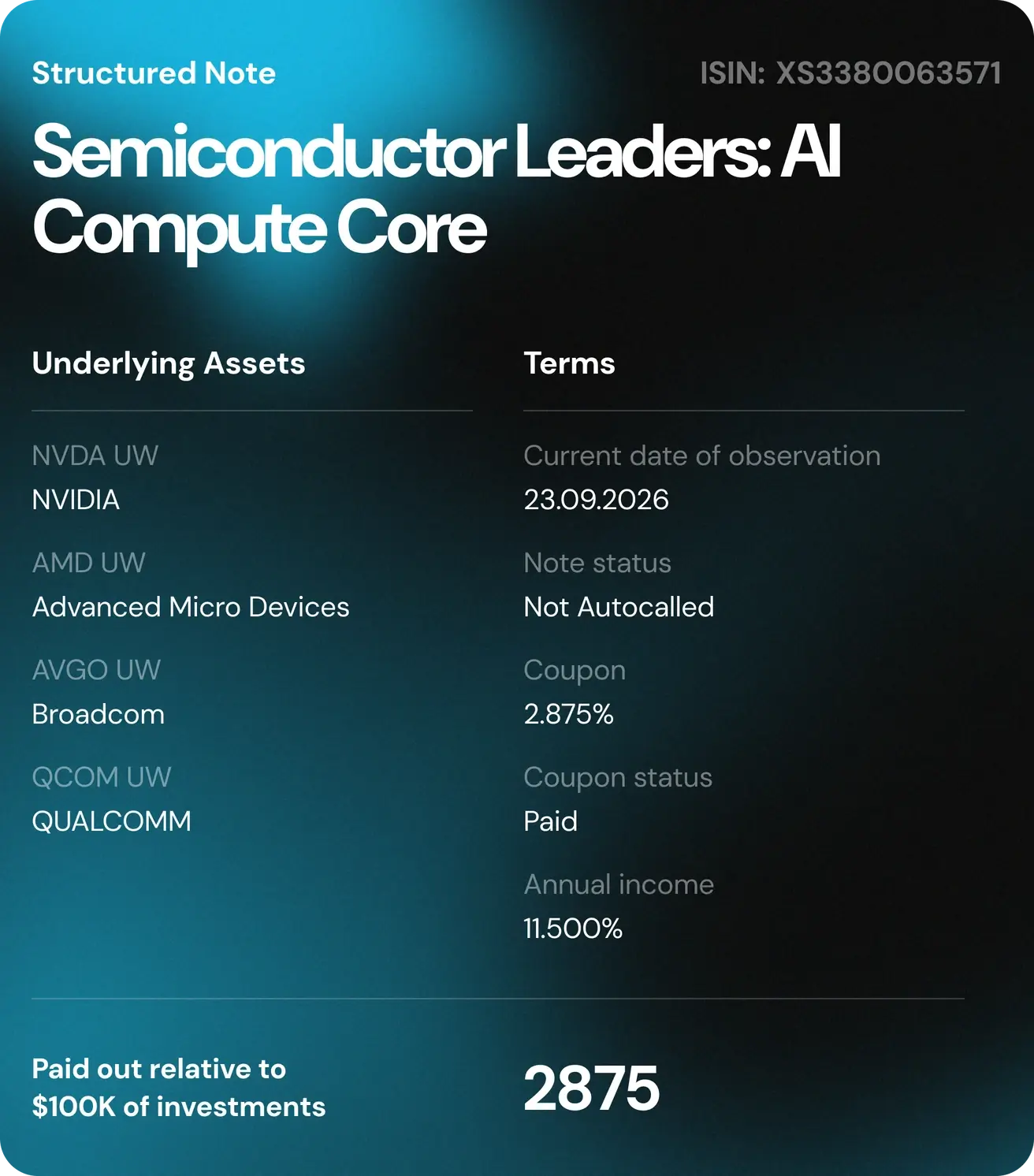
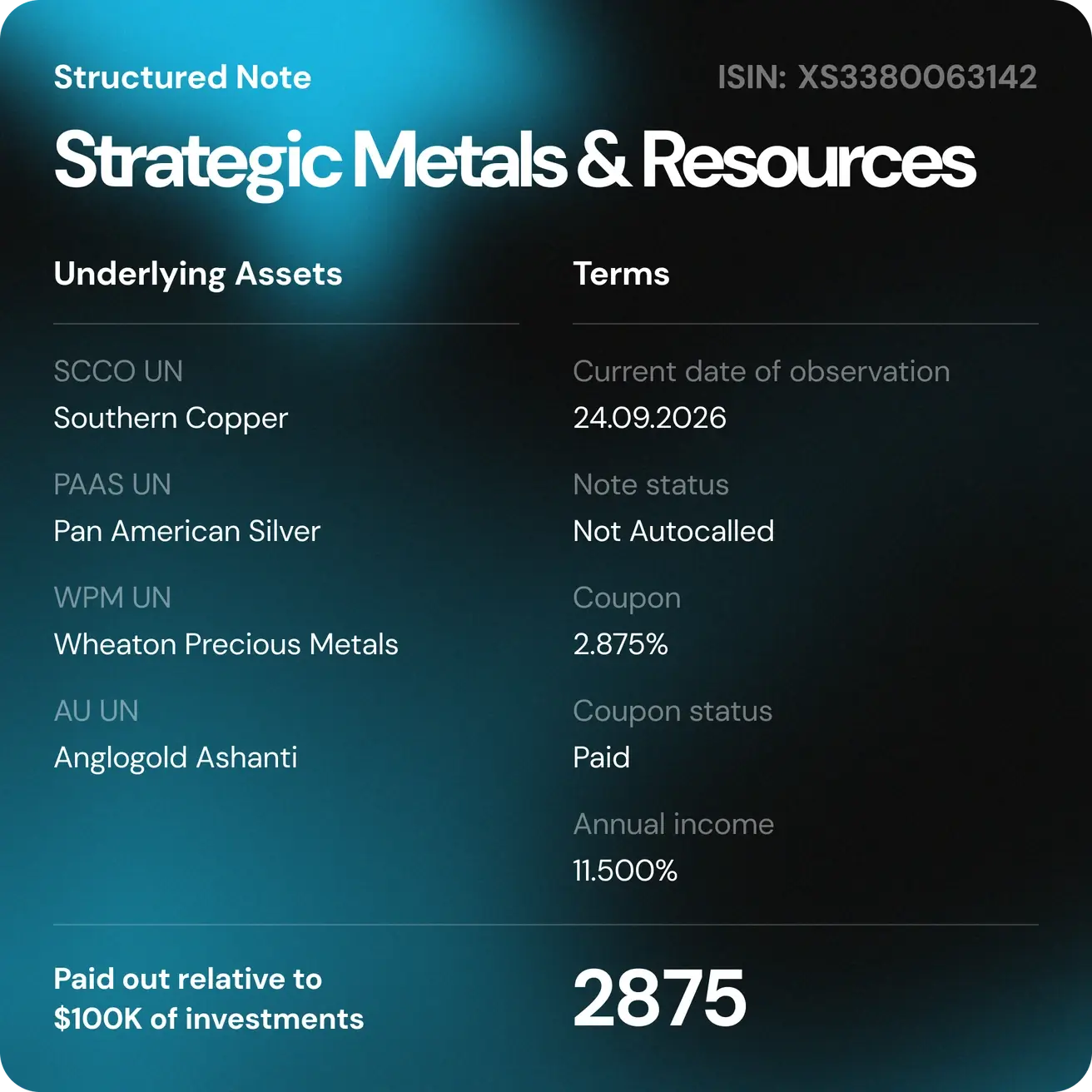
Each card shows:
- Basket composition: the underlying assets whose performance we track.
- Coupon status: whether the payment is confirmed for the period.
- Actual return: how much the investor earned per $100,000 invested.
Active notes
Autocalled
Memory Effect
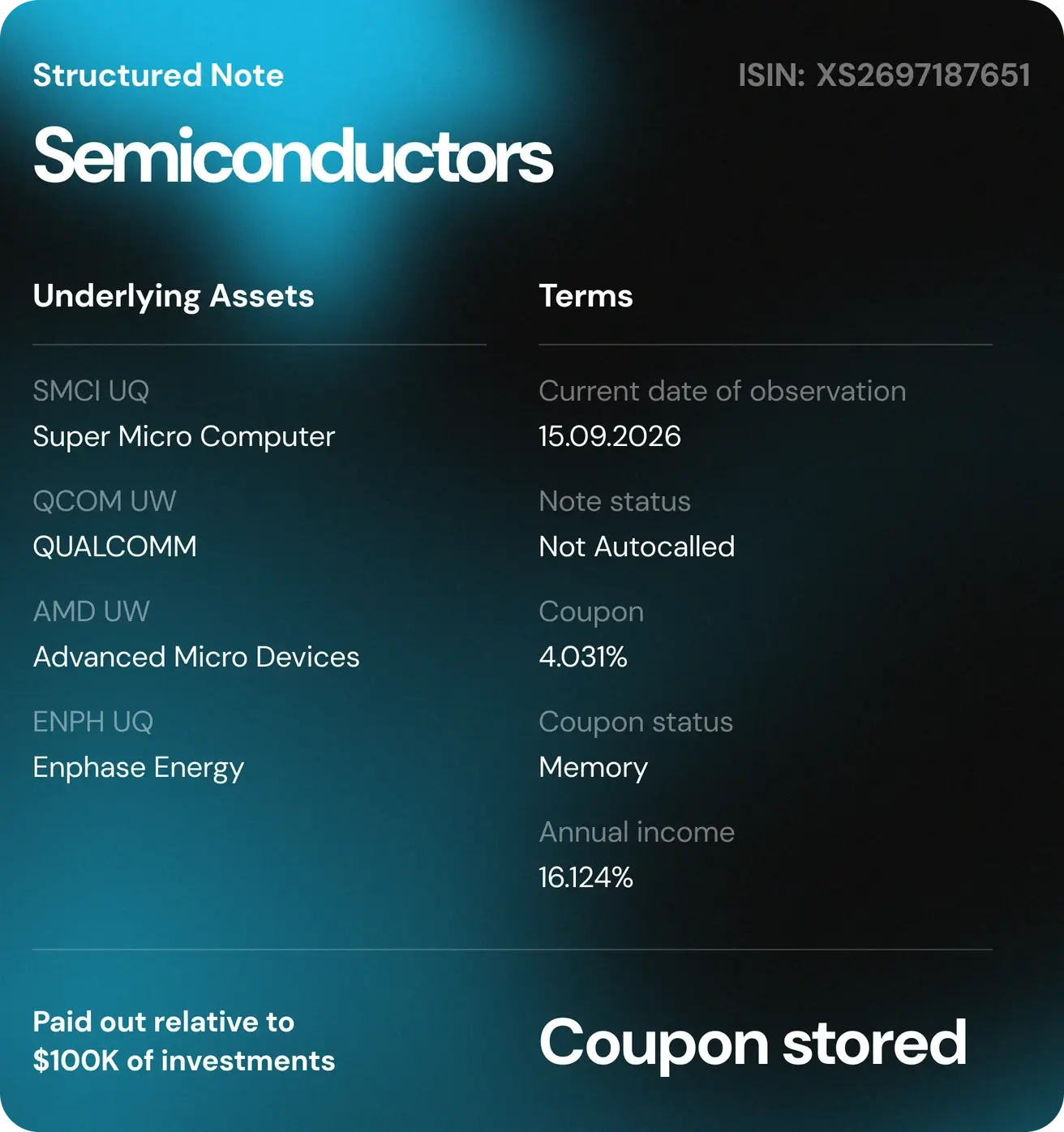
For two notes, some of the underlying assets were below the coupon barrier on the observation date. Under the terms of the notes, coupons for the period are not lost: they are locked in and will be paid once the underlying assets recover to the required levels.
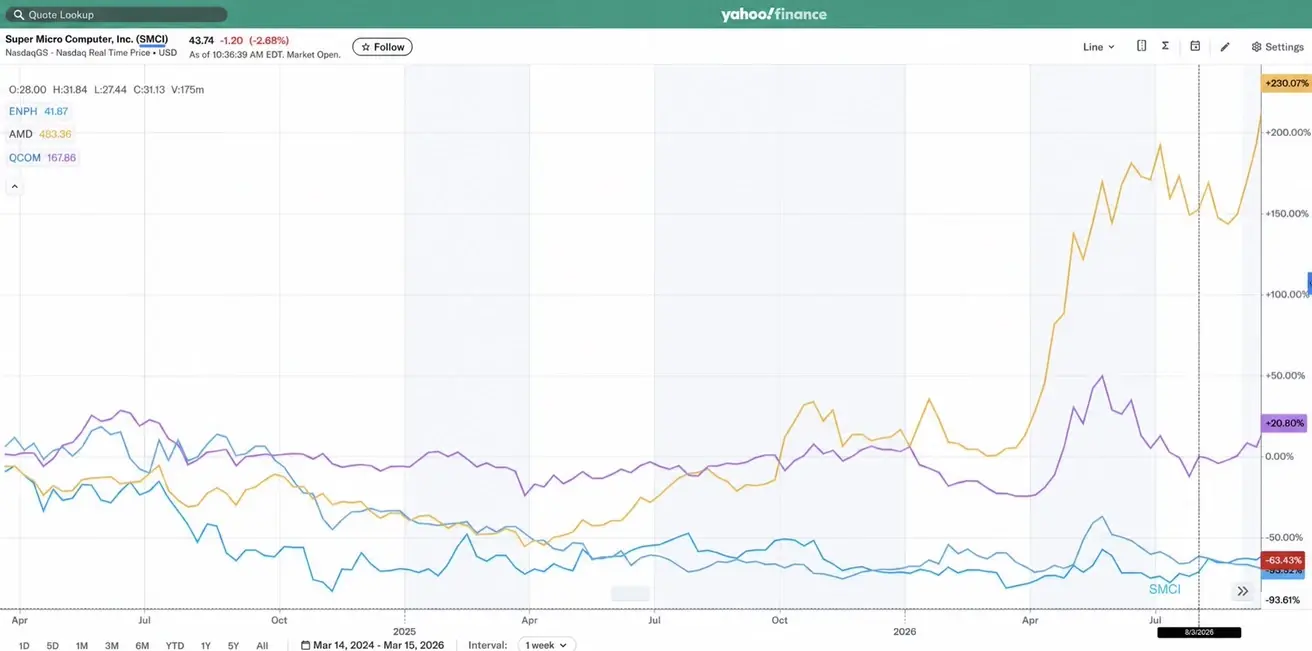
Why the Memory effect was triggered
ENPH. In mid-May, the stock rose in a three-day rally and set a new 52-week high, but by the observation date it had fallen below the coupon barrier. Since the start of the year, the company has been facing weaker demand for residential solar systems in the US. The reason is the repeal of the federal tax credit: since January 1, 2026, US households can no longer deduct 30% of the cost of solar systems from their taxes.
In the second quarter of 2026, Europe provided the main support: revenue in the region grew by about 35% quarter over quarter. In the US, sales fell by about 3%, which the company attributes mainly to lower shipments to distributors.
As a result, total revenue increased to $291.9 million from $282.9 million. Margins also improved: non-GAAP gross margin (excluding stock-based compensation and amortization) came in at 46.8% versus 43.9% a quarter earlier.
SMCI. After the summer correction, the stock gained 74% from its local low but remained below the coupon barrier on the observation date. In its fiscal 2026 results, CEO Charles Liang reported new orders of more than $60 billion and a record backlog heading into fiscal 2027.
Between July and September, the company expanded its partnerships and began shipping its next-generation systems:
- On August 25, Cisco announced that from October it will sell Super Micro Computer systems as part of its Secure AI Factory with NVIDIA solution.
- On September 23, Super Micro Computer began shipping liquid-cooled NVIDIA Vera Rubin NVL72 racks.
- On September 29, NetApp announced a strategic collaboration with the company in AI infrastructure.
Super Micro Computer's fiscal year begins in July. For the first quarter of fiscal 2027 (July–September 2026), the company guided for revenue of $14.5–15.5 billion versus $5.0 billion a year earlier. The quarterly report will show how closely the guidance was met.
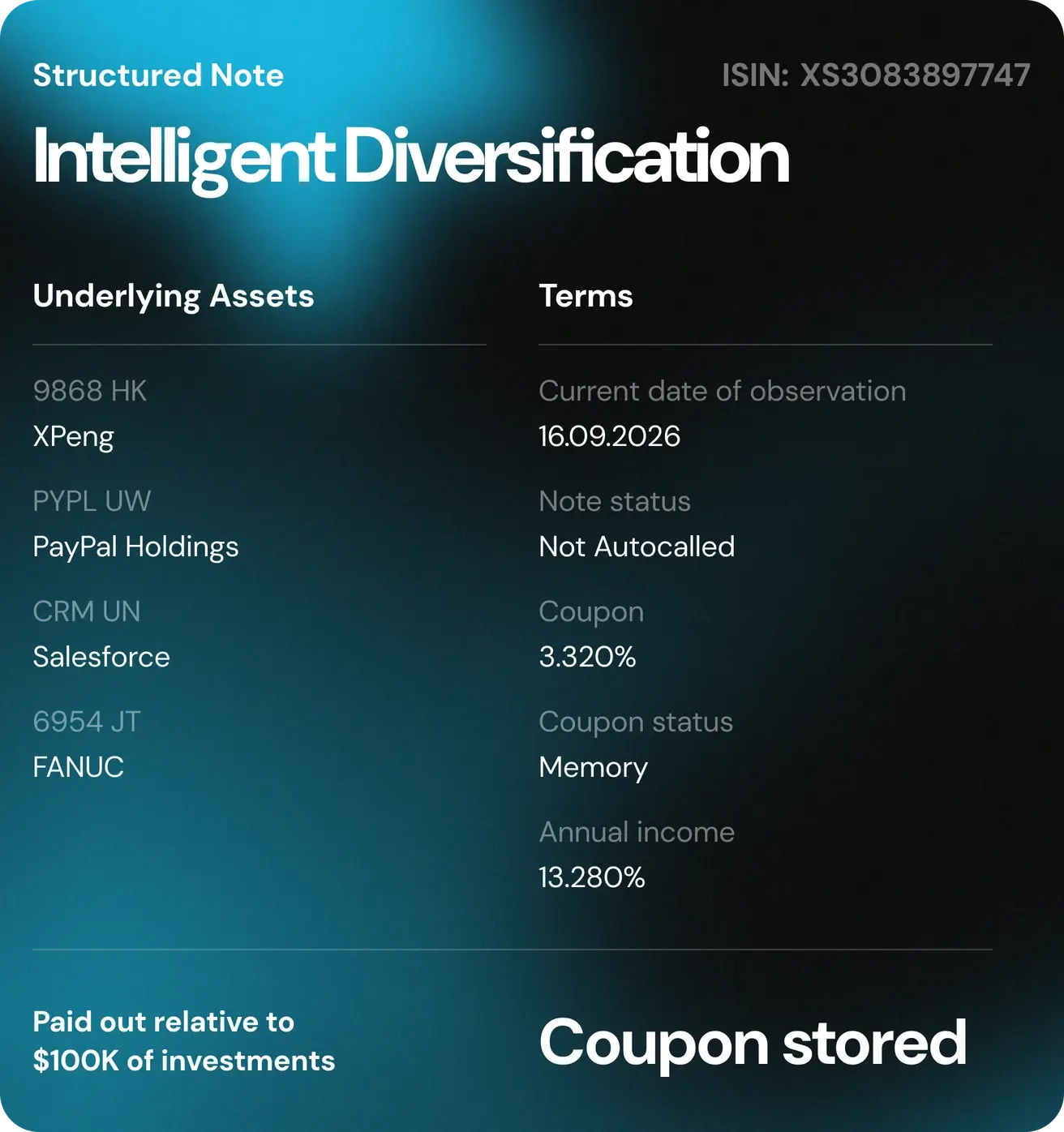
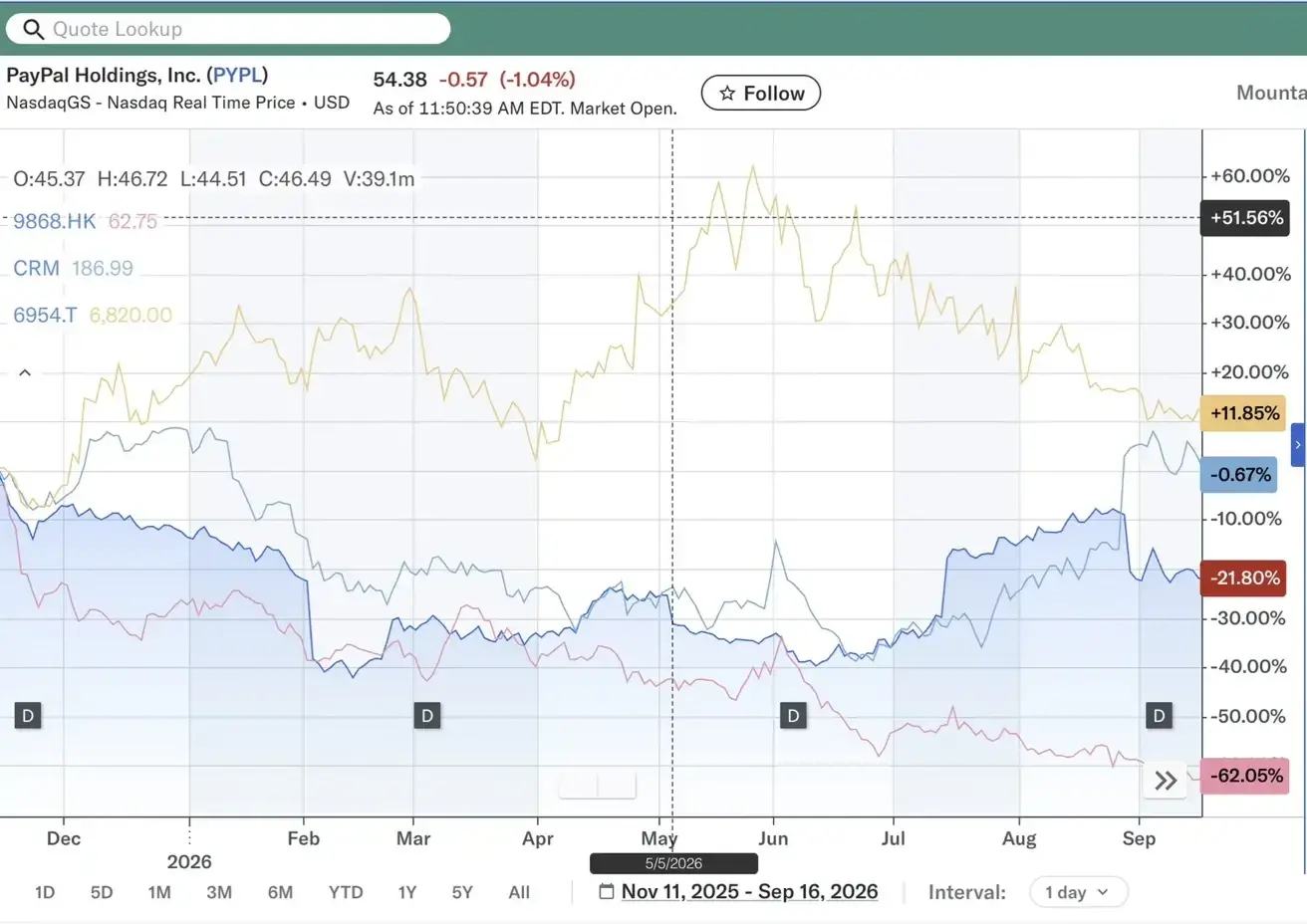
Why the Memory effect was triggered
On the observation date, only XPENG was below the coupon barrier. The other assets in the basket — PYPL, CRM and FANUC — were above the barrier.
XPENG. After a weak first half, the company returned to delivery growth. In the third quarter it delivered 118,390 vehicles to customers, 15% more than in the second. This came against a backdrop of falling car sales in China, which was driven by reduced subsidies and a prolonged real estate downturn. In the first half, the company's deliveries fell by 15.8%. A price war is adding further pressure on the industry.
Overseas markets provide support: in the second quarter, sales outside China exceeded 20,000 vehicles for the first time, up 81% year over year.
The next catalysts are tied to new models:
- On September 24, Volkswagen opened pre-orders for the ID. UNYX 09, the second electric vehicle developed jointly with XPENG.
- On October 12, XPENG launched its flagship G9L in Europe and opened orders.
Summary and outlook
September showed how Raison's protective mechanisms work in an uneven market: amid declines in small caps, Europe and China, the coupons on the two notes with the Memory effect were not lost but locked in until the underlying assets recover. In total, 16 notes had observation dates during the month: 13 active notes confirmed their coupons on schedule, the Memory effect was triggered on 2 notes, and 1 note was called early via Autocall.
The Memory effect protects the investor's return even when individual stocks correct temporarily, keeping coupons in place until the market recovers. We continue to structure products around current macro trends, balancing high returns with quality protection.
Want to learn more about structured notes? Send us a request via WhatsApp, and we will get in touch to discuss available solutions tailored to your investment goals.