 Русский
 Қазақша
 Eesti
EestiFOMC Meeting Summary: September 2026
The Fed raises rates amid a resilient economy
On September 16, the third meeting of the Federal Open Market Committee (FOMC) was held under the chairmanship of Kevin Warsh, at which the rate was raised by 25 bps to the 3.75–4.00% range.
In the forecasts provided, the Committee slightly improved its GDP and employment forecasts. Short-term inflation forecasts were raised, while long-term forecasts were unchanged.
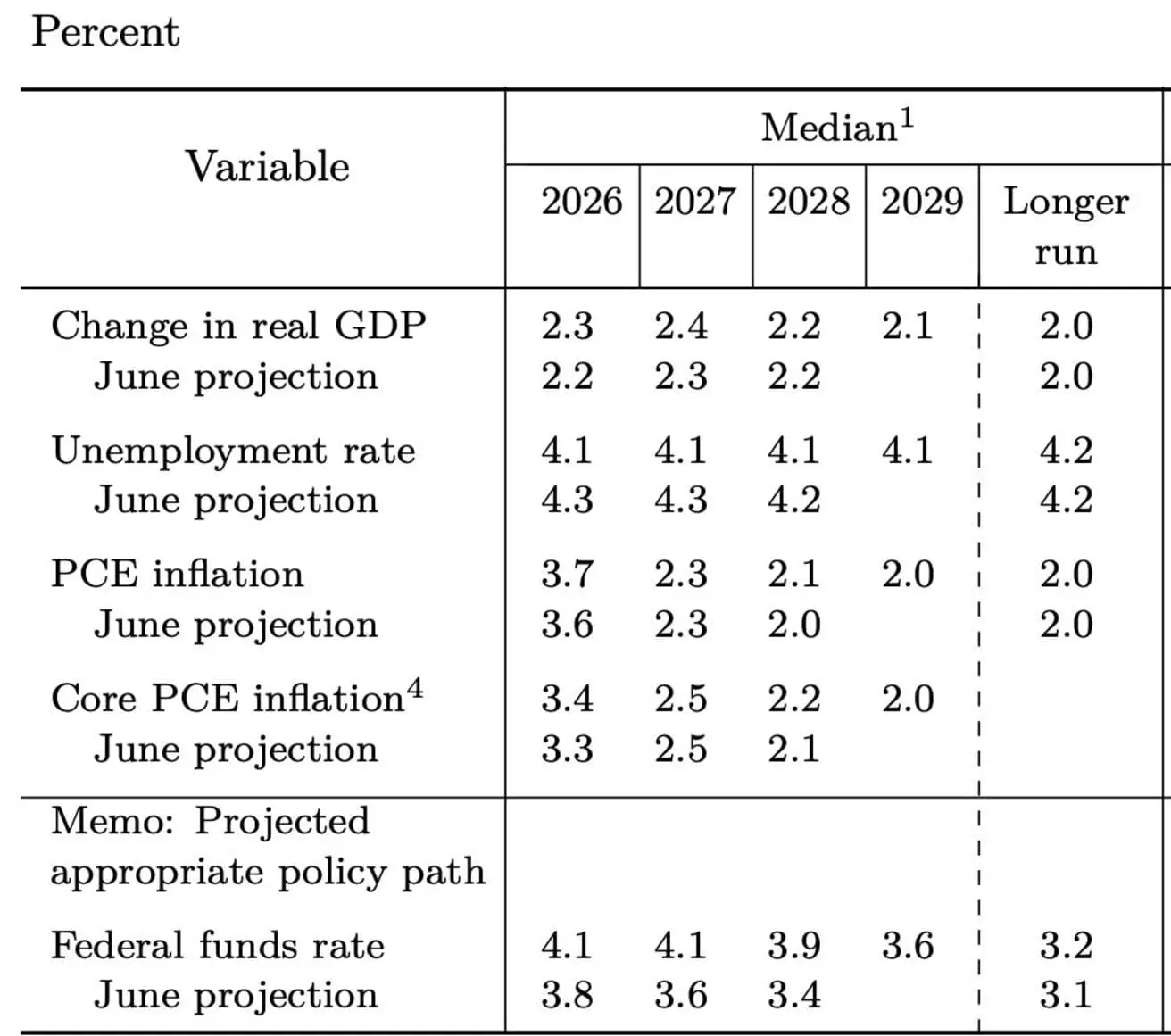
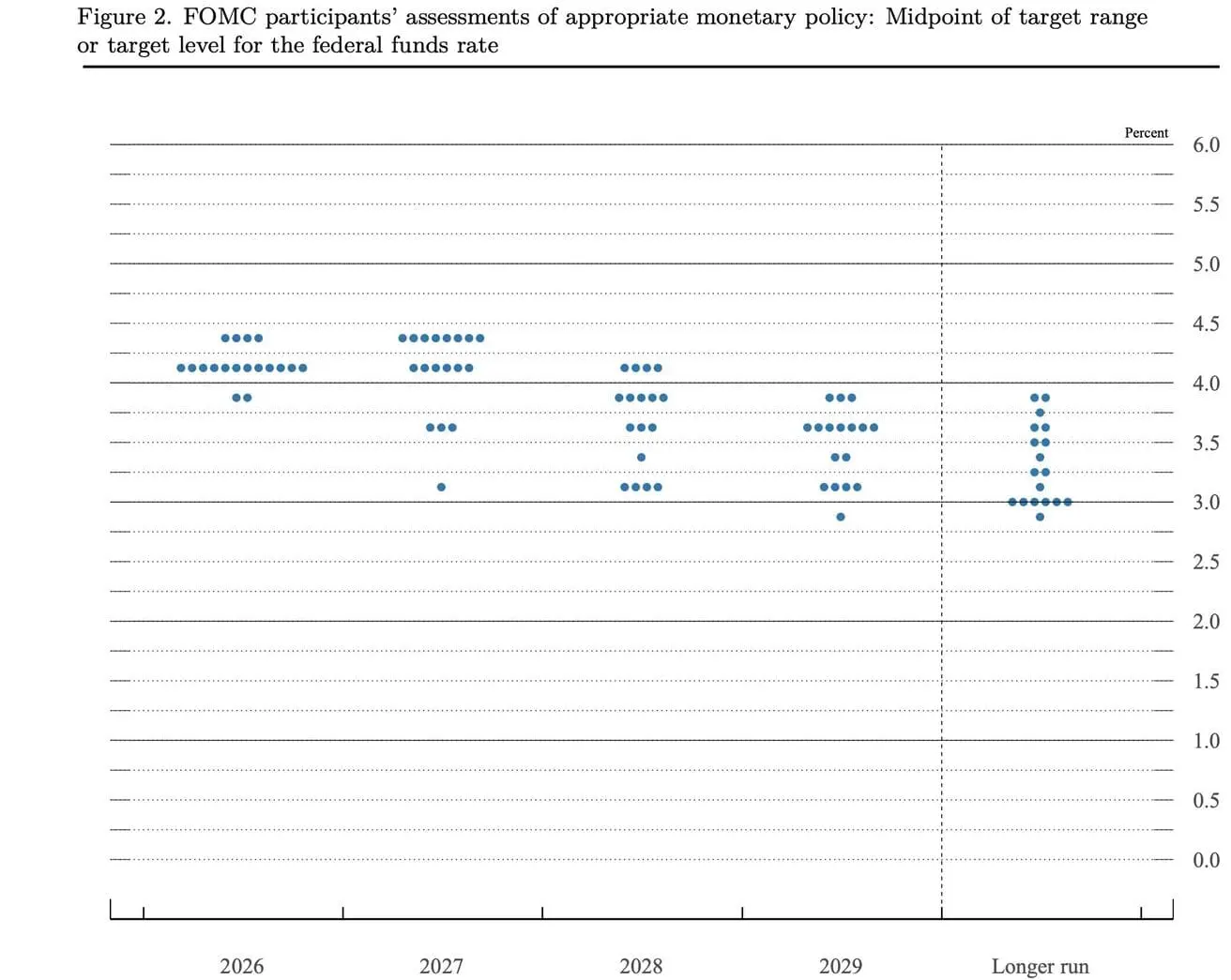
According to most voting members, the median federal funds rate forecast implies a level of 4.1% (an additional +0.25%) through the end of 2027. Long-term forecast range: 3.00–3.50%. Warsh again did not provide his own forecasts.
Comments on Kevin Warsh’s speech
The chairman’s main message was that the decision was made at a time when the U.S. economy is strengthening. Inflation risks are tilted to the upside, while labor market risks are roughly balanced. Inflation is too high and has remained so for too long. Recent data do not indicate any improvement in the situation.
In response to the journalist’s first important question about whether only a small rate hike would be enough, Warsh did not give a direct answer, but noted that the Fed would carry out its task of containing inflation.
Today’s actions show that the Fed is serious and will try to achieve the inflation target in a shorter time frame (note: the Fed’s median forecasts imply reaching the target only in 2029). Over the next few months, we will have more data, but I will not comment on future actions.
Kevin Warsh
Warsh also added that it is difficult for him to characterize current financial conditions as restrictive.
Accordingly, such hawkish remarks indicate that the Fed has shifted to a more restrictive stance on inflation. The decision to raise rates by 25 bps was unanimous, reinforcing the signal that the current rate level is not sufficient to bring inflation back to target.
Warsh described the U.S. economy as resilient: the labor market remains in good shape, domestic demand is holding up, and capital investment and credit flows look strong. In other words, if the economy does not look weak, the Fed has less reason to tolerate inflation above target.
Final takeaway
On the one hand, a very important hawkish signal is seen not only in the rate hike itself, but also in the updated FOMC forecasts — the median implies that the rate will remain around 4.1% through the end of 2027. In other words, the Committee is pointing to a tighter policy path for a longer period.
On the other hand, it feels as though Warsh is building a preventive verbal measure into his rhetoric. He is trying to convince markets that the regulator’s new leadership will not tolerate inflation above target and is ready to act if necessary. If the market accepts this signal, it could help lower inflation expectations and tighten financial conditions. In such a scenario, the regulator may not need a series of additional rate hikes — it would be enough to maintain confidence in the Fed’s resolve.
However, the key risk to such a scenario is energy and commodity price pressure. If rising energy prices begin to pass more broadly into business costs and inflation expectations, a tough communication stance alone may not be enough, and the Fed will have to back up its rhetoric with further action.
Why it is important to follow FOMC meetings
Federal Reserve decisions directly affect the cost of capital worldwide. Equity and bond valuations, the U.S. dollar exchange rate, investment returns, and risk appetite all depend on them. Even if the rate is kept unchanged, the Fed’s rhetoric can set the tone for markets for a long time, signaling the outlook for tighter policy, a pause, or future easing.