 Русский
 Қазақша
 Eesti
On the Right Note: October 2026
Structured Notes Monthly Performance Digest

On the Right Note is a regular analytical digest on the Raison blog covering our structured notes portfolio. In each issue, we look beyond the results to the logic behind them: the impact of the market backdrop, how protective mechanisms work, and how strategies behave on actual observation dates. The material helps note holders better understand their assets and helps investors assess how protective mechanisms work in practice.
October: Big Tech, China and crypto under pressure as the broader market held up
Between October 1 and October 31, 2026, 15 notes had observation dates:
- 15 notes maintained active status, including one individual strategy;
- Memory Effect was triggered on 1 note;
- 0 notes were called early via Autocall.
Market backdrop and key events
-
Inflation and oil kept rates high, but pressure eased by month-end. US consumer prices rose 0.6% month over month in September and 3.7% year over year. The main driver was energy, which rose 5.2% over the month. Excluding food and energy, inflation stayed moderate at 2.6% year over year. Oil rose on tensions between the US and Iran: on October 23, Brent briefly climbed above $117 per barrel and closed the month at $113.43. On October 28, the Fed left rates unchanged in the 3.75–4.00% range. The 10-year US Treasury yield came close to 5.36% mid-month, but by the end of October it had fallen by roughly 40 bps to 4.9%. This eases pressure on rate-sensitive companies.
-
Earnings season is going strong, but investors have become stricter about AI spending. By October 30, 60% of S&P 500 companies had reported, and 82% of them beat earnings estimates — above the five-year average. The index's aggregate quarterly earnings grew 30.2% year over year. Demand for AI infrastructure remains high: Amazon's cloud revenue grew 39%. However, the market is paying ever closer attention to how much it costs to build. Meta raised its 2026 capital spending forecast to $135–145 billion and plans to raise a record $97.5 billion. Alphabet shares fell 12% after its report. This repricing of the largest tech companies explains the decline in the Nasdaq 100. The season isn't over yet: Apple and NVIDIA report in November.
-
Outside the largest tech companies, the market held up noticeably better.
S&P 500 (−0.93%) declined, even though 72% of its constituents finished the month higher. The index is cap-weighted: the ten largest companies account for about 40% of its value, and their decline outweighed gains elsewhere. The equal-weight version of the index rose about 5% in October. Consumer staples gained roughly 11%, the sector's best month on record.
Russell 2000 (+0.54%) rose. Small caps rely more heavily on floating-rate debt, so falling yields gave them support.
STOXX Europe 600 (+1.87%) posted its best month since June on the back of strong earnings. Tech accounts for only 9.5% of the index; most of the weight sits in banks, industrials and healthcare.
CSI 300 (−8.54%) was the exception. Chinese AI-linked stocks were caught in the same sell-off, and the index posted its worst month in more than a decade.
-
The largest exchange hack in history deepened the crypto market correction. On October 29, around $6.36 billion was drained from Binance wallets. The exchange pledged to cover all client losses from its insurance fund and its own capital. The hack came when crypto was already falling in step with tech stocks. Bitcoin lost 7.34% in October, Ethereum fell 16.06%, and Coinbase shares dropped 10.6% in a single day. Spot Bitcoin ETFs saw $515 million in outflows for the month, and Ethereum ETFs a record $1.61 billion.
Key indicator performance (as of the end of October 2026):
- S&P 500: October −0.93%, year to date +10.73%
- Nasdaq 100: October −6.70%, year to date +12.42%
- Russell 2000: October +0.54%, year to date +13.29%
- STOXX Europe 600: October +1.87%, year to date +9.21%
- CSI 300: October −8.54%, year to date −13.92%
- VIX (volatility index): ≈19.42 points at month-end
October was not a month of broad market decline. The losses were concentrated mainly in the largest tech companies, China and crypto. Earnings season is running stronger than average; most S&P 500 stocks rose, and European equities and US small caps finished the month higher. Bond yields fell by the end of October, which supports companies that depend on borrowing. The key events expected in November that will move markets are Apple and NVIDIA earnings and rate decisions against the backdrop of expensive oil.
Impact on structured notes
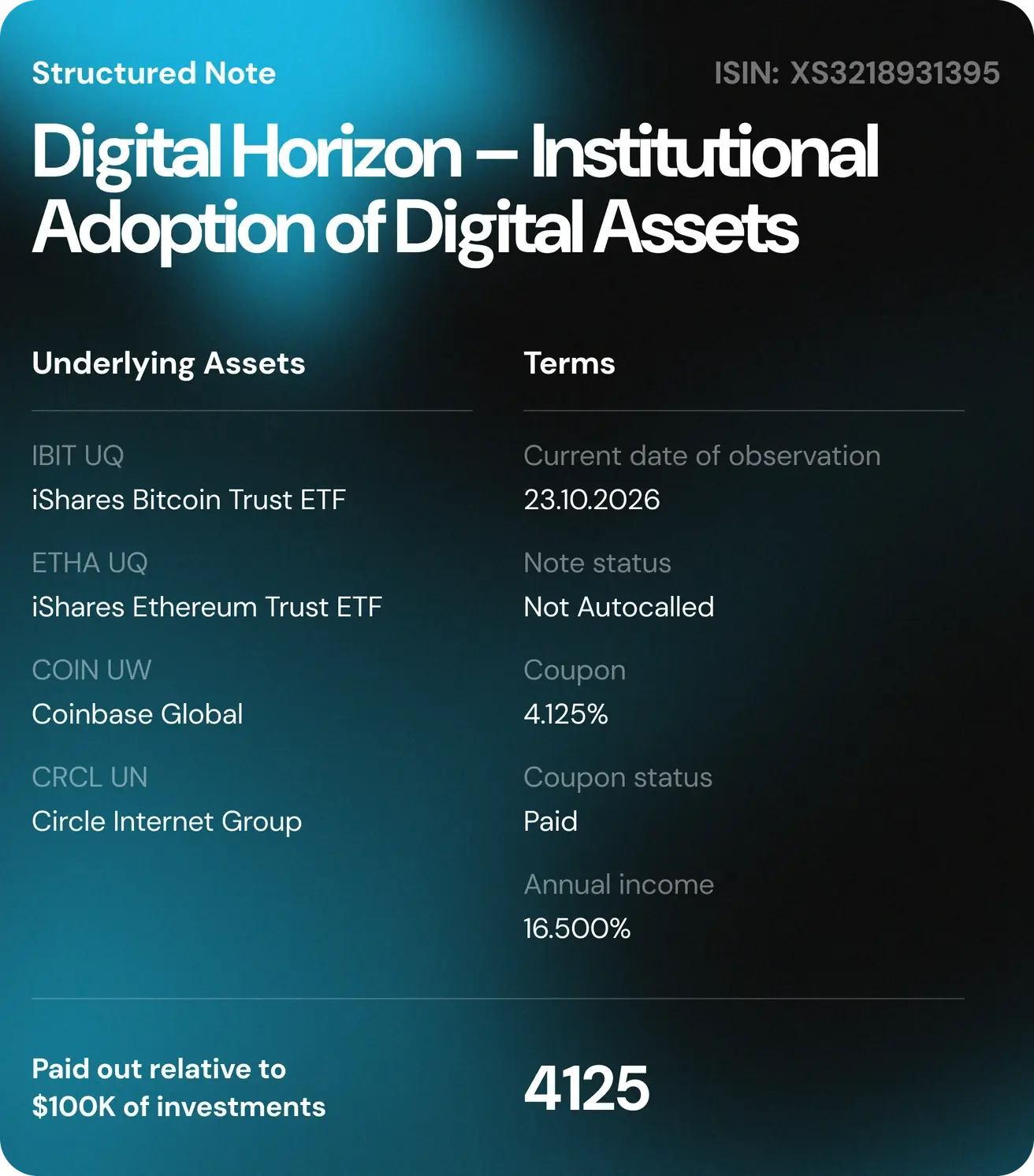
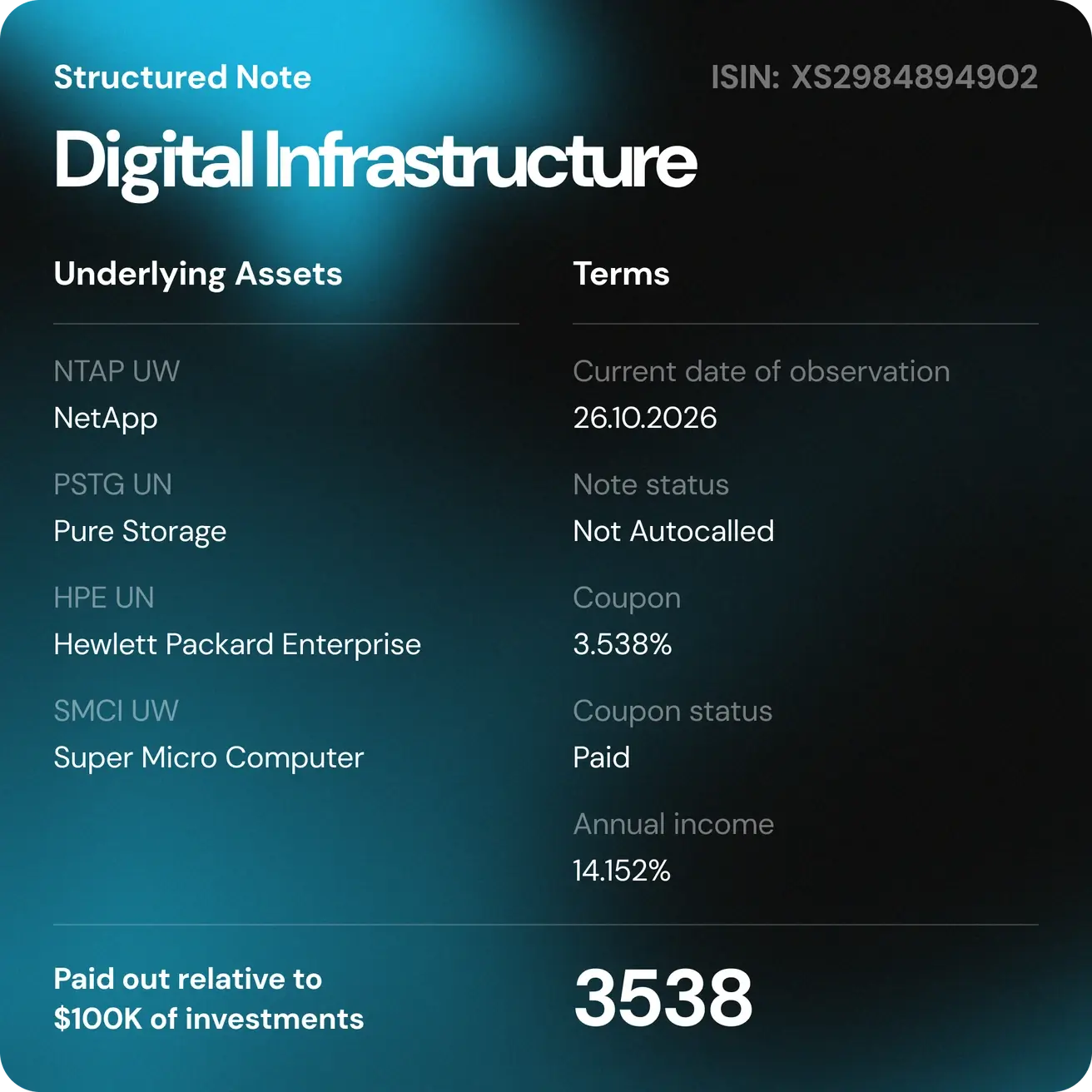
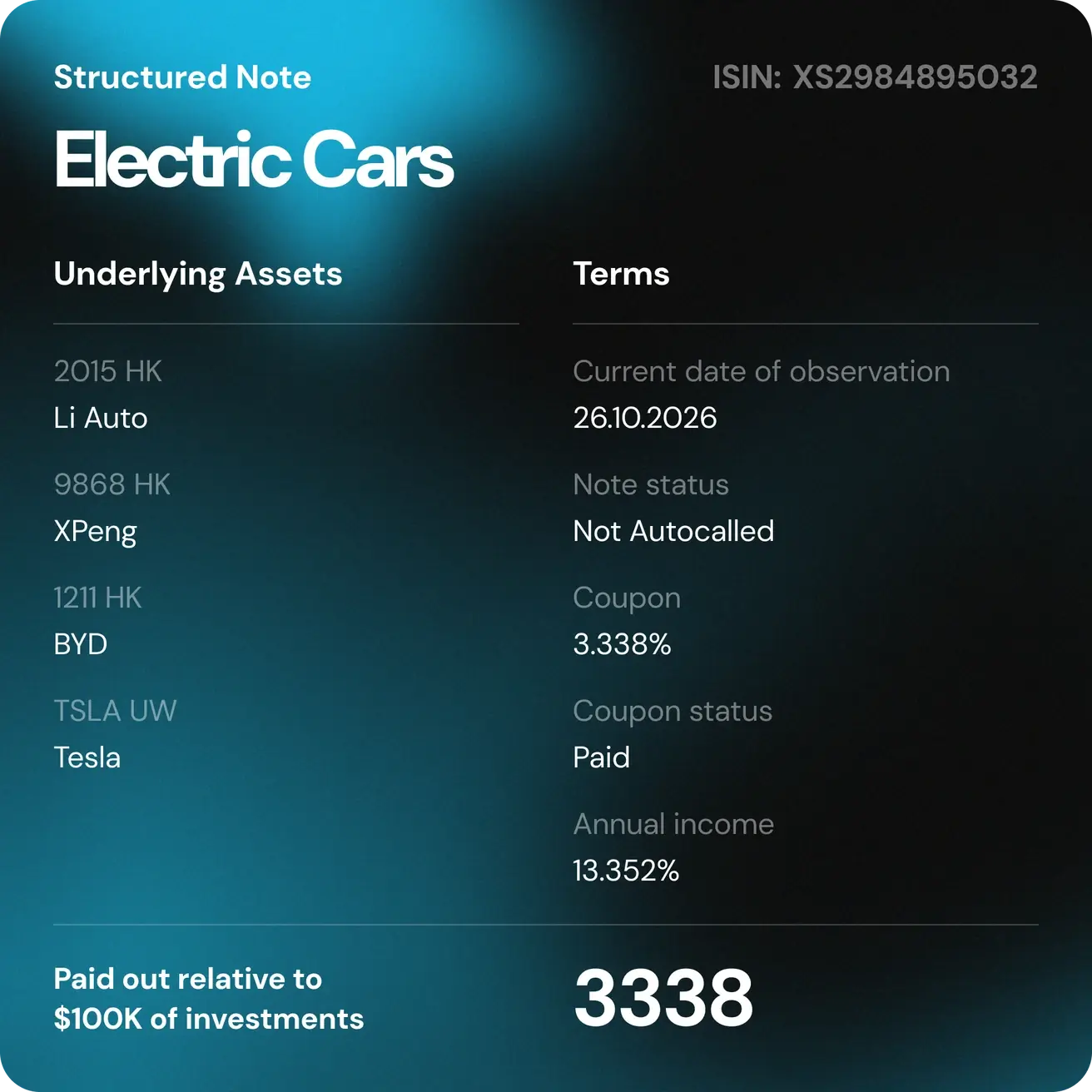
October's correction affected the underlying assets of some notes: portfolio baskets include semiconductor companies, Bitcoin and Ethereum ETFs, Coinbase and Chinese automakers. Even so, coupons were confirmed on 14 of 15 notes on their observation dates, including notes on digital assets and electric vehicles. Diversification across sectors and regions softened the impact of localized sell-offs, and where underlying assets fell below the coupon barrier, the coupon memory mechanism kicked in.
Notes in detail
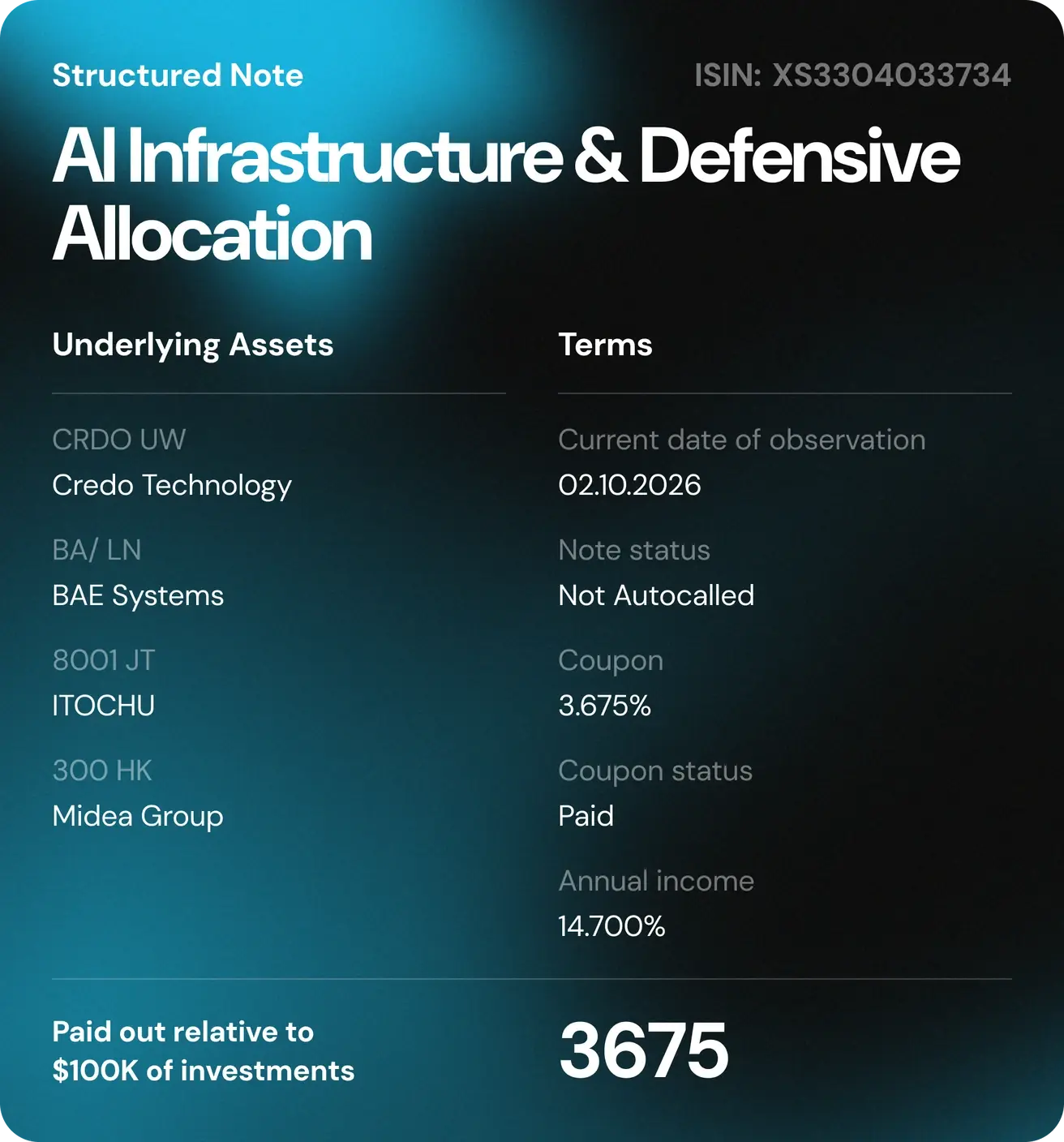
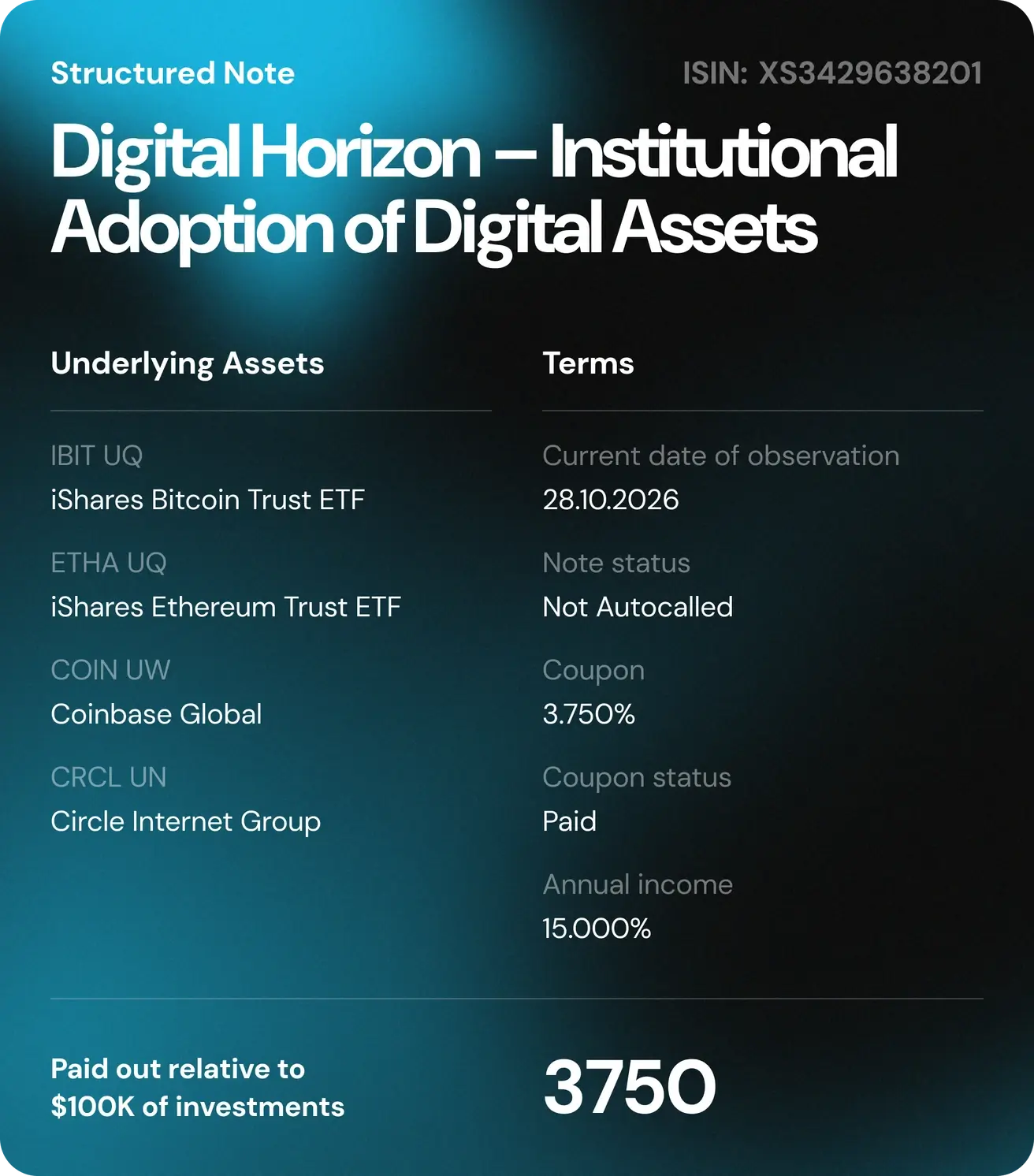
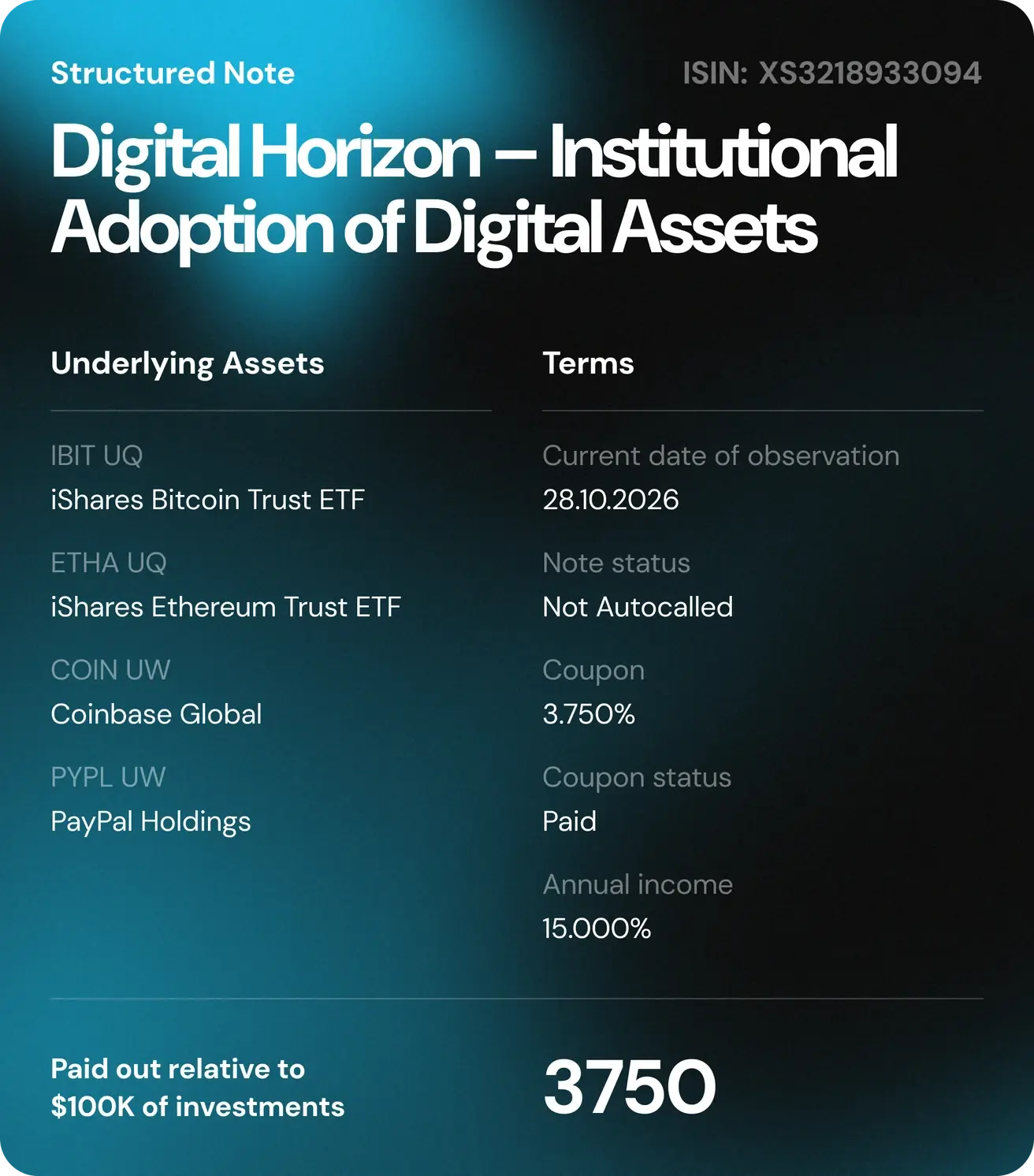
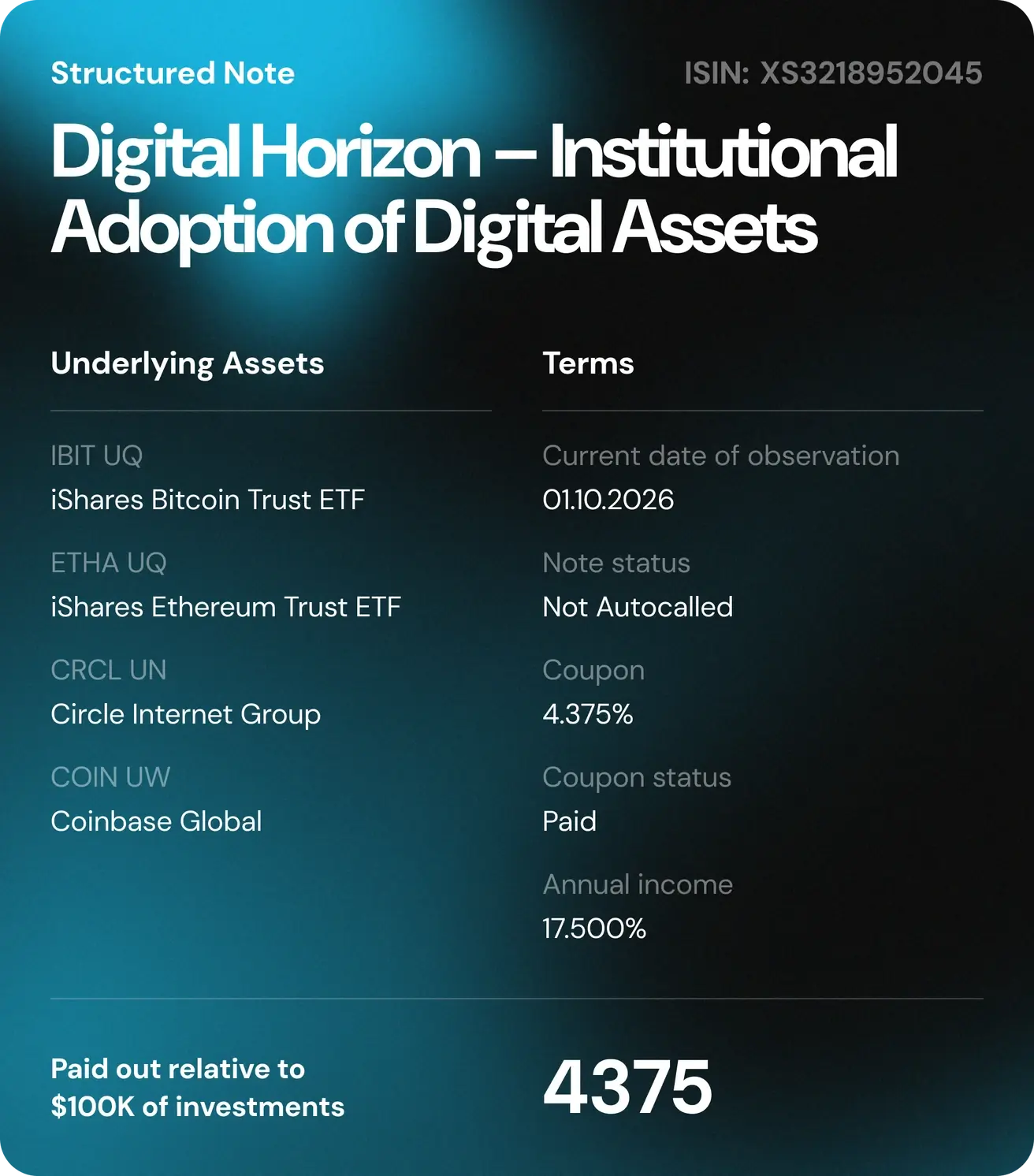
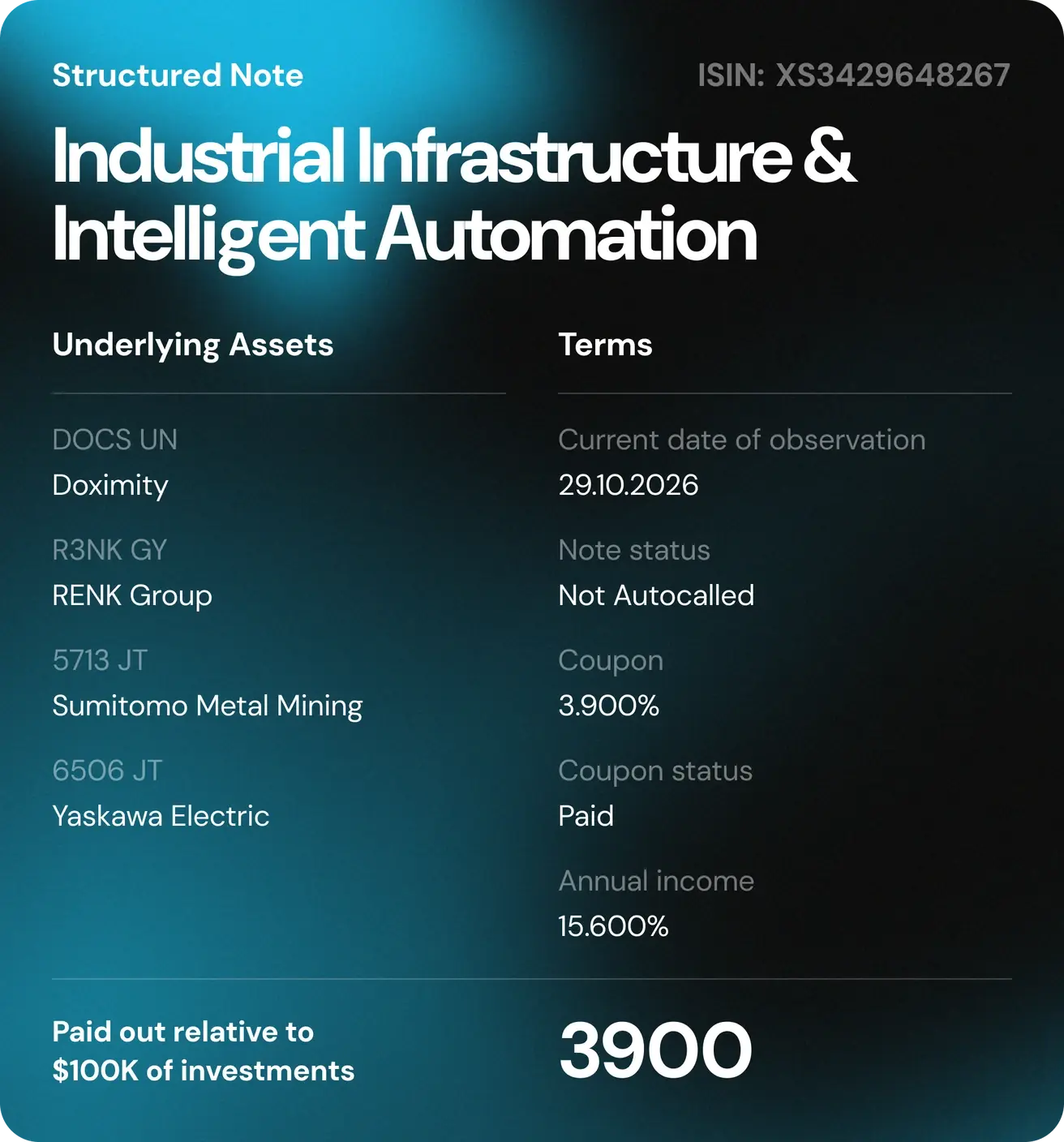
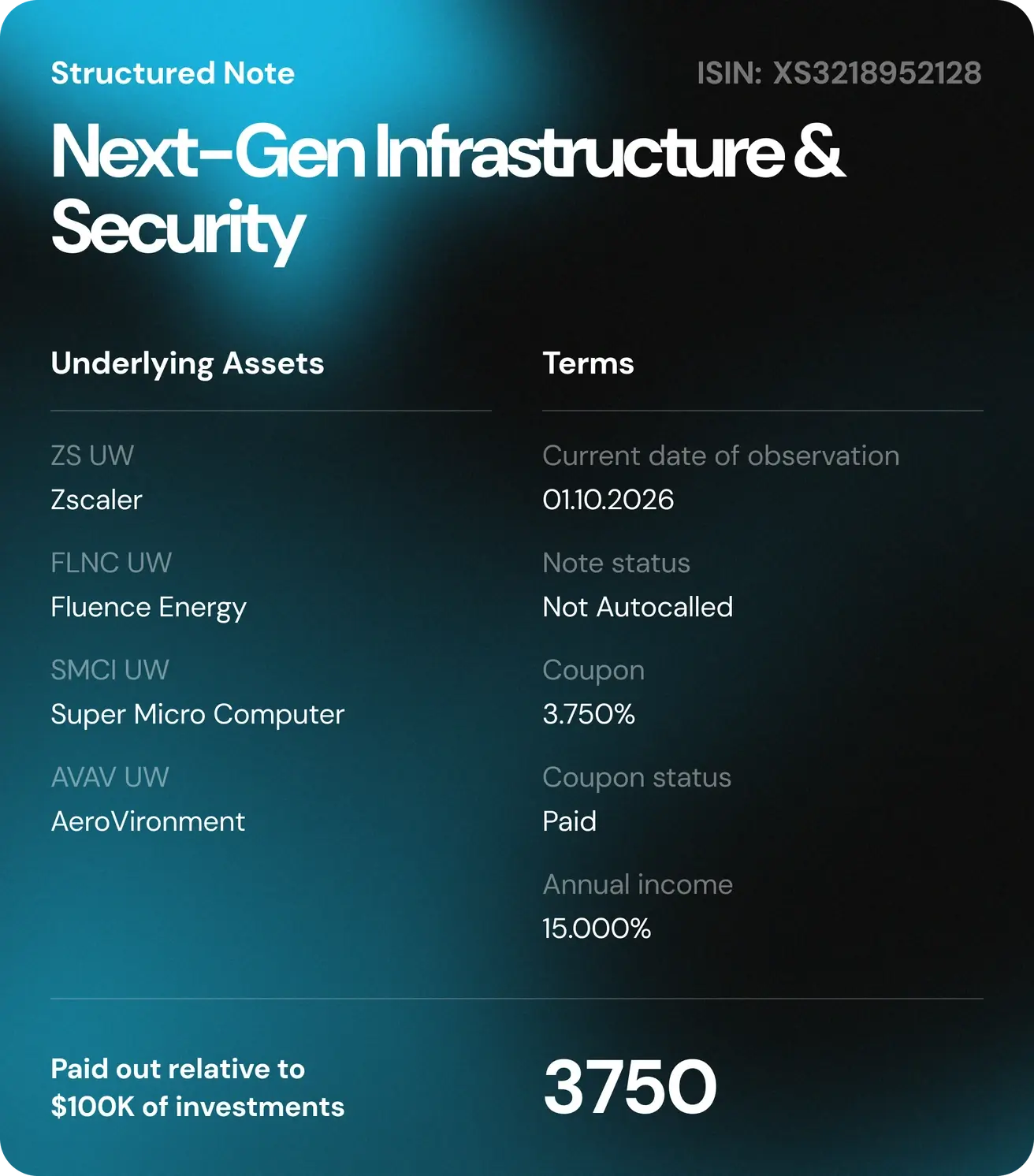
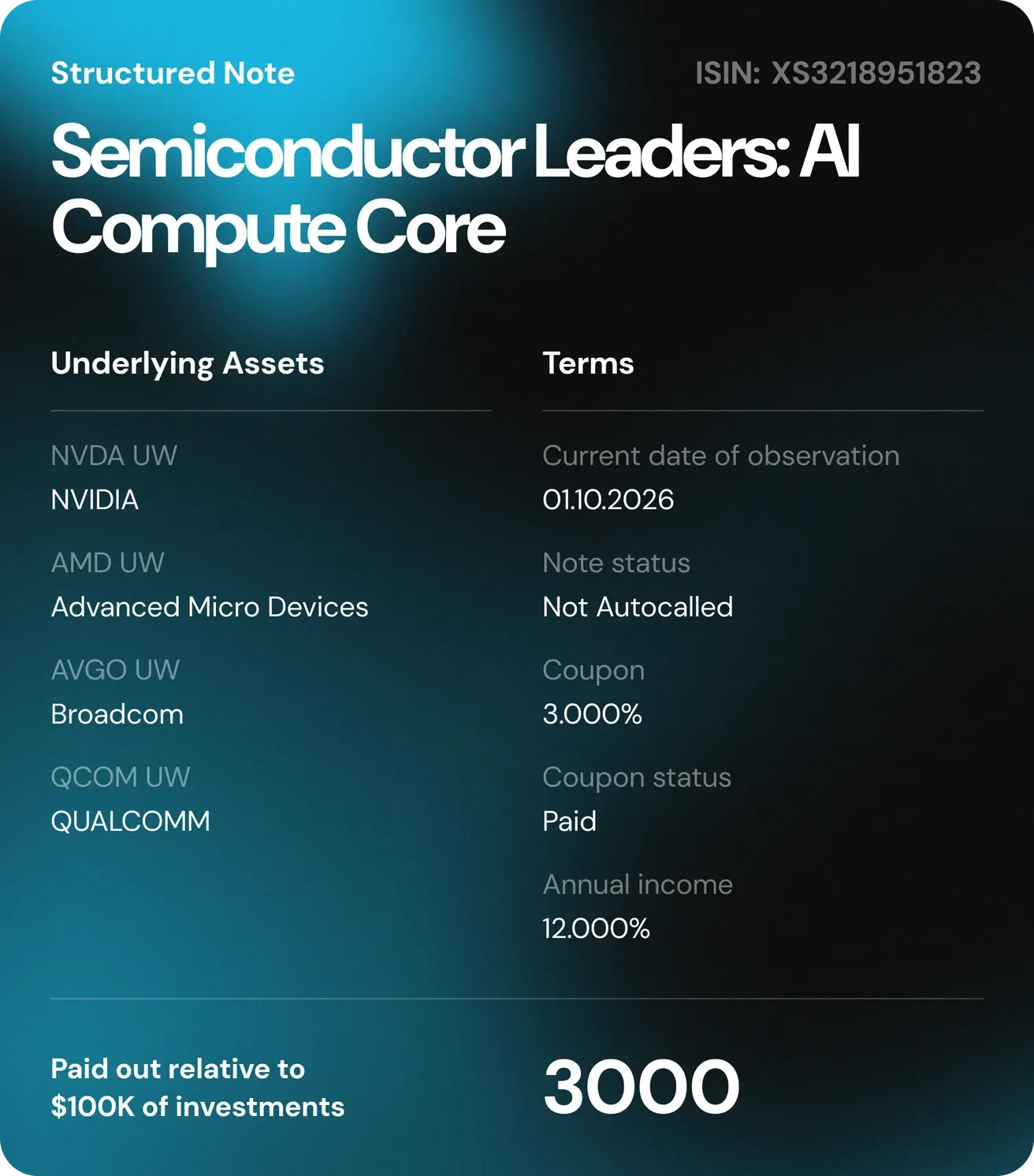
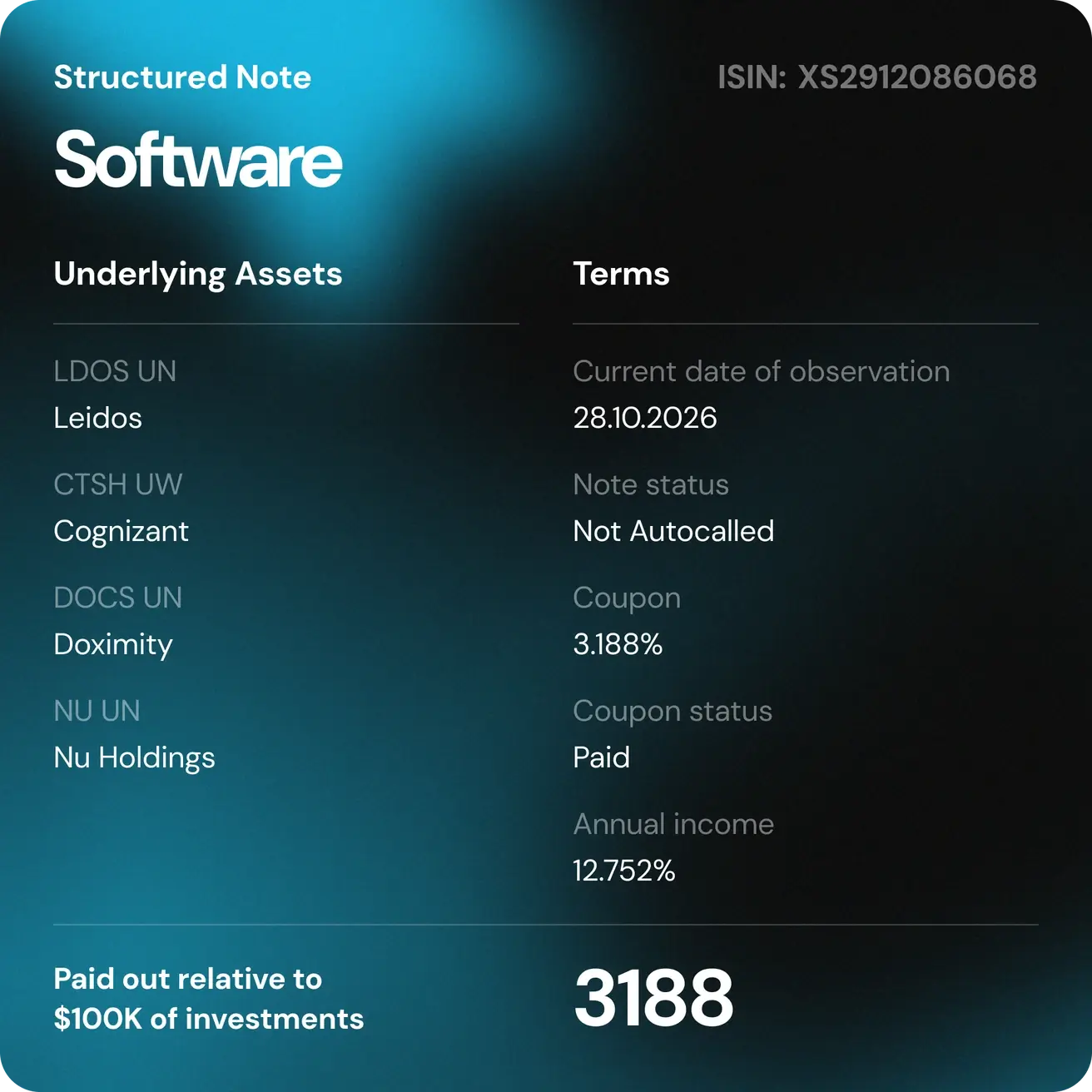
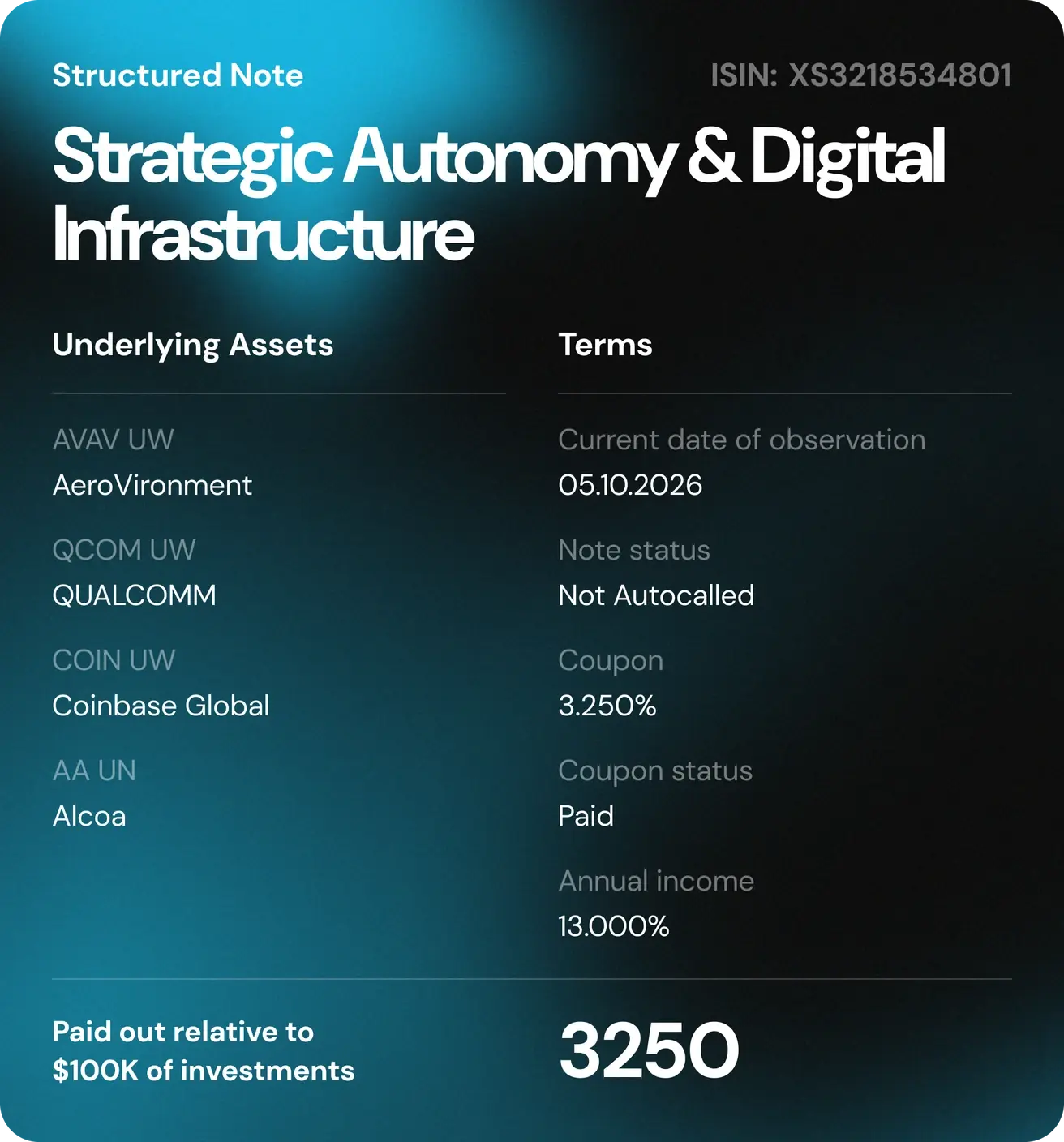
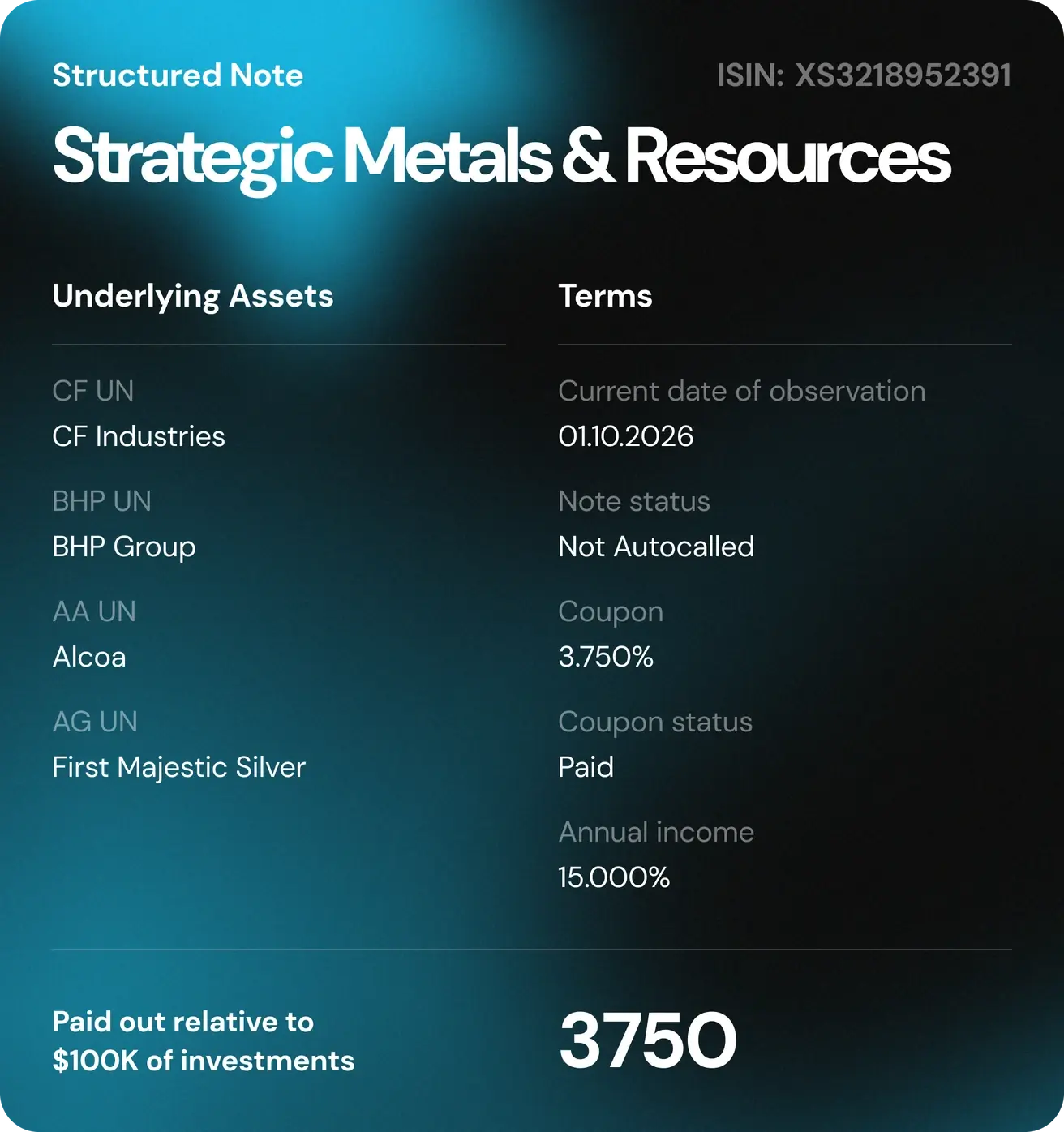
We now move from market trends to specific figures. Below are the cards for notes that had an observation date in October. We have grouped them into categories: Active notes continue to run, and the remaining notes triggered the Memory Effect protective mechanism. There were no Autocall redemptions in October.
Each card shows:
- Basket composition: the underlying assets whose performance we track.
- Coupon status: whether the payment is confirmed for the period.
- Actual return: how much the investor earned per $100,000 invested.
Active notes
Memory Effect
For one note, some of the underlying assets were below the coupon barrier on the observation date. Under the terms of the note, the coupon for the period is not lost: it is locked in and will be paid once the underlying assets recover to the required levels.
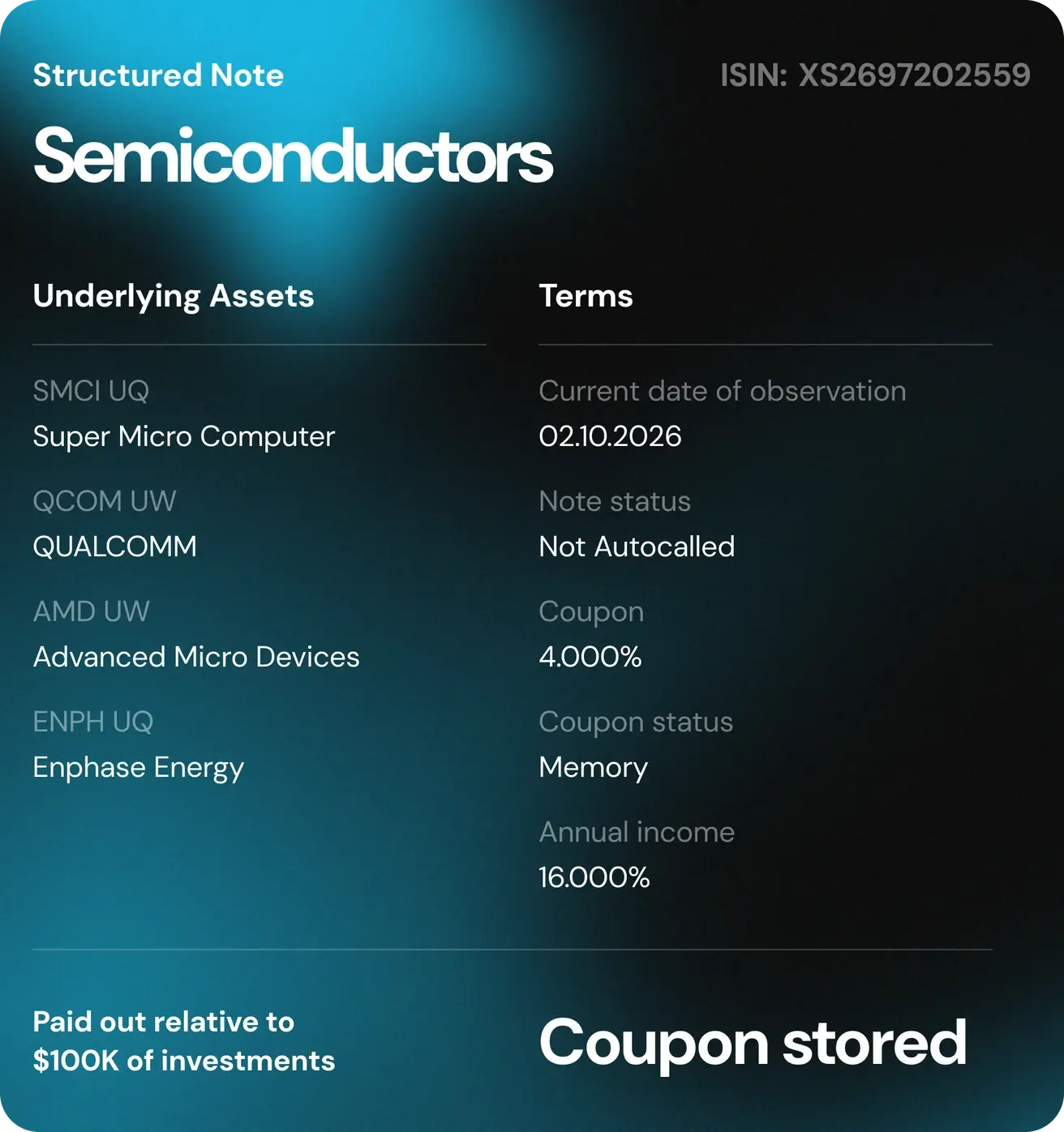
Why the Memory effect was triggered
SMCI sent one of the strongest signals in the portfolio in October. On October 20, the company raised its preliminary revenue estimate for the first quarter of fiscal 2027 (July–September 2026). The new estimate is $18.5–19.5 billion, up from the previous guidance of $14.5–15.5 billion. The company attributed this to growing demand for AI platforms. Final results on November 3 beat even that estimate: revenue reached a record $19.9 billion, nearly four times the prior-year figure ($5.0 billion). Gross margin rose to 12.7% versus guidance of 10.4–10.8%. The company raised its full fiscal-year revenue outlook to $72–82 billion.
ENPH is betting on energy storage in the second half of the year, and the segment kept growing in the third quarter. The company shipped 129.9 MWh of IQ Batteries, up from 113.8 MWh the previous quarter (+14%). It also opened US pre-orders for its first commercial storage system, the IQ Battery C80. US revenue rose about 3% quarter over quarter. The company has a solid financial cushion: at quarter-end it held $931.8 million in cash and marketable securities, and nine-month free cash flow rose to $97.5 million from $58.1 million a year earlier. The overall picture remains weak for now: quarterly revenue ($293.3 million) missed analyst expectations, and the company cut its fourth-quarter outlook to $225–255 million.
Summary and outlook
October showed how Raison's protective mechanisms work when a correction is concentrated in specific market segments: amid declines in Big Tech, China, and crypto, the coupon on the note with the Memory effect was not lost but locked in until the underlying assets recover. In total, 15 notes had observation dates during the month: all 15 notes maintained active status, including one individual strategy, coupons were confirmed on 14 notes, the Memory effect was triggered on 1 note, and there were no Autocall redemptions.
The Memory effect protects the investor's return even when individual stocks correct temporarily, keeping coupons in place until the market recovers. We continue to structure products around current macro trends, balancing high returns with quality protection.
Want to learn more about structured notes? Send us a request via WhatsApp, and we will get in touch to discuss available solutions tailored to your investment goals.